iAspirants
HomeAbout UsCurrent AffairsPrelims PYQsPricing
Login
iAspirants
HomeAboutBlogsFAQsPricingLogin
Privacy PolicyTerms & ConditionsReturn PolicyContact Us

© 2025 iAspirants, Inc. All rights reserved.

  1. Blogs
  2. Environment and Ecology

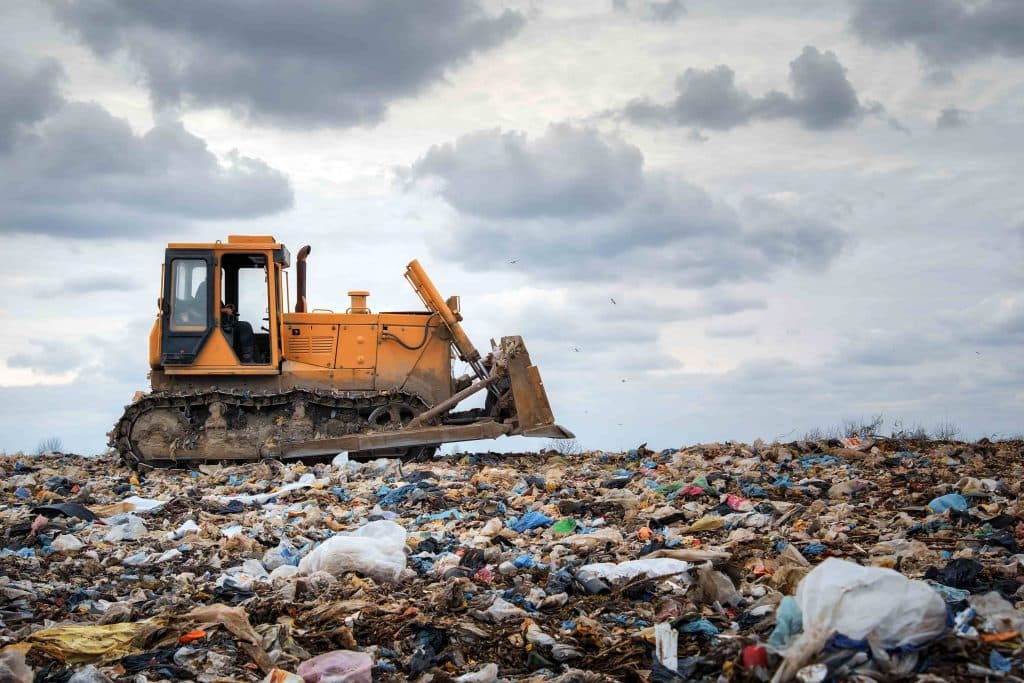
Supreme Court Addresses Solid Waste Management

Published on: 20-Aug-2026

Share this post

Supreme Court Addresses Solid Waste Management

Article Summary

Supreme Court Ruling on Solid Waste Management

  • Judicial Context: The Supreme Court, led by Justice S.V.N. Bhatti, emphasized the need for public education regarding solid waste generation. The court noted that the inadequacy of sanitary workers is not sufficient to manage the solid waste of India's 1.4 billion population.

  • Constitutional Reference: The court declared that the prevailing assumption that solid waste is solely the concern of sanitary workers is “constitutionally unethical,” stressing that the responsibility lies with every citizen.

  • Solid Waste Management (SWM) Rules, 2026:

    • Rule 4 mandates that the duty of waste management—segregation, safe storage, and handover—falls upon waste generators, which includes individuals, households, and institutions.
    • The court highlighted that the infrastructure for waste management requires a complete audit and upgrading in compliance with these rules.
  • Committee Formation: On May 25, the Supreme Court constituted a committee composed of five Union Secretaries and the Member-Secretary of the Central Pollution Control Board to monitor solid waste management across India.

  • Educational Initiatives: The court directed immediate incorporation of solid waste management education into school curricula aimed at empowering students to educate their families about waste management practices. This recognizes students as key agents of change for their families and communities.

  • Call for Civic Cooperation: The court emphasized that good civic behavior cannot be legislated; it must be a personal responsibility. Cooperation from all stakeholders, including households and local bodies, is necessary to prevent environmental disaster.

  • Future Health Risks: The court warned that continued negligence in solid waste management could lead to significant health risks and environmental disasters, underscoring the urgent need for community involvement and education on the issue.

  • Directives to District Collectors: They are to engage with households and educational institutions to promote practices that support effective waste management.

This ruling underscores a shift towards collective responsibility in environmental management, marking a significant judicial stance on public health and civic accountability in India.

Key Terms & Concepts

1.4 billionPopulation contributing to waste
Solid Waste Management (SWM) Rules, 2026Regulatory framework for waste management
August 18, 2026Date of Supreme Court order
committee of five Union SecretariesMonitoring solid waste management
Rule 4 of SWM RulesDuty of waste segregation on generators
Department of School and Higher EducationResponsible for educational integration

Mind Map for UPSC Civil Services Revision

Turn UPSC Civil Services Current Affairs Into Exam-Ready Notes

Reading Environment and Ecology current affairs is half the work. Revise them with ready-made notes and test what actually stuck.

  • Daily UPSC Civil Services current affairs analysis
  • Revision notes, mind maps & MCQs
  • Prelims mock tests with instant results

Related UPSC Civil Services Current Affairs Articles

Supreme Court Addresses Encroachments in Tamil Nadu
Environment and Ecology20-Aug-2026

Supreme Court Addresses Encroachments in Tamil Nadu

Supreme Court Ruling on Encroachments in Agasthyamalai Landscape

Judicial Context:

  • The Supreme Court of India dealt with persistent encroachments in the Agasthyamalai landscape, which includes vital protected areas:
    • Kalakad Mundanthurai Tiger Reserve
  • Srivilliputhur-Megamalai Tiger Reserve
  • Kanyakumari Wildlife Sanctuary
  • Justices Vikram Nath and Sandeep Mehta emphasized the need for a structured and time-bound eviction framework.
  • Previous Legal Directives:

    • The Supreme Court directed the Central Empowered Committee (CEC) to survey encroachments, highlighting violations of:
      • Forest Conservation Act, 1980
      • Wild Life (Protection) Act, 1972

    Survey Findings:

    • CEC report identified 4,595 individuals encroaching on 5,071.27 hectares of reserved forest land (as of 2020).
    • In Kanyakumari Wildlife Sanctuary, 427.40 hectares are reported as encroached, with 237.09 hectares entangled in litigation.
    • In Srivilliputhur-Megamalai Tiger Reserve, encroachments have compromised the region's ecological integrity.

    Encroachments Statistics:

    • Kalakad-Mundanthurai Tiger Reserve: 10.16 hectares encroached by 998 families.
    • Encroachments primarily for permanent crop cultivation (silk cotton, cardamom, beans).

    Government Employees as Encroachers:

    • 118 identified encroachers are serving or retired government employees, including veterans from Army, Police, and Forestry departments.

    Government Response:

    • Tamil Nadu government filed an affidavit acknowledging challenges faced:
      • Resistance from encroachers
      • Ongoing litigation
      • Many encroachers belong to economically weaker sections.

    Supreme Court Directives:

    • Initiation of disciplinary/legal action against 118 identified government employees.
    • Imposition of a moratorium on welfare schemes, utilities, and infrastructure in encroached forest areas to prevent legitimization of illegal occupations.
    • Complete prohibition on new non-forestry activities within the Agasthyamalai region.

    Challenges Ahead:

    • The government led by C. Joseph Vijay faces opposition from major Dravidian parties regarding evictions impacting thousands of families.
    • It must also focus on adequate resettlement and rehabilitation of displaced families while restoring the original forest ecosystems.

    Conclusion: The Supreme Court's intervention mandates strict adherence to environmental protections and the restoration of encroached lands, requiring a politically and socially nuanced approach from the Tamil Nadu government.

    BRICS Opposes Unilateral Climate Measures
    International Relations19-Aug-2026

    BRICS Opposes Unilateral Climate Measures

    • BRICS Environment Ministers' Meeting: Held in New Delhi, chaired by India; focused on climate measures and adaptation finance to support developing countries.

    • Unilateral Climate Measures: BRICS countries opposed such measures, particularly the European Union's Carbon Border Adjustment Mechanisms (CBAMs), described as “punitive, discriminatory, and protectionist.”

    • Carbon Border Adjustment Mechanisms (CBAM): Implemented by the EU from January 1, 2026. Requires importers of carbon-intensive products (e.g., iron, steel, aluminum, cement, fertilizers, hydrogen, and electricity) to account for production-related carbon emissions. Intended to prevent "carbon leakage," wherein businesses relocate production to avoid stringent climate policies.

    • Impact on India: Indian steel exports significantly affected as they comprise about 90% of exports to the EU under CBAM. A study in Nature Climate Change (June 2026) indicated that high-emission Indian steel firms faced reduced export quantities and revenues during CBAM's reporting phase, while lower-emission firms maintained export levels.

    • Adaptation Finance: BRICS Ministers emphasized the need for developed countries to increase adaptation finance, proposed to be “new, additional, predictable, adequate, and accessible." Specifically urged for compliance with the commitment made at the 2025 UN climate conference to triple adaptation funds for developing countries by 2035.

    • Definition of Adaptation Finance: Aimed at helping communities cope with unavoidable climate impacts (e.g., strengthening water security, agriculture, infrastructure, disaster preparedness), contrasting with mitigation finance focused on reducing greenhouse gas emissions.

    • Upcoming COP31: The UN Climate Conference (COP31) is scheduled for November in Turkey. Adaptation finance key topic, previously unresolved in Bonn talks prior to COP discussions.

    • Challenges for Developing Countries: The BRICS statement highlighted that access to adaptation finance should be simplified, with calls for tracking the delivery and impact of financial support.

    • Climate Vulnerability in India: India's climate-finance requirements are increasingly about adapting to climate change impacts like heatwaves, erratic rainfall, floods, and droughts, reflecting historical underfunding in adaptation compared to mitigation efforts.

    These points capture the essence of the BRICS meeting, its emphasis on fair climate measures, and the urgent need for increased adaptation finance to help developing nations address climate vulnerabilities.

    Green India Mission Audit Findings
    Environment and Ecology18-Aug-2026

    Green India Mission Audit Findings

    Performance Audit of the Green India Mission (GIM)

    Overview and Findings:

    • A performance audit conducted by the Comptroller and Auditor General (CAG) revealed inadequate outcomes from the Green India Mission (GIM) over a decade.
      • Target: To improve forest quality over 1.4 million hectares.
      • Actual achieved: Only 0.11 million hectares (approximately 7.86% of the target).
      • Contribution to expanding forest cover was merely 4%.

    Government Schemes Involved:

    • Compensatory Afforestation Fund Management and Planning Authority (CAMPA): Manages funds collected for afforestation in response to forest land diversion.
    • Mahatma Gandhi National Rural Employment Guarantee Scheme (MGNREGS), now known as VB-GRAM: Aims to provide rural wage labour for plantation and land-restoration works; however, integration with GIM was ineffective.

    Contextual Significance:

    • GIM was one of the eight pillars of the National Action Plan on Climate Change, launched in 2008.
    • Intended to support India's commitment under the Paris Agreement to create an additional carbon sink of 2.5 to 3 billion tonnes by 2030.

    Current Developments:

    • The focus has shifted to the initiative ‘Ek Ped Maa Ke Naam,’ launched in 2024, with claims of planting 140 crore saplings, although this effort highlights the difference between mere tree planting and effective forest restoration.
    • The India State of Forest Report 2023 indicates:
      • Gain of 1,445 square kilometers in green cover.
      • Only 156 square kilometers categorized as true forest; 1,289 square kilometers classified as ‘tree cover outside recorded forests.’

    Restoration Challenges:

    • Notable sites like the Aravallis face significant degradation, with invasive species overtaking native flora.
    • The proposed 'Green Wall' of newly planted trees cannot reclaim historical ecosystems or counteract the extensive damage from mining activities.

    Implications:

    • The CAG audit serves as a critical reflection on the effectiveness of the GIM and raises questions on actual forest recovery efforts versus superficial tree plantation initiatives.
    • Restoration cannot be equated with the counting of trees; it requires a deep ecological approach to restore living forest systems.

    Conclusion:

    • The findings emphasize a disconnect between aims and outcomes, highlighting that while tree planting efforts may have numerical success, they do not effectively translate into restoring India's forests or their complex ecosystems.
    Supreme Court Upholds Elephant Corridors
    Environment and Ecology18-Aug-2026

    Supreme Court Upholds Elephant Corridors

    • Judicial Directive: The Supreme Court of India has ordered the Centre to conduct a nationwide survey to ensure the free passage of wild elephants through their traditional corridors, emphasizing that no state can obstruct these paths.

    • Constitutional and Legal Context:

      • The court invoked provisions related to wildlife protection under the Wildlife (Protection) Act, 1972, which categorizes elephants as Schedule I animals and offers them the highest protection due to their vulnerability.
      • The Supreme Court's 2018 ruling prohibited the use of fireballs, burning rods, and spikes as methods to drive elephants away, labeling such practices as "barbaric" and "illegal."
    • Court Observations:

      • Chief Justice Surya Kant asserted that blocking elephant corridors exacerbates human-animal conflicts, urging alternative solutions instead of physical barriers.
      • Justice Joymalya Bagchi highlighted the non-state-specific nature of elephant migration, indicating elephants traverse multiple states for food and breeding.
  • Survey Details:

    • The Centre, represented by Additional Solicitor General Aishwarya Bhati, is mandated to conduct a survey within three months to assess the obstacles in elephant corridors and to propose measures for their removal.
  • Implementation Concerns:

    • The court emphasized the need for effective enforcement of the ban on harmful practices used to deter elephants from human habitats, particularly in areas like West Bengal, where such illegal actions persist.
    • The Supreme Court intends to monitor progress by scheduling a follow-up hearing in eight weeks.
  • Environmental and Biodiversity Implications:

    • The mandate aims to address critical environmental and biodiversity issues pertaining to the conservation of elephants, a keystone species in their ecosystems.
    • The ruling also reflects the challenges posed by human activities on wildlife migration patterns, necessitating a balance between agricultural interests and wildlife conservation.
  • Target Outcomes:

    • Adherence to wildlife protection laws, prevention of illegal deterrents, and the establishment of safe corridors for elephant movement.
    • Heightened awareness and action towards mitigating human-wildlife conflict through sustainable practices.
  • This case underscores the legal and ethical responsibilities relating to wildlife conservation enshrined in Indian law, demonstrating the judiciary's role in enforcing wildlife protections against human pressures.