 iAspirants

Environment and Ecology01-Nov-2026
Cyclone Murasu Approaching Andhra Pradesh
Cyclone Murasu Threatening Andhra Pradesh: Key Facts & Updates Cyclone Formation: The India Meteorological Department IMD announced a…
AI-Powered Learning for UPSC Civil Services & IAS Aspirants
Revolutionize your UPSC Civil Services journey with AI-powered tools, personalized learning, and data-backed strategies for smarter, faster, and more effective exam preparation.

Today, NXG Digital Solutions proudly releases this revolutionary AI platform to the UPSC Civil Services community—a powerful, exam-native intelligence engineered built to empower every aspirant with precision, strategy, and confidence.
1,000+
Aspirants Interviewed to build the product
300+
Essential Study Material Processed
120+
Strategies UPSC Civil Services Embedded
13,800+
News Items Analyzed
300+
Daily Prelims GS Questions
9,300
UPSC Civil Services -Relevant News Identified
07
Early Adoption Selections in 2024
14,760+
UPSC Civil Services -Pattern MCQs Generated
200+
Daily Current Affairs Centric MCQs
Stay ahead with UPSC Civil Services -focused Current Affairs, Editorials, and Daily News
Handpicked current affairs and editorials tailored to UPSC Civil Services question patterns.
Daily updates linked to Prelims MCQs and Mains-style questions for in-depth practice.
Simplified explanations and mind maps for better understanding and retention.
Focus only on what matters, saving time and boosting productivity.
Stay updated with daily UPSC Civil Services current affairs and editorials from trusted news outlets, government sources, and official publications, enhanced by AI-powered mind maps, smart notes, instant explanations, and MCQs. Get paper-wise content, in-depth UPSC Civil Services preparation resources, and tools designed to improve comprehension, time management, and answer-writing skills.
Governor's assent to state Bills: what Article 200 allows
Themes: Centre–state relations · Triggers: delays in assent to state Bills
Key Terms
Daily news analysis written for the UPSC Civil Services syllabus — each article summarised, with key terms and a mind map so it can be revised in minutes.
Cyclone Murasu Threatening Andhra Pradesh: Key Facts & Updates Cyclone Formation: The India Meteorological Department IMD announced a…

Historical Context: Kerala became an officially unified state on November 1, 1956, through the merger of Malayalam-speaking regions from…
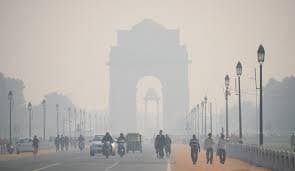
Delhi Government's Winter Air Pollution Control Measures Implementation Date: Measures to commence from November 1, 2026. Duration:…
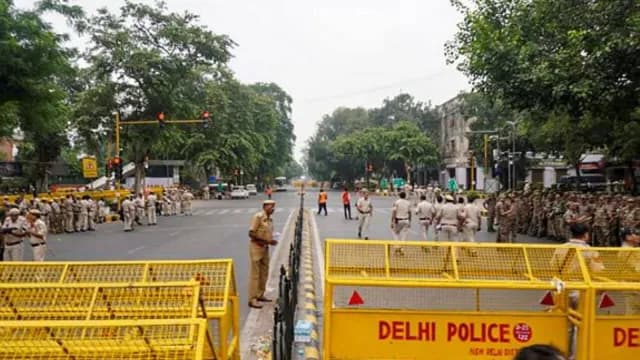
Exam-Focused Notes on Peaceful Protests and Constitutional Rights in India 1. Constitutional Rights Related to Protests: Article 191b:…
Turn what you read into what you remember. iAspirants flashcards cover the static syllabus and daily current affairs for UPSC Civil Services, so a few minutes a day keeps Polity, Economy, Environment and the news fresh for Prelims and Mains.
See the question and a hint, answer in your head, then check.
Decks built from book references and the day's news, each tagged by subject and theme.
Every card reads aloud with word-by-word highlighting.
Each answer explains the concept and why UPSC asks it. Star the tricky ones.
Which constitutional body recommends how tax revenue is shared between the Centre and the states?
Hint: Article 280, constituted every five years.
Fundamental Rights
PolityAcademy 28 Oct
Monsoon mechanism
GeographyCurrent Affairs 26 Oct
Fiscal deficit vs revenue deficit
EconomyEdChat 24 Oct
Note Details
EditFundamental Rights
Polity · Part III, Articles 12–35 · Date: 28 Oct
Justiciable rights against the State. Article 32 lets you move the Supreme Court directly to enforce them; Dr Ambedkar called it the heart and soul of the Constitution.
Enhance your UPSC Civil Services preparation with Smart Audio Notes, allowing you to create subject-wise recordings, generate mind maps, mark key points as favorites, and quickly search notes. Stay organized, revise anytime, and make learning more flexible, engaging, and effective.
Our advanced note-taking tools help you streamline, organize, and optimize your studies for maximum efficiency.
Fundamental Rights
Polity · Smart Note
Create, organize, and listen to subject-wise audio notes anytime for flexible and efficient revision.
Bring Your Own Notes
Take a photo Add BYO NotesUpload, organize, and access all your study materials in one place for smarter UPSC Civil Services preparation.
Visualize complex topics with diagrams to enhance understanding, memorization, and clarity for UPSC Civil Services .
More than a typical online course, iAspirants combines daily current affairs and editorials with AI-driven mind maps, smart notes, instant term explanations, and question generation for both UPSC Civil Services CSE Prelims and Mains — for efficient, in-depth, and strategic UPSC Civil Services preparation with better comprehension, retention, and answer-writing skills, with handwritten Mains answer evaluation.
UPSC Prelims · GS Paper I · Polity
With reference to the Fundamental Duties in the Constitution of India, consider the following statements:
Which of the statements given above is/are correct?
UPSC Civil Services Intended to Test
Whether you know Part IV-A and how Fundamental Duties differ from Fundamental Rights.
Correct Answer Explanation
Fundamental Duties were added by the 42nd Amendment (1976) on the Swaran Singh Committee's recommendation. They are not enforceable by courts, so only statement 1 is correct.
Static Vs Dynamic
Static: Polity, Part IV-A (Article 51A).
Write your answer on paper, take a photo and upload it. The evaluator reads your handwriting and marks it the way a UPSC examiner would, for GS Papers I to IV and Optional papers, in English or Hindi.
Evaluation Results
Comprehensive analysis of your answer
6/10
Score Obtained (60%)
Q3.
Introduction: The basic structure doctrine limits the power of Parliament to amend the Constitution under Art. 368.
It was laid down in the Kesavananda Bharati case (1975).
Body: It protects features like judicial review, secularism, federalism and separation of powers.
In Minerva Mills (1980), the Court held that limited amending power is itself a basic feature.
It stops a majority from destroying the core of the Constitution.
Conclusion: Thus the doctrine is very important.
1. Factual Inaccuracy
Kesavananda Bharati was decided in 1973.
2. Missing Dimension
Add the criticism: the doctrine is judge-made.
3. Lacks Substantiation
Back this with Indira Gandhi v. Raj Narain (1975).
4. Structure & Flow
Conclusion needs a way forward.
Every UPSC Civil Services Prelims previous year question from 2016 to 2026, with the correct answer, a detailed explanation, the source it came from and what the examiner was testing. Free to read, no sign-up needed.
Which one of the following objectives is not embodied in the Preamble to the Constitution of India?
The Preamble secures liberty of thought, expression, belief, faith and worship. Economic liberty is not among them; economic justice appears under Justice instead.
Source: Preamble, Constitution of India
How aspirants across India use iAspirants for Prelims practice, current affairs, notes and Mains answer writing, in their own words.
Failed prelims twice until this tool identified my weak areas and helped me restructure my preparation.
Mind maps made GS-1 and Polity incredibly clear. I improved retention without feeling overwhelmed.
My accuracy improved from 46% to 72% after using the platform’s MCQ analytics.
Current affairs summaries with PYQ linkages helped me focus only on exam-relevant topics.
I used to take 2 hours to analyze news, now it takes just 20 minutes with auto-summaries.
Triggers made me understand why UPSC Civil Services asks certain questions repeatedly. It changed my entire strategy.
I created notes from PDFs, books, and news with a single click. My preparation finally feels systematic.
The tool helped me raise my CSAT speed by nearly 40%. Time-tracking is incredibly useful.
After returning from Delhi coaching due to cost, this platform became my complete preparation source.
MCQs look exactly like recent UPSC Civil Services prelims—same traps, framing, and difficulty level.
I covered GS-2, GS-3, and GS-4 faster through automated structured notes.
Answer-writing evaluation helped me improve structure and clarity within two weeks.
Daily CA to MCQ conversion boosted my prelims confidence significantly.
The tool highlighted themes repeating in UPSC Civil Services , helping me plan GS revision smartly.
I improved mains answer quality by applying topper-style structure suggested by the tool.
Upload-anything-to-notes feature saved me hours daily.
I finally understood Geography through mind maps—it was a breakthrough moment.
This is the only platform that truly connects news with UPSC Civil Services -style questions.
I improved my prelims mock score by 18 marks after using the trigger-based analysis.
The platform organizes scattered notes into clear GS sections effortlessly.
Daily MCQs helped me revise faster and stay consistent.
My weakness in Environment flipped to a strength after 3 weeks of using the MCQ generator.
Affordable, powerful, and smarter than traditional coaching material.
I improved answer introductions with the tool’s structured templates.
Stuck on a concept at midnight? Ask EdChat. It answers in the way UPSC asks: as practice MCQs for Prelims, or as a structured answer for Mains, so every doubt you clear is also revision.
Explain the basic structure doctrine
Introduction: The basic structure doctrine holds that Parliament can amend the Constitution under Article 368 but cannot destroy its essential features.
Body: Laid down in Kesavananda Bharati (1973) and applied in Minerva Mills (1980), it protects judicial review, federalism and secularism…
Conclusion: It balances parliamentary sovereignty with constitutional supremacy.
Followup Questions:
Turns your doubt into practice MCQs: choose 2 to 5 questions and a level from Easy and Medium to Complex and Distractor, the trap-option kind UPSC loves.
Answers in Mains format, with an introduction, body and conclusion, at the length you pick: 150, 250, 350 or 450 words.
iAspirants brings your whole Civil Services preparation into one plan, for Prelims and Mains alike. Follow the news that matters for the exam, practise on previous year questions, get your handwritten answers evaluated and clear doubts the moment they come up, at your own pace, from anywhere.
Your Progress
42
Current Affairs
310
MCQ Practice
180
PYQ Practice
12
Mains Evaluation
Subject Accuracy (MCQ)
AI Performance Insight
Consistency Score
MediumPYQ Readiness
Needs Improvement
Strength Area
Polity
Weak Area
Economy
AI Suggests: Revise Economy this week: your MCQ accuracy there is 24 points below Polity.