iAspirants
HomeAbout UsCurrent AffairsPrelims PYQsPricing
Login
iAspirants
HomeAboutBlogsFAQsPricingLogin
Privacy PolicyTerms & ConditionsReturn PolicyContact Us

© 2025 iAspirants, Inc. All rights reserved.

  1. Blogs
  2. International Relations

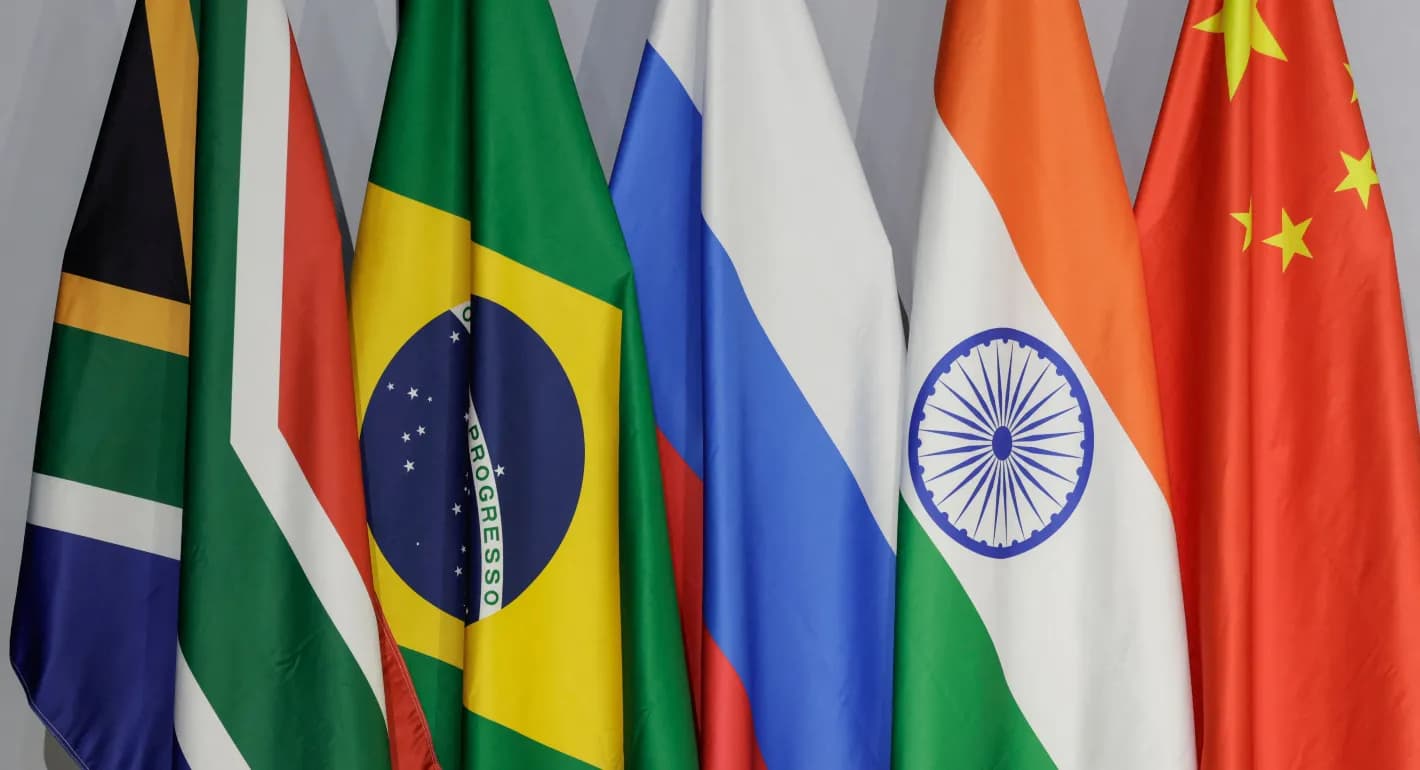
BRICS Opposes Unilateral Climate Measures

Published on: 19-Aug-2026

Share this post

BRICS Opposes Unilateral Climate Measures

Article Summary

  • BRICS Environment Ministers' Meeting: Held in New Delhi, chaired by India; focused on climate measures and adaptation finance to support developing countries.

  • Unilateral Climate Measures: BRICS countries opposed such measures, particularly the European Union's Carbon Border Adjustment Mechanisms (CBAMs), described as “punitive, discriminatory, and protectionist.”

  • Carbon Border Adjustment Mechanisms (CBAM): Implemented by the EU from January 1, 2026. Requires importers of carbon-intensive products (e.g., iron, steel, aluminum, cement, fertilizers, hydrogen, and electricity) to account for production-related carbon emissions. Intended to prevent "carbon leakage," wherein businesses relocate production to avoid stringent climate policies.

  • Impact on India: Indian steel exports significantly affected as they comprise about 90% of exports to the EU under CBAM. A study in Nature Climate Change (June 2026) indicated that high-emission Indian steel firms faced reduced export quantities and revenues during CBAM's reporting phase, while lower-emission firms maintained export levels.

  • Adaptation Finance: BRICS Ministers emphasized the need for developed countries to increase adaptation finance, proposed to be “new, additional, predictable, adequate, and accessible." Specifically urged for compliance with the commitment made at the 2025 UN climate conference to triple adaptation funds for developing countries by 2035.

  • Definition of Adaptation Finance: Aimed at helping communities cope with unavoidable climate impacts (e.g., strengthening water security, agriculture, infrastructure, disaster preparedness), contrasting with mitigation finance focused on reducing greenhouse gas emissions.

  • Upcoming COP31: The UN Climate Conference (COP31) is scheduled for November in Turkey. Adaptation finance key topic, previously unresolved in Bonn talks prior to COP discussions.

  • Challenges for Developing Countries: The BRICS statement highlighted that access to adaptation finance should be simplified, with calls for tracking the delivery and impact of financial support.

  • Climate Vulnerability in India: India's climate-finance requirements are increasingly about adapting to climate change impacts like heatwaves, erratic rainfall, floods, and droughts, reflecting historical underfunding in adaptation compared to mitigation efforts.

These points capture the essence of the BRICS meeting, its emphasis on fair climate measures, and the urgent need for increased adaptation finance to help developing nations address climate vulnerabilities.

Key Terms & Concepts

BRICSGroup opposing climate measures
EU's Carbon Border Adjustment Mechanisms (CBAM)Climate measure causing concern
New DelhiLocation of the meeting
January 1, 2026Start date of CBAM implementation
90%Percentage of India's steel exports to EU
UN climate conference 2025Event for adaptation finance commitment
2035Deadline for tripling adaptation finance
COP31Upcoming climate conference
Nature Climate ChangeSource of analysis on steel exports
Adaptation financeFunding for climate resilience
Mitigation financeFunding for reducing emissions

Mind Map for UPSC Civil Services Revision

Turn UPSC Civil Services Current Affairs Into Exam-Ready Notes

Reading International Relations current affairs is half the work. Revise them with ready-made notes and test what actually stuck.

  • Daily UPSC Civil Services current affairs analysis
  • Revision notes, mind maps & MCQs
  • Prelims mock tests with instant results

Related UPSC Civil Services Current Affairs Articles

Strengthening India-Japan Defense Cooperation
International Relations19-Aug-2026

Strengthening India-Japan Defense Cooperation

Summary of India-Japan Bilateral Defense Cooperation

Date of Meeting: August 20, 2026
Participants:

  • Indian Defense Minister: Rajnath Singh
  • Japanese Defense Minister: Shinjiro Koizumi

Key Objectives of the Meeting:

  • Strengthening bilateral defense relations.
  • Enhancing strategic trust and cooperation.
  • Promoting stability and security in the Indo-Pacific region.
  • Identifying new areas of collaboration.

Context:

  • The meeting follows Japan's revision of its three principles on defense equipment and technology transfer.
  • Focus on promoting deep maritime security cooperation and defense equipment and technology collaboration under the 'Make in India' initiative.

Activities Undertaken:

  • Shinjiro Koizumi's visit to the Western Naval Command in Mumbai on August 19, 2026.
  • Discussions with:
    • Admiral Krishna Swaminathan (Chief of the Indian Navy)
    • Vice Admiral Sanjay Vatsayan (Flag Officer Commanding, Western Naval Command)
  • Overview of the Indian Navy's roles, responsibilities, and operational capabilities.
  • Koizumi inspected a Guard of Honor and paid tribute at the Glory Pillar in the naval dockyard.
  • Visited the indigenous ship INS Chennai.

Significance:

  • The visit underscores the growing momentum in bilateral defense cooperation and reflects both countries' commitment to advancing their partnership.
  • It aligns with the shared vision of a free, open, resilient, and prosperous Indo-Pacific region.
  • Occurs shortly after Japanese Prime Minister Sanae Takaiichi's visit for the annual summit with Indian Prime Minister Narendra Modi, where both leaders agreed to enhance defense and security cooperation.

Constitutional and Policy References:

  • No specific constitutional articles or policies were explicitly mentioned in the article. However, the collaboration aligns with India's defense policy objectives and international engagement strategies.

Economic and Strategic Implications:

  • Enhanced defense ties with Japan, a key partner in the Indo-Pacific, signify India's strategic pivot towards multilateral defense frameworks.
  • Potential economic benefits through technology transfers and joint defense manufacturing initiatives.

International Context:

  • The meeting reflects the broader geopolitical dynamics in the Indo-Pacific region, emphasizing collective security and cooperation among like-minded nations.

Conclusion:

The bilateral meeting on August 20, 2026, between India and Japan highlights a significant step in defense collaboration, focusing on maritime security, technology transfer, and a mutual commitment to regional stability and cooperation.

India and U.S. Collaboration in Space
International Relations16-Aug-2026

India and U.S. Collaboration in Space

Summary of Key Facts and Initiatives in Moon Exploration and International Space Cooperation

  1. India-U.S. Space Cooperation:

    • The recent ninth India-U.S. Civil Space Joint Working Group meeting took place at ISRO headquarters, focusing on joint participation in NASA’s 'Moon Base' program under the Artemis Accords partnership.
    • India signed the Artemis Accords in 2023, which outline principles for international cooperation in lunar exploration.
  2. NASA's Artemis Program:

    • The 'Moon Base' program aims to establish a human outpost on the Moon by around 2030, near the lunar south pole where sunlight is abundant, and significant water-ice deposits exist.
    • Artemis III is set to be a crewed test flight in Earth orbit in 2027, while Artemis IV aims for the first lunar landing in 2028.
    • NASA has contracted several private companies for lunar missions, including Astrolab ($219 million) and Lunar Outpost ($220 million) for vehicle technology, and Astrobotic, Firefly Aerospace, and Intuitive Machines for lunar equipment delivery ($600 million total).
  3. International Rivalry in Space:

    • The U.S. seeks to counter China’s growing space capabilities, particularly after China and Russia announced their plan for the International Lunar Research Station (ILRS), aimed for completion by 2035 and involving 17 countries.
    • NASA's FY2027 budget explicitly states intentions to establish U.S. superiority on the Moon, motivated by strategic competition with China.
  4. Technological and Strategic Challenges:

    • The increasing polarization of the U.S.-China relationship could complicate India’s future engagements with both nations regarding lunar exploration.
    • India may face challenges integrating technologies developed under different frameworks (U.S. vs. Chinese systems) that require substantial investment in capabilities for compatibility.
  5. ISRO's Ongoing Missions:

    • ISRO launched the NASA-ISRO Synthetic Aperture Radar, representing significant collaborative progress, and NASA instruments will appear on upcoming Chandrayaan missions.
  6. Strategic Autonomy in Space:

    • India is encouraged to maintain strategic autonomy in the space sector while deepening ties with NASA, avoiding over-dependence on any single technological ecosystem that could limit collaborative opportunities with other nations, particularly China.
    • There is a call for the development of open international standards in space technology to maintain sovereign control and foster interoperability among different nations' space assets.
  7. Conclusion:

    • The ongoing rivalry between the U.S. and China in space exploration affects international collaborations and India’s position therein. To maximize benefits and opportunities, active participation and development of standards is essential for India’s role in future lunar endeavors.
India and Bangladesh Bilateral Talks
International Relations14-Aug-2026

India and Bangladesh Bilateral Talks

Summary of India-Bangladesh Bilateral Relations and Upcoming Diplomatic Developments

Key Diplomatic Engagements:

  • Ongoing discussions for an early bilateral visit by Bangladesh's Prime Minister Tarique Rahman to New Delhi, targeted for late August or early September 2026.
  • This visit aims to facilitate the normalization of India-Bangladesh relations, including the renewal of the Ganga waters treaty and energy agreements, and lifting trade restrictions imposed in May 2025.

Recent Developments:

  • High Commissioner Dinesh Trivedi from India met with Prime Minister Rahman on August 10, 2026, to resume dialogue following tensions from a press conference held by former Prime Minister Sheikh Hasina and her son Sajeeb Wazed Joy on August 5, which the Bangladeshi Ministry of Foreign Affairs described as an affront to national sovereignty.
  • India distanced itself from Hasina’s comments, reiterating support for the current Bangladeshi government.

Background:

  • Bangladesh's relationship with India has cooled since the fall of Sheikh Hasina's government on August 5, 2024.
  • A 15-month interim government led by Mohammed Yunus did not engage in significant discussions on strategic matters such as water-sharing.
  • The ongoing discussions reflect the strategic importance of Bangladesh as one of India's largest trading partners.

Political Context:

  • Rahman won a landslide victory on February 12, 2026, and took office shortly after. His government faces domestic challenges, including an energy crisis and health crises affecting infants.
  • Bangladesh is scheduled to elect a new President on August 20, with Mirza Fakhrul Islam Alamgir of the ruling Bangladesh Nationalist Party expected to succeed.

Economic and Strategic Points:

  • Normalization talks involve critical areas: addressing water-sharing agreements, the facilitation of energy trade, adjusting visa policies, and removing restrictions on textile and food processing exports from Bangladesh.
  • Possible diplomatic fallout if comments from Hasina's party continue to influence public perception and negotiations with India.

Additional Information:

  • Discussions have been facilitated by trade ties, as Bangladesh has significant agricultural and textile exports to India.
  • Any successful normalization could enhance regional stability and cooperation, particularly in areas affected by shared resources such as rivers.

Next Steps:

  • Coordination for the proposed bilateral visit, while managing internal political dynamics in Bangladesh.
  • Continued diplomatic engagement to mitigate the impacts of Hasina’s comments on bilateral relations and work towards addressing critical trade and resource-sharing issues.

This summary outlines the current state of India-Bangladesh relations, highlighting the significance of ongoing diplomatic efforts and the implications for regional cooperation and economic ties.

Nepal Cancels Tibetan Studies Conference
International Relations14-Aug-2026

Nepal Cancels Tibetan Studies Conference

Summary of Key Points on the Cancellation of Tibetan Studies Conference in Nepal

Event Overview

  • Conference Details: Scheduled for August 23-29, 2026, in Kathmandu, expected around 700 participants including scholars from China.
  • Cancellation: Called off at the request of the Nepalese government; no official statement provided.

Diplomatic Context

  • Pressure from China: Concerns raised regarding whether the Nepalese government acted under pressure from Beijing.
  • Chinese Concerns: Discussions between Chinese Ambassador to Nepal, Zhang Maoming, and Nepal's Foreign Secretary indicated Chinese apprehensions about the event, particularly due to sensitivities surrounding Tibet.
  • Nepal's Stance: Historically, Nepal seeks to prevent its territory from being used for anti-China activities.

Geopolitical Implications

  • Tibet and Nepal Relations: Nepal hosts around 12,000 Tibetan refugees, with significant sensitivities regarding protests or activities against China.
  • Security Concerns: Potential security threats from the conference, especially following a self-immolation incident involving a Tibetan in New York, were cited as reasons for cancellation.
  • Balancing Relations: Nepal's government faces the challenge of balancing relations with China and India, given its strategic position between the two nations.
  • Academic Freedom and Sovereignty

    • Impact on Academic Discourse: The cancellation raises concerns about Nepal's capacity for independent decision-making and the potential precedent set for foreign sensitivities constraining academic freedom.
    • Future Conferences: The International Association for Tibetan Studies expressed that the last-minute cancellation could deter future academic events in Nepal, potentially leading to economic and reputational damage.

    Key Quotes

    • Rupak Sapkota: Noted that while Chinese concerns were serious, it is important to distinguish between direct requests from China and Nepal's independent decision-making.
    • Sanjay Upadhya: Emphasized the broader implications for Nepal's strategic autonomy and academic freedom, questioning whether Chinese sensitivities would dictate Nepal's academic activities.

    Conclusion

    • The cancellation of the Tibetan studies conference reflects Nepal's complex geopolitical situation and the influence of Chinese sensitivities on its domestic and academic policies. The event's move to an online format indicates ongoing challenges for Nepal in maintaining its sovereignty and academic independence amidst external pressures.