iAspirants
Current AffairsPrelims PYQsUPSC SyllabusBlogsPricing
Login
iAspirants

Your AI-powered companion for UPSC preparation.

Quick Links

  • Home
  • About Us
  • Current Affairs
  • Prelims PYQs
  • UPSC Syllabus
  • Blogs

Company

  • Pricing
  • FAQs
  • Contact Us
  • Login

Legal

  • Privacy Policy
  • Terms & Conditions
  • Return Policy

© 2025 iAspirants, Inc. All rights reserved.

  1. Blogs
  2. Economic and Social Development

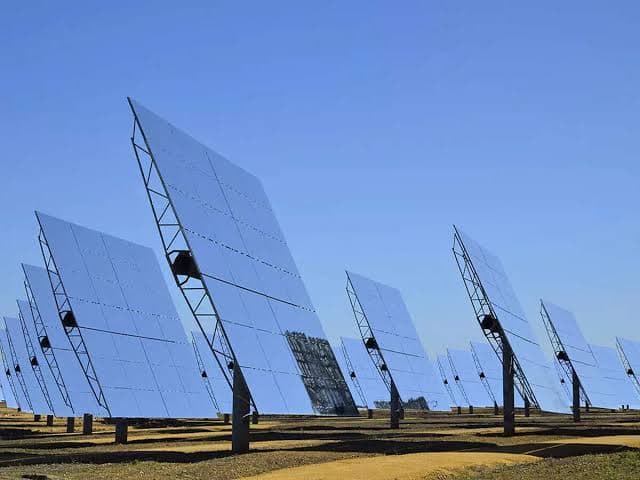
Nagaland Signs Solar Power Agreement

Published on: 22-Aug-2026

Share this post

Nagaland Signs Solar Power Agreement

Article Summary

Summary of Nagaland Solar Power Agreement

Key Facts:

  • Project: 20-megawatt solar power plant at Tizit, Mon district, Nagaland.
  • Agreement Date: Signed on August 21, 2026.
  • Developer: Pune-based Tvaksas Renewable Private Limited.
  • Location: Lapa Lampong village.
  • Tariff Rate: ₹4.12 per kWh, approved by the Nagaland Electricity Regulatory Commission.
  • Commissioning Timeline: Expected within 20 months.
  • Long-term Plans: Potential expansion to 100 MW in phases.

Government Initiatives:

  • Renewable Energy Goals: The project aims to augment Nagaland’s renewable energy generation capacity and assist the State in meeting its renewable consumption obligations.
  • Current Power Demand: Nagaland's peak power demand is currently 203 MW, projected to increase to 482 MW by 2034-35.
  • Policy Focus: Encouragement of private sector participation to enhance local generation capacity and reduce reliance on power imports.

Economic Implications:

  • Investment and Development: The project is expected to bring long-term investments, skill development opportunities, and climate finance to Nagaland.
  • Cost Savings: Reducing the State’s power import bill through local generation.

Constitutional and Regulatory Framework:

  • Electricity Regulatory Framework: The tariff for the power purchase is approved under the guidelines set by the Nagaland Electricity Regulatory Commission, which regulates electricity pricing and ensures fair practices in power supply.

Conclusion

This initiative marks Nagaland's first private-sector solar plant, aligning with broader government objectives to enhance renewable energy capacity and meet future electricity demands sustainably. The focus on private investment indicates a strategic shift towards local energy solutions, contributing to economic and environmental goals.

Key Terms & Concepts

Nagaland governmentSigned power purchase agreement
20-megawatt solar power plantRenewable energy project
Pune-based firmDeveloping solar power plant
Tizit, Mon districtLocation of solar project
₹4.12 per kWhFixed tariff for energy
25-year agreementDuration of power purchase
203MW peak demandCurrent electricity demand
482MW by 2034-35Projected electricity demand
Nagaland Electricity Regulatory CommissionApproved tariff for energy
skill development and climate financeExpected project benefits

Mind Map for UPSC Civil Services Revision

Turn UPSC Civil Services Current Affairs Into Exam-Ready Notes

Reading Economic and Social Development current affairs is half the work. Revise them with ready-made notes and test what actually stuck.

  • Daily UPSC Civil Services current affairs analysis
  • Revision notes, mind maps & MCQs
  • Prelims mock tests with instant results

Related UPSC Civil Services Current Affairs Articles

SEPA Launches Student Cell for Energy
Economic and Social Development22-Aug-2026

SEPA Launches Student Cell for Energy

Summary of Key Facts and Developments

New Initiatives and Funding

  • Sustainability and Energy Practitioners Association (SEPA):
    • Launched a student cell aiming to enroll 10,000 students within a year.
    • Targets in funding over the next five years for various initiatives.
₹1,000 crore
  • Plans to undertake research projects worth ₹83 crore through consortiums formed with industries and academic institutions.
  • Energy Production in India

    • Director-General of National Institute of Solar Energy, Mohammad Rihan, emphasized that:
      • Reliable power supply is crucial for development.
      • India's energy production has increased; however, as development progresses, the demand for power continues to rise.
      • There is an urgent need to transition to green energy sources to meet growing power requirements sustainably.

    Solar Energy Capacity

    • India currently boasts over 300 GW of non-fossil fuel power generation capacity, with a significant contribution from solar energy.
    • To meet its net zero emissions target, the country needs to scale up to over 5,000 GW of solar energy capacity.

    Importance of Electricity Access

    • Electric access is fundamental for modern data availability, underscoring the importance of ensuring sustainable electricity production to facilitate technological advancements.

    Strategic Focus Areas

    • Emphasizing a transition towards renewable energy is highlighted as a critical pathway for India to meet its future energy demands while aligning with environmental sustainability goals.
    • Continued investment in education and research, especially for students, is envisioned to bolster innovation within the energy sector.

    Conclusion

    The initiatives led by SEPA and the strong focus on solar energy illustrate India's commitment to enhancing its renewable energy capacity and addressing environmental challenges through structured educational and funding frameworks.

    India's Fiscal Outlook for 2026-27
    Economic and Social Development21-Aug-2026

    India's Fiscal Outlook for 2026-27

    Fiscal Outlook for 2026-27: Key Highlights

    1. Tax Revenue Performance:

      • Gross Tax Revenues (GTR) for the Centre grew by 3.7% in Q1 of 2026-27.
      • Modifications in tax structures in 2025-26, especially for Personal Income Tax (PIT) and Goods and Services Tax (GST), led to subdued revenue performance.
      • PIT revenue growth for 2025-26 was only 0.037%, indicating a buoyancy of zero.
      • GST revenues contracted by (-11%) in Q1 2026-27 after a growth of 4.67% in the second half of 2025-26.
    2. Tax Modifications:

      • Significant rate rationalization occurred in 2025-26 for both PIT and GST.
      • GST underwent a substantive rate reduction, anticipating initial revenue sacrifice to enhance the tax base gradually.
    3. Economic Indicators:

      • Despite pressure from tax revenues and subsidies, strong non-tax receipts and policy interventions are expected to help maintain fiscal outcomes.
      • Current pressures highlight challenges in revenue generation as economic uncertainties persist.
    4. Geopolitical Context:

      • Ongoing geopolitical tensions, particularly involving West Asia (Israel-US strikes on Iran), may influence external factors affecting India's fiscal health.
    5. Government Schemes/Policies:

      • Continuing focus on tax reforms and ensuring enhanced revenue collection mechanisms as a part of fiscal strategy.
    6. Monetary Policy Indicators:

      • Reserve Bank of India's (RBI) stance may adjust in response to fiscal pressures and inflationary trends stemming from global supply chain disruptions.

    The fiscal landscape moving towards 2026-27 will likely be shaped significantly by these tax interventions and the broader geopolitical climate, influencing current and future economic strategies of the government.

    Transformative Digital Infrastructure in India
    Economic and Social Development20-Aug-2026

    Transformative Digital Infrastructure in India

    Summary of Key Points on Digital Public Infrastructure and Economic Development

    Key Speakers and Context:

    • Dr. Chandrashekar Pemmassani, Minister of State for Communications, addressed the BRICS ICT Track in Pune.
    • Emphasis on sustainable and resilient digital infrastructure for empowering citizens and fostering economic growth in the Global South.

    Digital Public Infrastructure (DPI):

    • Concept: DPI is presented as essential for sustainable development, not a luxury.
    • Strategic Approach: Focus on creating open, inclusive, and resilient digital infrastructure.
    • Core Pillars of India's DPI:
      • Basic Identity Layer: Facilitates low-cost remote verification for billions of authentications, SIM issuance, and banking access.
      • Unified Payments Interface (UPI):
        • Connects 720 banks.
        • Processes 85% of India's digital transactions.
        • Contributes approximately 49% to global real-time payment volumes.
        • Expanded to nine partner countries.
      • Direct Benefit Transfer (DBT):
        • Integrates 318 schemes from 56 ministries, eliminating intermediaries.
      • DigiLocker:
        • Over 70 million users and 9 billion issued verifiable credentials.

    New Initiatives:

    • Open Network for Digital Commerce (ONDC) and Government e-Marketplace (GEM): Enhance market access and promote individual data sovereignty.
    • Account Aggregator Framework: Aims to democratize financial data access.

    Telecommunications Expansion:

    • 4G Coverage: Nearly 99% of villages with 4G mobile coverage as a result of a $4 billion extensive coverage campaign.
    • 5G Rollout: India is one of the fastest countries to deploy 5G, with over 500,000 base stations installed.
    • BharatNet Project: Under this $17 billion initiative, high-speed optical fiber is being laid in every major village.

    Environmental Sustainability:

    • Renewable Energy Target: India aims for 30% of telecom infrastructure to be powered by renewable sources by 2030. Currently, 12.4% of mobile towers use green energy.

    International Collaboration:

    • Advocacy for a robust BRICS digital partnership based on modular, open-source technology frameworks to lower licensing costs.
    • Call for joint capacity-building initiatives to ensure fair representation in international ICT standard-setting bodies.

    Conclusion:

    Dr. Pemmassani's address highlighted India's transformative journey in digital infrastructure as a model for sustainable economic development, particularly for developing nations, stressing the importance of collaboration and innovation in the digital realm.