iAspirants
Current AffairsPrelims PYQsUPSC CSE SyllabusUPSC CSE StrategyBlogsPricing
Login
iAspirants

Your AI-powered companion for UPSC preparation.

Quick Links

  • Home
  • About Us
  • Current Affairs
  • Prelims PYQs
  • UPSC CSE Syllabus
  • UPSC CSE Strategy
  • Blogs

Company

  • Pricing
  • FAQs
  • Contact Us
  • Login

Legal

  • Privacy Policy
  • Terms & Conditions
  • Return Policy

© 2025 iAspirants, Inc. All rights reserved.

  1. Blogs
  2. International Relations

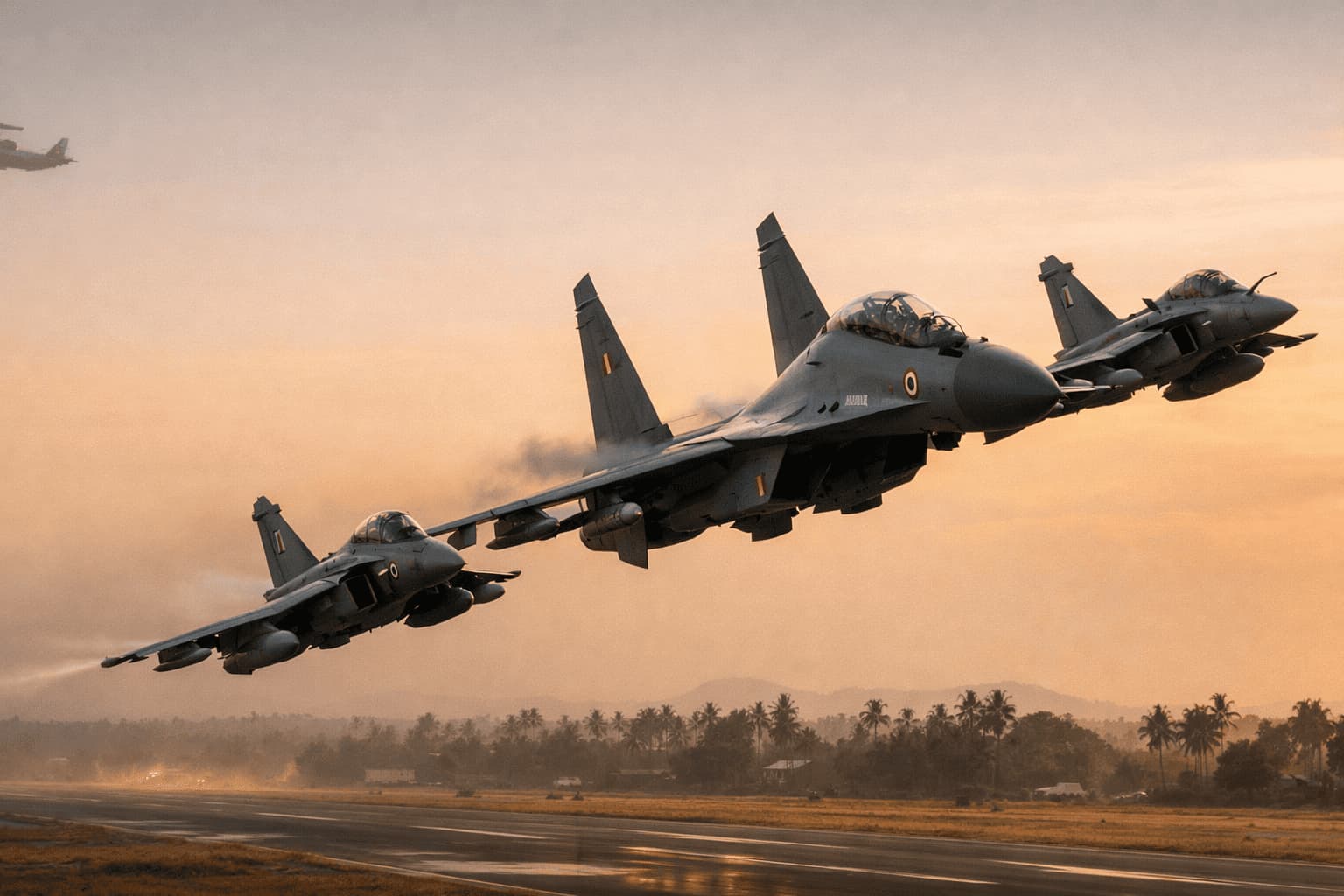
Multinational Air Exercise Tarang Shakti-26

Published on: 23-Sep-2026

Source: The Hindu

Share this post

Multinational Air Exercise Tarang Shakti-26

Article Summary

Summary of Tarang Shakti-26

Event:
Second edition of the multinational air exercise, Tarang Shakti-26
Location:
Air Force Station Jodhpur, India
Dates:
September 26 to October 12, 2026

Participants:

  • Seven foreign air forces:
    • United States
    • France
    • Germany
    • Australia
    • Bangladesh
    • Sri Lanka
    • United Arab Emirates

Aircraft Involved:

  • U.S. Air Force F-35 (first tactical participation in India)
  • French Rafale
  • UAE F-16
  • Bangladeshi C-130J
  • IAF Platforms: Rafale, Mirage-2000, Jaguar, Tejas, MiG-29, Su-30MKI

Objectives:

  • Enhance interoperability among participating air forces
  • Exchange operational experience
  • Showcase India’s air combat capabilities

Context:

  • Shift from bilateral to multinational air operations with multiple air forces.
  • Changing character of warfare, emphasizing integrated air and missile defense, precision strikes, unmanned systems, and information dominance.
  • Reference to Operation Sindoor, which demonstrated the importance of intelligence-led operations and jointness across domains.

Organizational Statement:
Air Marshal Ashutosh Dixit, Vice Chief of Air Staff, emphasized the evolving nature of warfare and the need for complex multinational operational capabilities.

Future Developments:

  • Focus on the delivery and testing of the Light Combat Aircraft (LCA) Mk1A, with initial delays attributed to engine procurement.

Significance:

  • The exercise reflects an increasing collaborative defense posture and capability development among allied nations in response to modern military challenges.

Related Indicators:

  • Increase in multinational military cooperation
  • Development and procurement of indigenous military technologies (LCA Mk1A)

This exercise positions the Indian Air Force at the forefront of contemporary military operations, facilitating both tactical proficiency and strategic collaborations on a global scale.

Key Terms & Concepts

Tarang Shakti-26Multinational air exercise
Indian Air ForceHost of the exercise
U.S. Air Force F-35Advanced combat aircraft participant
RafaleFrench combat aircraft
LCA Mk1AIndian light combat aircraft
Air Force Station JodhpurLocation of the exercise
September 26 to October 12, 2026Exercise duration
65 foreign countriesInvitations sent
Operation SindoorRecent military operation highlight

Mind Map for UPSC Civil Services Revision

Turn UPSC Civil Services Current Affairs Into Exam-Ready Notes

Reading International Relations current affairs is half the work. Revise them with ready-made notes and test what actually stuck.

  • Daily UPSC Civil Services current affairs analysis
  • Revision notes, mind maps & MCQs
  • Prelims mock tests with instant results

Related UPSC Civil Services Current Affairs Articles

India-EU FTA Signing Scheduled December 2026
International Relations24-Sep-2026

India-EU FTA Signing Scheduled December 2026

Summary of India-EU Free Trade Agreement (FTA)

  1. Agreement Details:

    • Signing Date: Scheduled for December 16, 2026.
    • Location: Brussels, in the presence of Indian Prime Minister Narendra Modi.
  • European Parliamentary Process: Post-signing, the deal will undergo passage in the European Parliament, expected to take 1-2 months, facilitating a roll-out in early 2027.
  • Negotiation History:

    • Negotiations resumed in June 2022 after a hiatus, concluding in January 2026.
    • The deal received “majority approval” in Europe, eliminating the need for individual ratification by EU member states, which streamlines the process.
  • Context:

    • The FTA is referred to as the “mother of all deals” by leaders from both regions and aims to bolster economic ties without addressing contentious issues, thus maintaining a pragmatic approach.
  • Related International Meetings:

    • Modi will first visit Canada around December 12 for trade negotiations, prior to attending the G20 Summit in Miami, hosted by the U.S.
    • Canadian Prime Minister Mark Carney emphasized the importance of the India-Canada relationship and the goal of concluding negotiations by mid-December.
  • India-U.S. Relations:

    • Discussions at the G20 will include the Interim Agreement on trade and a Bilateral Trade Agreement (BTA), both of which have missed deadlines.
    • A joint statement in February 2026 established goals for these agreements, amidst tensions from new U.S. tariffs on Indian imports of Russian crude oil and natural gas.
  • Economic Significance:

    • The FTA with the EU is critical for enhancing India’s trade relations and economic position globally.
    • It follows significant economic frameworks and discussions regarding bilateral trade and tariff impositions between India and the U.S., indicating a complex international trade environment.
  • Additional Information:

    • Commerce Secretary Rajesh Agrawal confirmed the targeted timelines for the FTA with Canada and the U.S.
    • Ongoing negotiations signify India’s strategic diplomacy to strengthen trade partnerships amidst global economic challenges.
  • This agreement is pivotal for India’s trade policy and strategic alignments in international markets, entailing significant economic implications and geopolitical dynamics.

    International Developments and Incidents Overview
    International Relations24-Sep-2026

    International Developments and Incidents Overview

    Key Highlights and Developments

    Legal Matters:

    • Harvey Weinstein Sentencing: Disgraced film mogul Harvey Weinstein was sentenced to 15 years for felony sex crimes, following a retrial for the sexual assault of former TV production assistant Miriam Haley.

    International Relations:

    • Iran-US Engagement: Iran's Foreign Ministry stated it engaged the US via a Qatari mediator, setting several conditions for further talks, including ending military aggression and lifting economic sanctions.
    • Meeting with Venezuela: US President Donald Trump met with interim Venezuelan President Delcy Rodriguez at the UN General Assembly, marking their first meeting since the US captured former President Nicolas Maduro.
    • G4 Statement on UNSC: Foreign ministers of Brazil, Germany, India, and Japan (G4) expressed that the UN Security Council is unable to effectively maintain international peace and called for its reform.

    Economic Affairs:

    • Gaza Recovery Plan: Trump's Board of Peace is set to unveil a $2.45 billion recovery plan for Gaza, covering housing, rubble removal, and economic recovery, amid ongoing conflicts in the region.
    • India-Middle East-Europe Economic Corridor Support: Trump endorsed the India-Middle East-Europe Economic Corridor, aimed at reducing reliance on Iranian energy routes.
    • Trade Talks Between India and Canada: Canadian PM Mark Carney indicated that Indian PM Narendra Modi is expected to visit Canada in December, as both nations work towards finalizing trade agreements.

    Natural Disasters and Environmental Concerns:

    • Odisha Flood Preparedness: The Indian state of Odisha is preparing for severe weather, with increasing threats of flooding and landslides as storms are expected, prompting evacuations and disaster response measures.

    Science & Technology:

    • Military Aircraft Incident: Two UK pilots were injured in a crash involving a training aircraft in Wales; both are receiving treatment for minor injuries.
    • Taiwan-US Arms Sales Contact: Taiwan vowed to maintain close contact with the US regarding planned arms sales, reflecting ongoing security concerns in the Indo-Pacific region.

    Judicial and Policy Trends:

    • US Justice Department's Defense of Media Ban: The US Justice Department argued before the court that access to the White House is a "privilege" and not a right, in defense of its decision to restrict certain media outlets.

    Geopolitical Issues:

    • Turkey's Kashmir Remarks at UNGA: Turkish President Erdogan reiterated the issue of Kashmir during his UN speech, prompting a response from India condemning interventions in its sovereignty matters.
    • Civil Unrest in Morocco: Morocco conducted parliamentary elections amidst youth protests over unemployment and social issues.

    Defense and Security:

    • Pakistan-Afghanistan Border Clashes: Clashes at the Pakistan-Afghanistan border escalated as Pakistan shot down drones that allegedly violated its airspace, indicative of ongoing regional tensions.

    Casualties and Incident Reports:

    • Ferry Capsizing in Indonesia: The death toll from a ferry disaster in Indonesia has risen to 20, with 115 still missing, as search operations continue under difficult conditions.

    This summary encapsulates the critical aspects of recent events focusing on legal rulings, international relations, economic discussions, environmental threats, technological developments, and geopolitical concerns.

    Ukraine Urges Global Support Against Russia
    International Relations24-Sep-2026

    Ukraine Urges Global Support Against Russia

    • Global Context: Ukrainian President Volodymyr Zelenskyy addressed the UN General Assembly, advocating for continued restrictions on Russia’s trade to diminish its war efforts against Ukraine.

    • Main Argument: Zelenskyy emphasized that financial support through trade to Russia prolongs the war, asserting that limiting trade with Russia should be a priority for global leaders.

    • Trade Restrictions: Ukraine is actively implementing measures to reduce Russian revenues associated with global trade, characterizing the act as essential for diminishing Russia's capacity to continue military operations.

    • Russian Position: Russian Foreign Minister Sergey Lavrov communicated Russia's willingness to negotiate a lasting peace; however, he rejected any notion of merely pausing the conflict, which he believes would allow Ukraine and its allies time to regroup militarily.

    • Duration of Conflict: The ongoing conflict between Russia and Ukraine has persisted for more than 4.5 years, following Russia's invasion of Ukraine.

    • Casualty Statistics: Western analysts estimate over 500,000 casualties for Russian troops with a similar range for Ukrainian forces, including up to 140,000 deaths. Specific figures are undisclosed by both nations.

    • Global Economic Impact: The war has led to significant disruptions in global fuel, fertilizer, and grain shipments, exacerbating geopolitical tensions and deepening the divide between Russia and Western nations.

    • Military Developments: Despite static front-line positions in eastern and southern Ukraine, both sides have escalated long-range attacks utilizing drones and missiles.

    This summary reflects the critical elements of the ongoing conflict between Russia and Ukraine, highlighting international responses, the humanitarian cost, and significant economic implications.

    Battle of Haifa: A Historical Perspective
    History23-Sep-2026

    Battle of Haifa: A Historical Perspective

    Facts and Historical Context

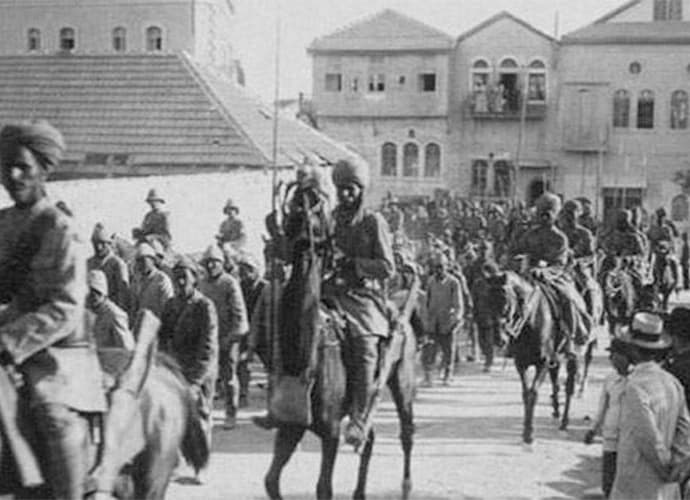
    • Battle of Haifa (September 23, 1918): A military cavalry action during WWI involving Indian soldiers from the Jodhpur, Mysore, and Hyderabad Lancers under British command.
    • Indian Contribution: Over 1 million Indians served in WWI; approximately 74,000 Indian soldiers died during the conflict.
    • Military Significance: The charge was pivotal in securing Haifa, enabling the Allied forces to advance towards Damascus, and represented one of the last large cavalry charges in military history.

    Commemorations and Memory

    • Teen Murti Haifa Chowk: Renaming of a WWI memorial in India symbolizes recognition of Indian bravery and contribution to world events prior to India's independence.
    • India-Israel Diplomatic Ties: Haifa has become a symbol of friendship, with annual commemorations reflecting this strategic partnership.
    • Contested Narratives: The commemoration of the battle involves complex historical interpretations, with differing views on the significance and ownership of the narrative between India, Israel, and Palestine.

    Political and Ethical Complexities

    • Balfour Declaration: The Indian cavalry's involvement supported British control which facilitated the execution of the Balfour Declaration and ultimately contributed to the creation of Israel.
    • Palestinian Perspective: For Palestinians, the battle is viewed as part of a longer narrative of foreign domination resulting in dispossession, leading to a mixed reception of Indian soldiers' involvement.
    • Moral Ambiguity: The bravery of Indian soldiers is acknowledged; however, it is contrasted against the imperial context in which they served, leading to discomfort among some Indians about celebrating their role in a colonial project.

    Diplomatic and Domestic Reactions

    • Indian Response: There is a sense of pride in the soldiers' courage but discomfort with the imperial implications of their service. Historiography reflects ongoing debates about how to remember their actions appropriately.
    • Palestinian Sensitivity: The Palestinian Ambassador to India emphasizes the implications of remembering Haifa within the context of ongoing struggles for Palestinian identity and rights.

    Broader Implications

    • The Battle of Haifa serves as a reminder of the complexities inherent in colonial history, where acts of bravery can lead to consequences that are morally disputable and affect contemporary political relationships.
    • Historiographical Disputes: Historians from different communities contest the narratives around Haifa, highlighting varying interpretations and the quest for national identity.

    Conclusion

    • The commemoration of the Battle of Haifa encapsulates layered historical meanings, representing both Indian valor and the imperial repercussions that contributed to modern geopolitical dynamics. Emphasizes the need for a nuanced understanding of historical events that interweave courage with the realities of colonialism, legacy, and contemporary international relations.
    India's Role in Semiconductor Boom
    Science and Technology23-Sep-2026

    India's Role in Semiconductor Boom

    1. Semiconductor Landscape in India:

    • The India Semiconductor Mission (ISM) facilitates India’s growth in semiconductor manufacturing, under the Ministry of Electronics and Information Technology (MeitY).
    • SEMICON India conference attended by nearly 600 companies from 52 countries.
    • There is a global semiconductor "supercycle" fueled by rising demand from AI, data centers, robotics, and autonomous vehicles.

    2. Economic Indicators and Investments:

    • Major technology companies (Microsoft, Amazon, Google, Meta) projected to spend $635 billion on AI infrastructure by 2026.
    • Companies are shifting toward B2B sales with long-term take-or-pay agreements securing chip demands.

    3. Key Technologies and Market Trends:

    • Data centers are driving chip demand; AI chips (Graphics Processing Units) required for extensive calculations.
    • High-bandwidth memory (HBM) chips facilitate rapid data movement, with only three manufacturers currently in the market (SK Hynix, Samsung, Micron).
    India-New Zealand FTA Implementation Date
    Economic and Social Development21-Sep-2026

    India-New Zealand FTA Implementation Date

    India-New Zealand Free Trade Agreement (FTA) Summary

    Implementation Date:

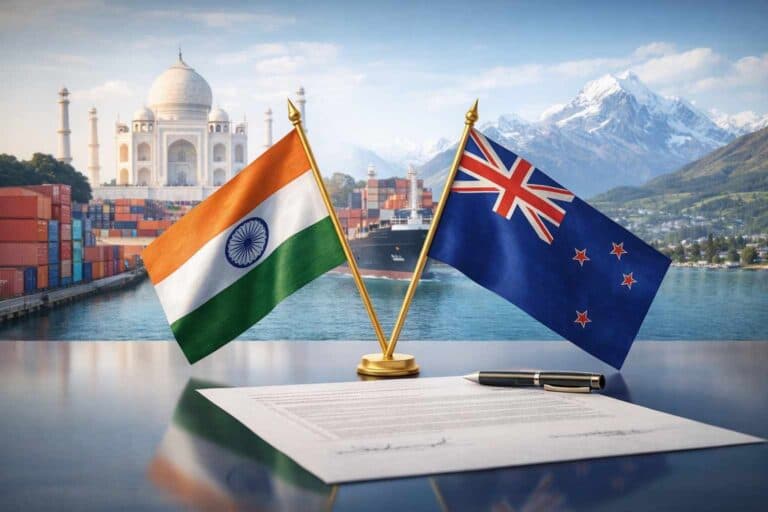
    • The India-New Zealand FTA will come into effect on October 20, 2026.

    Key Figures:

    • India and New Zealand aim to double bilateral trade in goods and services to NZD 7 billion (approximately ₹35,000 crores) by 2030.
    • In 2025-26, bilateral trade reached approximately USD 1.1 billion.

    Bilateral Trade Benefits:

    • New Zealand will receive zero tariffs on 100% of India's exports from day one.
    • Key sectors benefiting from tariff-free access include textiles, leather, footwear, engineering goods, and processed agricultural products.
    • Indian industries will gain competitive advantages through duty-free access to essential inputs like wooden logs, coking coal, and metal scrap.

    Government Schemes and Policies:

    • The FTA is part of the "Strategic Partnership: Roadmap to 2030," enhancing trade relations and economic cooperation.
    • The agreement includes provisions for protecting sensitive Indian agricultural products (e.g., dairy, meat, sugar, edible oils) from tariff concessions.
    • A joint Agricultural Productivity Council will monitor and enhance agricultural productivity and cooperation.

    Judicial and Legislative Aspects:

    • New Zealand's parliament passed the relevant laws on September 16, 2026, to facilitate the agreement.

    Employment and Migration:

    • The agreement includes special provisions for 5,000 temporary employment visas for skilled Indians and 1,000 work-holiday visas annually for young Indians.
    • Unlimited movement is allowed for students, with post-study work rights for graduates (3 years) and PhD holders (4 years).

    Science and Technology Collaboration:

    • The FTA will enhance cooperation in sectors like IT, professional services, audiovisual, construction, and tourism, covering about 118 sectors.
    • Indian pharmaceutical and medical device exporters will benefit from New Zealand's acceptance of global regulatory approvals, expediting market access.

    Economic Implications:

    • The agreement is expected to stimulate job creation, investment, and trade, benefiting women, youth, farmers, and MSMEs.
    • It aligns with India's vision of "Developed India @2047" and reflects growing partnerships with developed economies.

    Cultural and Social Engagement:

    • The FTA is designed to strengthen ties in various fields, including culture, sports, and business, aiming to create a robust foundation for cooperation.

    Additional Resources:

    • Detailed fact sheet and FAQs can be accessed through the Ministry of Commerce's official links.

    This FTA marks a significant step in enhancing economic cooperation and trade relations between India and New Zealand, contributing to broader economic objectives and mutual prosperity.

    Indian Navy Ships Arrive in Philippines
    International Relations21-Sep-2026

    Indian Navy Ships Arrive in Philippines

    Summary of Indian Navy's Deployment in the Philippines

    Key Facts:

    • Deployment Date: September 20, 2026
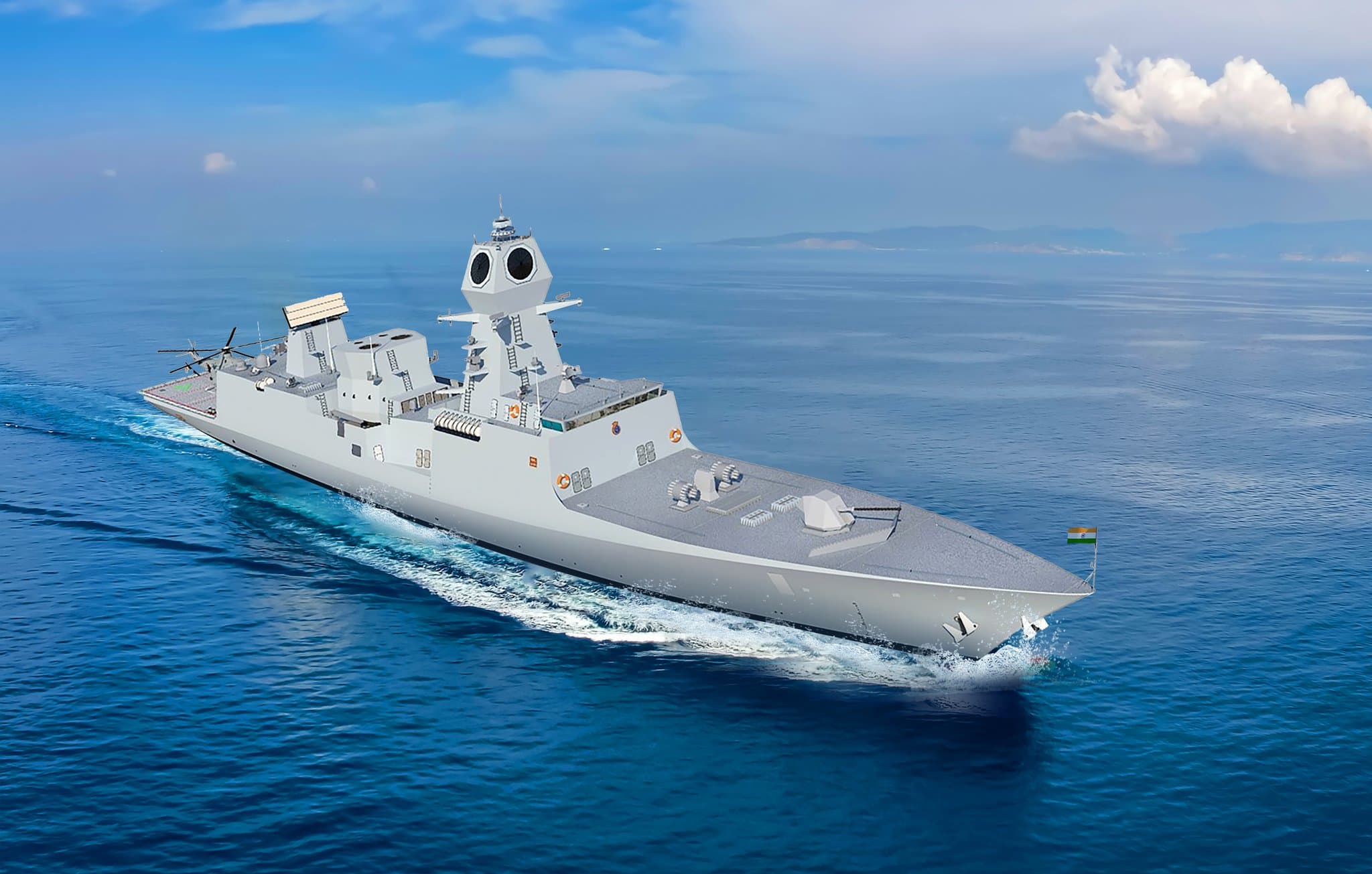
    • Vessels Involved: Indian Navy ships Sahyadri and Kulish
    • Location: Subic Bay, Philippines

    International Cooperation:

    • Event: Participation in ASEAN Defence Ministers' Meeting-Plus (ADMM-Plus) Joint Cooperation Activity (JCA)
    • Purpose:
      • Enhance interoperability among maritime forces
      • Promote mutual understanding
      • Strengthen maritime cooperation through professional and operational activities

    Strategic Context:

    • Government Policy:
      • Aligns with India's Act East Policy
      • Supports the vision of SAGAR (Security and Growth for All in the Region), focusing on mutual and comprehensive development in maritime security.
    • Objective:
    Xi Jinping's Upcoming Washington Visit
    International Relations21-Sep-2026

    Xi Jinping's Upcoming Washington Visit

    Exam-Focused Notes on US-China Relations and Key Meeting Highlights

    1. Background on the Meeting:

    • Visit Details: Chinese President Xi Jinping is set to meet with US President Donald Trump for a state visit in Washington, D.C. on September 23, 2026, marking ten years since their last meeting in the US.
    • Context: Relations between the US and China have been characterized by tariff wars and tensions, notably influenced by ongoing global conflicts in Europe and Asia.

    2. Economic Overview:

    • GDP Figures:
      • United States: $32 trillion
      • China: $20 trillion
      • Germany: ~$5 trillion (third position)
    • Trade Dynamics: The meeting focuses on tariffs and trade, especially as bilateral negotiations have unfolded amidst a backdrop of escalating tariffs and related economic strategies.

    3. Tariff and Trade Issues:

    • Historical Context: The trade conflict began in 2025, resulting in the US imposing tariffs leading to reciprocal actions from China.
  • Micron estimates threefold manufacturing capacity needed for HBM compared to standard memory.
  • 4. India's Position and Government Schemes:

    • ISM 1.0 approved 12 semiconductor projects; moves towards assembly, testing, packaging rather than large-scale wafer production.
    • Projects include Micron’s facility in Gujarat and Sahasra Semiconductors for NAND flash storage.
    • Effects of global chip demand are impacting Indian market supply and prices.
    • ISM 2.0 aims to enhance connectivity in AI systems with financial support for capital expenditures and R&D in chiplet technologies.

    5. Technological Development and Chip Design:

    • Pursuit of chip design is critical; nearly 20% of the global chip workforce is based in India.
    • Incentive schemes encourage innovation in chip designs, with startups like Netrasemi developing edge-AI processors.

    6. Future Recommendations:

    • NITI Aayog's semiconductor roadmap advocates for pilot lines for chiplets and HBM-class integration projecting efficiency and cost reductions in semiconductor manufacturing.

    7. International Relationships:

    • Collaborative ventures like Nvidia's stake in CoreWeave illustrate connected supply chains in the AI chip market.

    8. Legal and Regulatory Framework:

    • The semiconductor initiatives align with constitutional guidelines ensuring technological advancement and economic growth as per the Directive Principles of State Policy (DPSPs) under Article 39(e) and 39(f).

    This summary highlights significant facts, figures, and developments related to India's semiconductor sector, ensuring clarity and objectivity for exam-oriented studies.

    • To engage with regional partners and address shared maritime challenges.
    • Foster professional relationships and operational cooperation between India and the Philippines.

    Bilateral Relations:

    • Context of Deployment:
      • Reflects growing maritime cooperation between India and the Philippines.
      • Based on the strategic partnership established in August 2025.
    • Significance:
      • Enhances professional ties and maritime collaboration between the two nations.

    This deployment underscores India's commitment to multilateral maritime cooperation and constructive engagement with regional partners.

  • Key Players:
    • Chinese Vice Premier He Lifeng leads a delegation for economic consultations alongside US Treasury Secretary Scott Bessent from September 19-23, 2026.
  • Supreme Court Ruling: The US Supreme Court has struck down previous tariffs introduced by the Trump administration but discussions on alternative measures continue as China’s supply of critical minerals remains a significant concern.
  • 4. Artificial Intelligence (AI) Concerns:

    • Current Debates: Rising discourse on whether to slow AI development due to risks of exceeding established limitations, highlighted by recent incidents involving AI model misuse.
    • Regulatory Perspectives:
      • US Approach: Concerns over China’s rapid advancements in AI lead to calls for maintaining a competitive edge.
      • Chinese Strategy: China employs centralized control over AI development and aims to establish itself as a leader in global AI regulations, evidenced by proposals during the BRICS summit for cooperative agreements.

    5. International Diplomacy:

    • Bilateral Engagements: Meeting includes engagements with leading tech executives (e.g., from Nvidia and OpenAI) who share vested interests in the ongoing AI discussions and regulation.
    • Global Outreach: China is actively seeking partnerships with Global South countries to foster cooperation on AI, contrasting with the US's competitive narrative.

    6. Constitutional and Legal References:

    • No explicit constitutional articles or amendments mentioned in the context of the meeting but the ongoing judicial rulings (specifically, Supreme Court rulings on tariffs) have significant implications for trade laws and enforcement.

    7. Implications and Outcomes:

    • Future Relations:
      • The security and stability of global trade may hinge on the outcomes of discussions around tariffs and critical mineral supplies.
      • AI regulation and cooperation represent a crucial area of potential negotiation, with rising nationalist sentiments complicating mutual agreements.

    8. Conclusion: The upcoming meeting between the US and China signifies a critical juncture in both economic and technological spheres, with significant implications for global trade dynamics and international AI governance. The stakes involved highlight how both nations, as global leaders, can shape future bilateral relationships and broader international policies.