iAspirants
COP31 Ends in Deadlock on Climate
Published on:
Source: Indian Express
Share this post
Article Summary
UN Climate Change Conference (COP31) Summary Notes
Conference Overview:
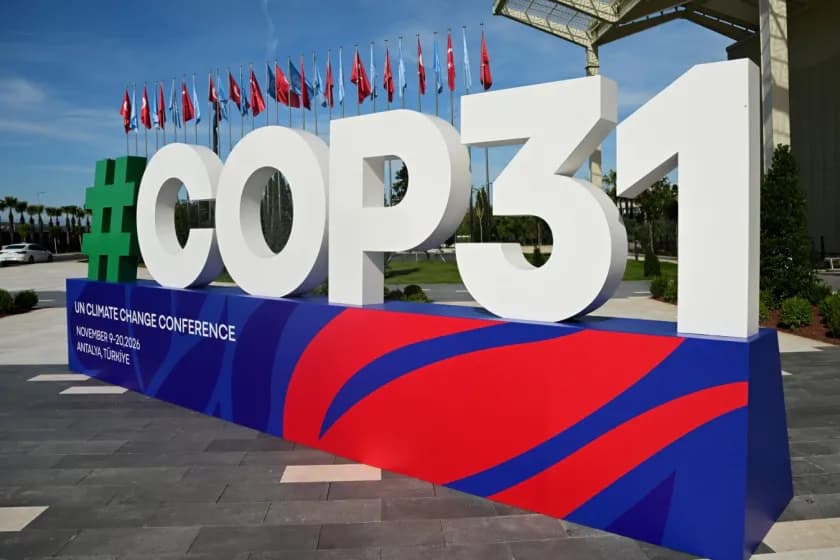
- The 31st Conference of the Parties (COP31) to the UN Framework Convention on Climate Change (UNFCCC) was held in Antalya, Turkey.
- Dubbed as the “Implementation COP,” the conference aimed to transition climate commitments into actionable strategies.
- The conference extended negotiations for over 40 hours past the November 20 deadline, ultimately ending in a deadlock.
Key Issues:
Negotiation Deadlock:
- Influential negotiating blocs, particularly Saudi Arabia and oil-producing nations, opposed commitments to shift away from fossil fuels.
- The European Union (EU) failed to provide adequate financial support commitments for developing countries, which complicated negotiations.
Adaptation Finance:
- A notable development was the removal of a proposed annual adaptation finance target of $120 billion from the final draft, reflecting ongoing challenges between developed and developing countries regarding climate funds.
Historical Context:
- COP31 marks a continuation of previous negotiation breakdowns, such as COP6 in The Hague (2000) and COP15 in Copenhagen (2009).
- The breakdown post-COP15 delayed the creation of the Paris Agreement, ultimately approved in 2015, illuminating the risks of inaction.
Current Climate Situation:
- The Paris Agreement aims to limit global warming to 1.5 degrees Celsius above pre-industrial levels, a target increasingly seen as unattainable without immediate action.
- Increasingly severe extreme weather events highlight the urgent need for a global response to climate change.
Looking Ahead:
- COP32 will be hosted in Addis Ababa, Ethiopia. The challenge lies in achieving action-oriented climate commitments while adhering to UNFCCC principles.
India's Role:
- India emphasized the importance of developed nations fulfilling their climate financing obligations.
- The country positioned itself as willing to collaborate for outcomes that balance climate ambition with developmental priorities.
- India has exceeded its Paris Agreement clean energy commitments ahead of schedule and intends to align development efforts with decarbonization goals.
- This approach aims to enhance India’s global competitiveness and energy security, while presenting a nuanced climate diplomacy in contrast to more obstructive petroleum-reliant nations.
Conclusion:
- Stakeholders at COP31 have reiterated the need for immediate action to mitigate climate change impacts, with significant dependencies on financial commitments and participation from developed nations being crucial to achieving the UNFCCC’s long-term objectives.
Key Terms & Concepts
| UN Framework Convention on Climate Change | Regulatory framework for climate |
| COP31 | Conference of climate negotiations |
| Antalya, Turkey | Location of COP31 |
| $120 billion | Adaptation finance target |
| Paris Agreement | Climate commitment framework |
| 1.5 degrees Celsius | Global warming limit goal |
| COP32 | Upcoming conference location |
| India | Key negotiating party |
| Kyoto Protocol | Previous climate treaty |
| Clean energy target | Paris Agreement commitment |