iAspirants
AI's Role in Indian Education System
Published on:
Share this post
Article Summary
Summary of Educational Insights and Recommendations
Current State of Indian Education:
- Digital Progress:
- Internet connectivity in schools has increased from 8% in 2014-15 to 64% by 2024-25 (source: NITI Aayog).
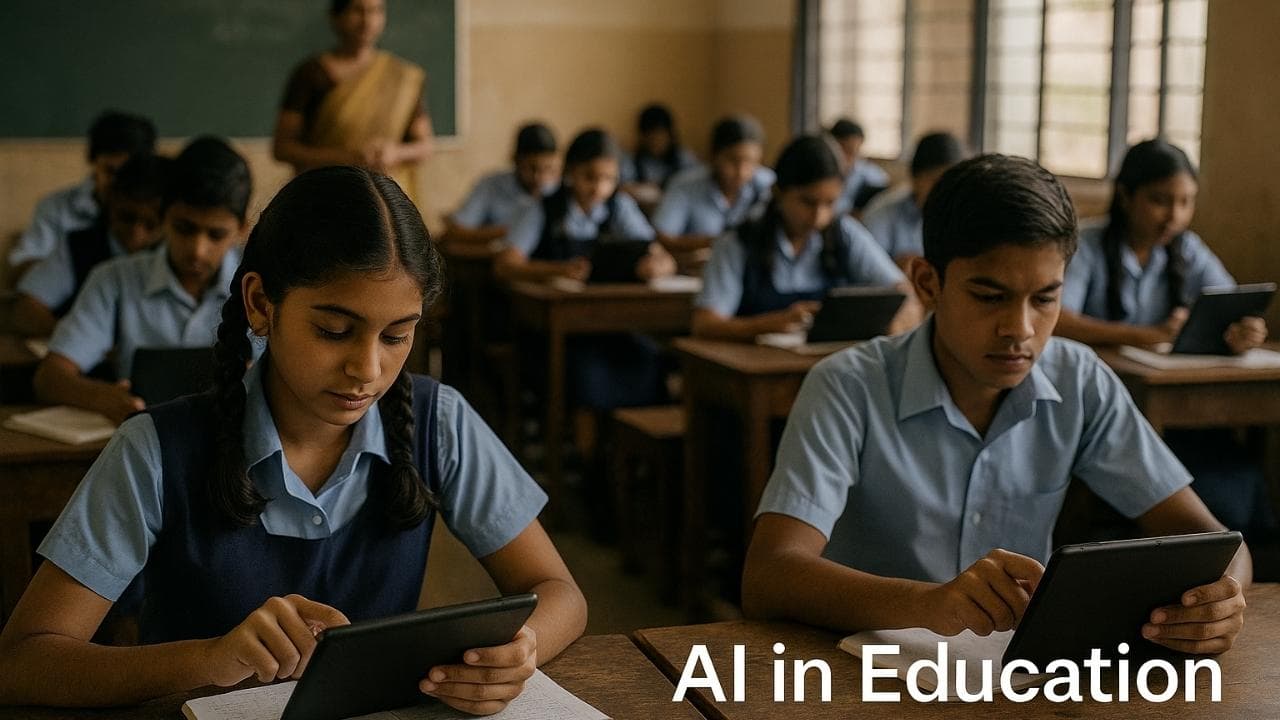
- Enhanced classroom engagement via technology with modern devices like smart boards.
Challenges in Learning Outcomes:
- While technology facilitates presentation, it does not ensure understanding, leaving many students' learning gaps unaddressed.
- Basic literacy and math skills rebounded post-pandemic, yet secondary-level education and overall literacy lag despite technological advancement.
- Teachers face challenges in identifying individual learning needs due to class sizes averaging 30-40 students with varied comprehension levels.
Areas Needing Improvement:
- Learning Diagnosis: Current systems focus on "delivery" of content rather than diagnosing learning conditions and progress.
- There is a disconnect between educational technology (like smart boards and projectors) and the actual learning metrics of students.
Role of Artificial Intelligence (AI) in Education:
- Gap Identification: AI can help identify learning struggles in real-time, moving beyond the traditional assessment methods that reveal issues only after tests.
- Personalized Learning: Customizes student practice according to their readiness rather than applying a uniform pace across the entire class.
- Administrative Efficiency: Reduces the time teachers spend on grading, report preparation, and data management, allowing them to focus more on teaching and individual student engagement.
- Real-Time Data for Leadership: Offers timely insights into classroom performance, enabling actionable interventions rather than post-analysis after term results.
Vision for Future Classrooms:
- Transition towards "intelligent classrooms" that utilize technology not just for content delivery but for effective learning assessments.
- Shift educational focus from merely increasing the number of devices in classrooms to genuinely understanding and improving student learning processes.
Conclusion:
- Successful integration of AI can transform educational paradigms in India, making classrooms responsive to individual learning needs, thus closing the existing gap in education quality. It emphasizes that infrastructure must serve as a means to an end, with the ultimate goal of ensuring that students are actually learning.
Key Terms & Concepts
| NITI Aayog | Policy report on education |
| Internet connectivity | Increased from 8% to 64% |
| AI-enabled learning systems | Identifies learning gaps |
| Smart board | Modern teaching tool |
| Administrative load | Burden on teachers |
| Learning data | Needed in real-time |
| Learning outcomes | Need for improvement |
| Classroom technology | Means to assist learning |
| Curriculum pacing | Varies among students |
| Timely intervention | For school leaders |