iAspirants
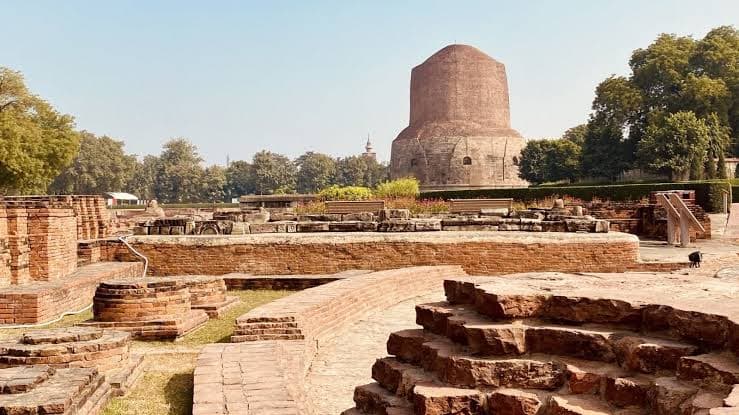
Sarnath Gains UNESCO World Heritage Status
Published on:
Share this post
Article Summary
Summary of Key Points from the News Article
UNESCO World Heritage Recognition
- Site Inscribed: Sarnath, the location where Lord Buddha delivered his first sermon, has been added to UNESCO’s World Heritage List.
- Significance: This brings India’s total to 45 World Heritage Sites, and Uttar Pradesh's count to four, alongside the Taj Mahal, Agra Fort, and Fatehpur Sikri.
Historical Context
- Tentative List: Sarnath was included in UNESCO’s tentative list on July 3, 1998.
- Cultural Importance: Sarnath is a major pilgrimage site for Buddhism and is mentioned in ancient scriptures such as Rishipattan.
Government and Archaeological Efforts
- Archaeological Survey of India (ASI): Prior to the nomination, ASI altered historical records at Sarnath to credit local rulers, particularly Babu Jagat Singh, for the discovery of the site rather than British archaeologists.
- Conservation Efforts: Leading conservation architect Abha Narain Lambah emphasized that Sarnath’s cultural significance extends beyond its monuments, highlighting a continuous 2,500-year pilgrimage tradition.
Economic and Cultural Impact
- Tourism Enhancement: The Sarnath designation is expected to boost Uttar Pradesh’s profile in international tourism and cultural heritage, potentially leading to increased visitor numbers and economic benefits.
Key Statements
- Prime Minister Narendra Modi: Emphasized the site’s alignment with India's civilizational and spiritual legacy, noting that the recognition celebrates the country’s profound heritage.
Constitutional and Policy Implications
- Cultural Heritage Protection: The inclusion of Sarnath in the World Heritage List aligns with India’s commitment to preserving its cultural heritage as encapsulated in the Directive Principles of State Policy (DPSPs) under Article 49 of the Constitution, which focuses on protecting monuments and places of artistic or historic interest.
Conclusion
The inclusion of Sarnath in the UNESCO World Heritage List marks a significant milestone in India's cultural recognition and highlights the ongoing efforts to honor and preserve historical sites through government action, archaeological research, and international acknowledgment.
Key Terms & Concepts
| Sarnath | UNESCO World Heritage Site |
| UNESCO | World Heritage Committee |
| Buddhism | Major Religion |
| Dharmachakra Pravartan | Buddha's First Sermon |
| Archaeological Survey of India (ASI) | Site Management |
| July 3, 1998 | Tentative UNESCO Listing Date |
| Varanasi | Location of Sarnath |
| Taj Mahal, Agra Fort, Fatehpur Sikri | Other World Heritage Sites |
| Busan, South Korea | Location of UNESCO Session |
| Prime Minister Narendra Modi | Praise for Recognition |
| Babu Jagat Singh | Site Discovery Credit |
| Rishipattan | Buddhist Scripture Reference |