iAspirants
NGT Actions on Sambhar Lake Issues
Published on:
Source: Indian Express
Share this post
Article Summary
Summary of National Green Tribunal (NGT) Ruling on Sambhar Lake
Constitutional and Legal Framework:
- The National Green Tribunal (NGT) was established under the NGT Act, 2010, to handle environmental protection and conservation issues in India. The NGT operates with powers to enforce environmental protection under Article 21 (Right to Life) of the Constitution, which encompasses the right to a healthy environment.
- The recent case revolves around allegations of environmental degradation at Sambhar Lake, designated as a Ramsar Wetland, which highlights India's commitment to international treaties like the Ramsar Convention focusing on the conservation of wetlands.
Issues Addressed:
- Allegations of encroachment and the construction of unauthorized salt pans within lake boundaries.
- Groundwater extraction through numerous borewells using heavy machinery, impacting the hydrology and ecology of the wetland.
- The introduction of illegal structures obstructing natural feeder streams leading to reduced inflows of rainwater.
- Observations regarding depletion of groundwater, increased hypersalinity, and deterioration of water quality affecting the ecological balance necessary for migratory birds, particularly flamingos.
Judicial Proceedings:
- NGT's Central Zone Bench in Bhopal ordered the formation of a joint committee for site inspection, comprising representatives from:
- Jaipur District Collector
- State Wetland Authority, Rajasthan
- Central Pollution Control Board (CPCB)
- Rajasthan State Pollution Control Board (RSPCB)
- The joint committee is tasked with submitting a report within six weeks, with RSPCB designated as the nodal agency for monitoring the situation.
- NGT's Central Zone Bench in Bhopal ordered the formation of a joint committee for site inspection, comprising representatives from:
Ecological Importance:
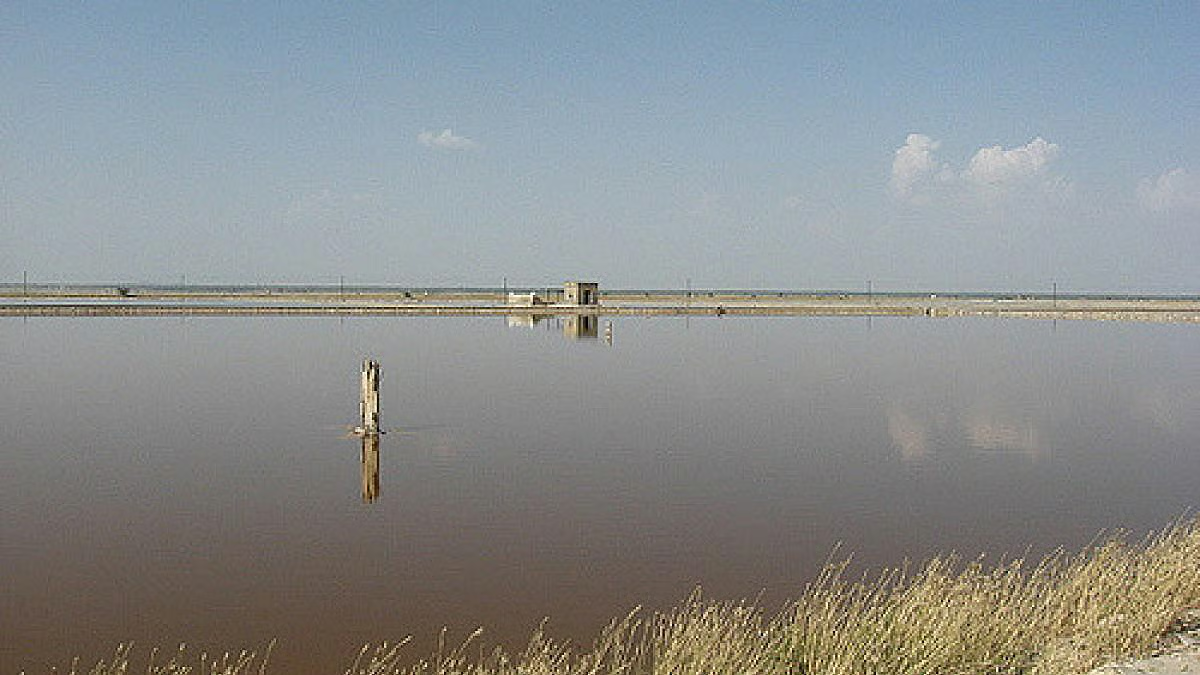
- Sambhar Lake is recognized as India’s largest inland saline wetland, crucial for the habitat of diverse migratory bird species.
- The ecological health of the lake is linked to the maintenance of a delicate balance of river inflows, groundwater levels, evaporation rate, and salinity.
Next Steps:
- The NGT has scheduled the next hearing for December 9, where it expects responses from the Union of India and others named in the application.
- The tribunal emphasizes the urgency of addressing the allegations to safeguard the ecological integrity of Sambhar Lake.
Environmental Significance:
- The case draws attention to critical environmental issues such as wetlands' degradation, the impact of human activities on biodiversity, and the need for stricter enforcement of environmental laws to protect natural habitats.
These points illuminate substantial issues related to environmental law, judicial interventions, and the importance of maintaining ecological balance as mandated by Indian law and international conventions.
Key Terms & Concepts
| National Green Tribunal (NGT) | Regulatory authority overseeing wetland issues |
| Sambhar Lake | India’s largest saline wetland |
| Ramsar wetland | Designated international wetland site |
| September 28, 2026 | Date of tribunal's observation |
| Joint Committee | Conducts site inspection and report |
| Jaipur district collector | Committee representative from local governance |
| State Wetland Authority Rajasthan | Local authority on wetland conservation |
| Central Pollution Control Board | Monitors national pollution control efforts |
| Rajasthan State Pollution Control Board | State-level pollution regulation |
| December 9, 2026 | Next hearing date set by NGT |
| Groundwater extraction | Threatening wetland ecosystems |
| Groundwater depletion |