iAspirants
Delhi Police Denotifies Protest Sites
Published on:
Source: Indian Express
Share this post
Article Summary
Summary Notes on Delhi's Designated Protest Sites and Political Dissent
1. Context of the Issue:
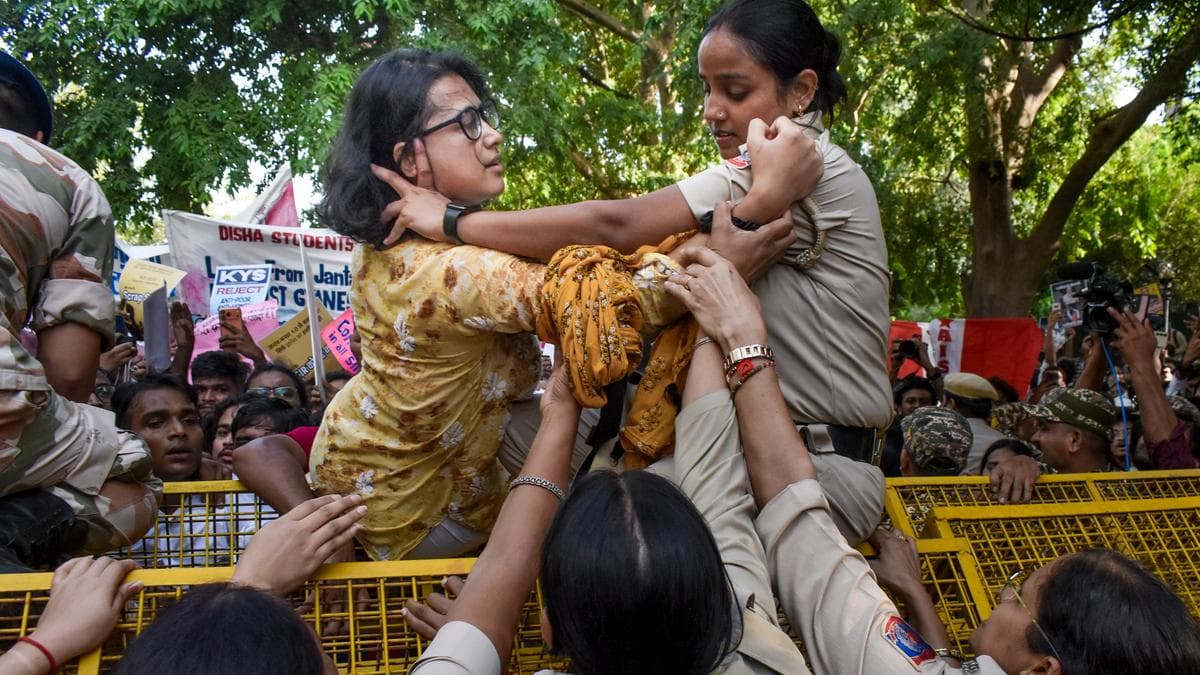
- Delhi Police's decision to de-notify Jantar Mantar as a designated protest site reflects a broader pattern of state actions aimed at limiting dissent in India.
2. New Designated Protest Sites:
- Ramlila Maidan, Burari Ground, and CBD Ground are the newly designated sites for protests in Delhi.
- Justifications provided by authorities: public safety, traffic management, and resident inconvenience.
3. Historical Context:
- Jantar Mantar evolved into a significant protest site for over three decades, positioned as a control mechanism post-1993, following the Babri Masjid demolition.
- This site became emblematic of India's political struggles, despite attempts by authorities to curb dissent.
4. Evolving Nature of Protest Spaces:
- Historical precedent shows when conventional protest sites are restricted or deactivated, movements adapt and create new political spaces:
- Significant protests include Mahatma Gandhi's Dandi March and more contemporary movements like Shaheen Bagh during the anti-CAA protests.
- Protests can occur in non-traditional spaces as exemplified by farmers at Singhu, Tikri, and Ghazipur, creating makeshift bases with kitchens and libraries.
5. Global Examples of Adaptation:
- Similar global phenomena observed:
- Cairo’s Tahrir Square during Egypt's 2011 revolution.
- Occupy Wall Street in New York's Zuccotti Park.
- Protests in Istanbul's Gezi Park.
- Hong Kong's use of highways as assembly areas.
- Transforming university lawns into spaces for political discourse in Palestine.
6. The Role of Space in Politics:
- Protests highlight that political action can occur outside designated spaces granted by authorities, showcasing the resilience of civic agency.
- The assumption by states that they can restrict where and when citizens may gather is often challenged by grassroots movements that redefine political geographies.
7. Implications of the Changes:
- Withdrawal of established protest spaces creates barriers for political mobilization but also necessitates creativity and resourcefulness in activism.
- Challenges arise in creating new protest spaces, which require time, organization, and financial resources.
8. Conclusion:
- The ongoing struggle for designated protest spaces in India reflects deeper conflicts between state authority and civil liberties, echoing through historical and contemporary movements.
- Political spaces are not solely granted but can be created through collective action and civic engagement, emphasizing the resilience of democracy amid restrictions.
These notes encapsulate the dynamics of protest spaces, historically significant protests, and the implications of government actions regarding civic liberties.
Key Terms & Concepts
| Jantar Mantar | Former designated protest site |
| Ramlila Maidan | New protest site designated |
| Burari Ground | New protest site designated |
| CBD Ground | New protest site designated |
| October 1988 | Mass protest by farmers |
| Mahendra Singh Tikait | Leader of 1988 protest |
| Republic Day | Ceremonial protests location |
| Narasimha Rao government | Restricted protests in 1993 |
| Babri Masjid | Event leading to protest restrictions |
| 2020 | Farmers' protest at borders |
| Singhu, Tikri, Ghazipur | Farmers' protest sites |
| Palestine solidarity encampments | Political communities formed |
| Tahrir Square |