iAspirants
Current AffairsPrelims PYQsUPSC CSE SyllabusUPSC CSE StrategyBlogsPricing
Login
iAspirants
Current AffairsPrelims PYQsUPSC CSE SyllabusUPSC CSE StrategyBlogsPricingContact UsLoginSignUp
iAspirants

Your AI-powered companion for UPSC preparation.

Study Resources

  • Current Affairs
  • Prelims PYQs
  • UPSC CSE Syllabus
  • UPSC CSE Strategy
  • Blogs

Practice & Plans

  • Mains Answer Evaluation
  • Pricing
  • Sign Up
  • Login

Company

  • Home
  • About Us
  • Contact Us
  • FAQs

Legal

  • Privacy Policy
  • Terms & Conditions
  • Return Policy

© 2026 iAspirants, Inc. All rights reserved.

  1. Blogs
  2. Environment and Ecology

Concerns Over Sheshnag Lake Development

Published on: 27-Nov-2026

Source: The Hindu

Share this post

Concerns Over Sheshnag Lake Development

Article Summary

Summary Notes on Sheshnag Lake Environmental Concerns

  1. Context: Concerns have arisen regarding the use of heavy earth-moving equipment (e.g., JCBs) for road widening near the Amarnath shrine, especially in proximity to Sheshnag Lake in Kashmir, which is deemed an environmentally sensitive area.

  2. Key Stakeholders:

    • Karan Singh, former Dogra Maharaja and environmental advocate.
    • Mehbooba Mufti, President of the Peoples Democratic Party (PDP).
    • Jammu and Kashmir Government and the Border Roads Organisation (BRO).
  3. Environmental Concerns:

    • Use of heavy machinery during road construction raises alarms about irreversible damage to the fragile ecosystem around Sheshnag Lake, which is already under considerable stress.
    • Issues highlighted include the felling and burning of protected species like Chinar and Chestnut trees.
    • The Himalayan region’s vulnerability to disasters (reference to past Kedarnath disaster) due to infrastructure expansion.
  4. Economic and Cultural Importance:

    • Sheshnag Lake is culturally and religiously significant, linked to the Amarnath Yatra pilgrimage.
    • Concerns about the erosion of natural beauty and the impact of tourism infrastructure on local ecology.
  5. Legislative and Policy Issues:

    • Call for the withdrawal of the Memorandum of Understanding (MoU) between J&K government and BRO for road expansion.
    • Request for transparency regarding the MoU's terms, especially related to the use of heavy equipment.
    • Emphasis on the need for environmental assessments prior to infrastructure developments in sensitive areas.
  6. Judicial and Administrative Measures:

    • Agitation from politicians to halt construction activities until expert evaluations are conducted.
    • Critical questions raised around the government's decision-making process regarding extensions granted to projects endangering ecological balance.
  7. Geographical Significance:

    • Sheshnag Lake is located in a seismic zone, making the area particularly susceptible to geological disturbances influenced by human activity.
  8. Public Advocacy and Awareness:

    • Calls for collective responsibility to protect J&K's unique ecology for future generations.
    • A unified plea from local leaders and politicians for immediate governmental action to safeguard the environment from extensive road-widening projects.
  9. Recommendations:

    • Urgent intervention required from governmental and environmental authorities to ensure the integrity of Sheshnag Lake and surrounding natural habitats.
    • Consideration of sustainable tourism practices that do not compromise environmental and cultural heritage.

This summary encapsulates the ongoing discourse regarding environmental management in Kashmir, focusing on the intersection of cultural heritage and ecological preservation amid infrastructure development pressures.

Key Terms & Concepts

Sheshnag LakeSacred lake facing environmental threats
Border Roads Organisation (BRO)Responsible for road widening
Heavy earth-moving equipmentUsed for route widening
Chinar and Chestnut treesProtected species in danger
Kedarnath disasterPast environmental disaster example
700 lakesFacing environmental threats in Kashmir
J&K Dharmarth TrustOrganization involved in heritage protection
MoUAgreement between J&K Government and BRO
Omar AbdullahJ&K Chief Minister involved

Mind Map for UPSC Civil Services Revision

Turn UPSC Civil Services Current Affairs Into Exam-Ready Notes

Reading Environment and Ecology current affairs is half the work. Revise them with ready-made notes and test what actually stuck.

  • Daily UPSC Civil Services current affairs analysis
  • Revision notes, mind maps & MCQs
  • Prelims mock tests with instant results

Related UPSC Civil Services Current Affairs Articles

COP31 Highlights Climate Change Challenges
Environment and Ecology26-Nov-2026

COP31 Highlights Climate Change Challenges

Climate Change and COP31 Summary Notes

Climate Change Impact

  • Severe Events: Catastrophic floods in Nepal, severe drought affecting 6.5 million in Somalia, extreme heat across South Asia, heat dome in North America, and extensive wildfires in Canada.
  • : Over 50,000 lives lost in Europe due to extreme heat this summer.
Practise Mains answer writingUpload a handwritten answer and get it evaluated
Statistics

COP31 Highlights

  • Location: Antalya, Turkey.
  • Duration: Longest COP conference held to date.
  • Key Issues: Failure to reach agreement on fossil fuels and climate finance despite extensive negotiations.
  • Global Warming Projections: Previous forecasts indicated potential warming of 4°C, revised to approximately 2.8°C.

Challenges and Critique

  • Fundamental Questions: Persisting uncertainties regarding financial responsibility and action commitment.
  • Fossil Fuels: COP31's final decision sidestepped explicitly naming fossil fuels as a primary concern, despite earlier commitments.
  • Electrification Goal: Turkish presidency aimed for 35% electrification by 2035, raising questions about funding sources and energy transitions.

Economic Context

  • Financial Disparity: Wealthy nations citing limited public budgets while simultaneously investing heavily in fossil fuel subsidies.
  • Profit Figures: Major oil and gas companies collectively earned $150 billion in profits in the first nine months of the year.

Proposed Solutions

  1. Integrated Bargain:

    • Create direct links between action, finance, and technology in negotiations.
    • Clear definitions of actions and associated costs from each country.
    • Commitment from wealthy nations towards realistic financial contributions.
    • Establish predictable funding linked to measurable actions from developing countries.
  2. Minilateralism Approach:

    • Form smaller coalitions (e.g., G20, BRICS, Quad) to discuss and negotiate climate issues outside the main COP forum.
    • Use outcomes from these discussions to inform the broader COP conversations.

Inclusivity and Future Outlook

  • Need to maintain representation for vulnerable groups such as Least Developed Countries and the Alliance of Small Island States to ensure equitable outcomes.
  • Emphasizing the urgency of action against climate change, noting that communities cannot afford delays in response to climate-related disasters.

Key Takeaways

  • The climate crisis is immediate and exacerbating; traditional negotiation frameworks are insufficient.
  • A call for innovative approaches to climate diplomacy is necessary to achieve substantive commitments.
  • Recognition that climate adaptation finance and technology access are crucial for supporting developing nations in tackling climate challenges effectively.
COP31 Ends in Deadlock on Climate
International Relations25-Nov-2026

COP31 Ends in Deadlock on Climate

UN Climate Change Conference (COP31) Summary Notes

Conference Overview:

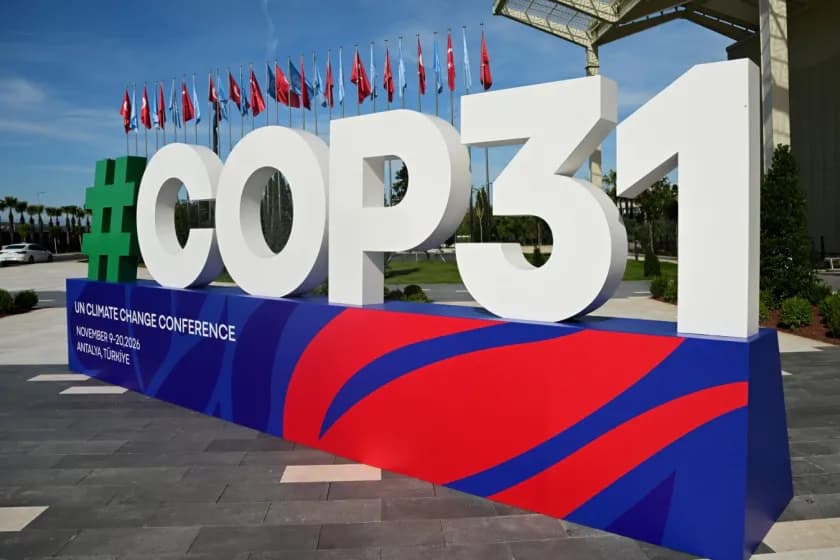
  • The 31st Conference of the Parties (COP31) to the UN Framework Convention on Climate Change (UNFCCC) was held in Antalya, Turkey.
  • Dubbed as the “Implementation COP,” the conference aimed to transition climate commitments into actionable strategies.
  • The conference extended negotiations for over 40 hours past the November 20 deadline, ultimately ending in a deadlock.

Key Issues:

  • Negotiation Deadlock:

    • Influential negotiating blocs, particularly Saudi Arabia and oil-producing nations, opposed commitments to shift away from fossil fuels.
    • The European Union (EU) failed to provide adequate financial support commitments for developing countries, which complicated negotiations.
  • Adaptation Finance:

    • A notable development was the removal of a proposed annual adaptation finance target of $120 billion from the final draft, reflecting ongoing challenges between developed and developing countries regarding climate funds.

Historical Context:

  • COP31 marks a continuation of previous negotiation breakdowns, such as COP6 in The Hague (2000) and COP15 in Copenhagen (2009).
  • The breakdown post-COP15 delayed the creation of the Paris Agreement, ultimately approved in 2015, illuminating the risks of inaction.

Current Climate Situation:

  • The Paris Agreement aims to limit global warming to 1.5 degrees Celsius above pre-industrial levels, a target increasingly seen as unattainable without immediate action.
  • Increasingly severe extreme weather events highlight the urgent need for a global response to climate change.

Looking Ahead:

  • COP32 will be hosted in Addis Ababa, Ethiopia. The challenge lies in achieving action-oriented climate commitments while adhering to UNFCCC principles.

India's Role:

  • India emphasized the importance of developed nations fulfilling their climate financing obligations.
  • The country positioned itself as willing to collaborate for outcomes that balance climate ambition with developmental priorities.
  • India has exceeded its Paris Agreement clean energy commitments ahead of schedule and intends to align development efforts with decarbonization goals.
  • This approach aims to enhance India’s global competitiveness and energy security, while presenting a nuanced climate diplomacy in contrast to more obstructive petroleum-reliant nations.

Conclusion:

  • Stakeholders at COP31 have reiterated the need for immediate action to mitigate climate change impacts, with significant dependencies on financial commitments and participation from developed nations being crucial to achieving the UNFCCC’s long-term objectives.
Concerns Over Ecological Damage in Kashmir
Environment and Ecology25-Nov-2026

Concerns Over Ecological Damage in Kashmir

Exam-Focused Summary: Sheshnag Lake Controversy

  1. Location & Significance:

    • Sheshnag Lake is situated at an elevation of 3,590 meters (11,780 feet) on the Pahalgam-Amarnath cave trek, which is a significant pilgrimage route for the Amarnath Yatra in Hinduism.
    • It is regarded as ecologically sensitive and is surrounded by other high-altitude glacial lakes and glaciers feeding the Lidder stream, a tributary of the Jhelum river.
  2. Environmental Concerns:

    • Excavation activities reported on the shores of Sheshnag have raised alarms regarding potential ecological damage in the fragile Himalayan environment.
    • Concerns are specifically centered around the impact on the sensitive ecosystem of the Lidder valley and the sacred status of the lake in Hindu tradition.
  3. Government Response:

    • The Border Roads Organisation (BRO) is responsible for the ongoing excavation and widening of the tracks to facilitate pilgrim access, asserting compliance with safety norms and environmental safeguards.
  • The BRO claimed that the work was necessary to stabilize vulnerable sections and ease pedestrian congestion during the Yatra.
  • Legal and Judicial Background:

    • In response to previous incidents of pilgrim fatalities, the Supreme Court of India mandated the widening of tracks along the Amarnath route, stipulating that such development must respect ecological limits.
    • The Court emphasized that no motorable road should replace existing walking tracks in these sensitive areas.
  • Government Schemes & Financial Commitments:

    • In April 2023, Union Minister Nitin Gadkari announced a plan worth ₹5,300 crore aimed at improving access to the Amarnath shrine, which includes widening existing routes but does not permit vehicles for pilgrims to prevent congestion.
  • Pilgrimage Route Information:

    • Two primary routes for the Amarnath Yatra:
      • Pahalgam-Chandanwari-Sheshnag-Amarnath Cave
      • Baltal-Amarnath Cave from Sonamarg
    • Recent developments included the Baltal route being widened to accommodate vehicles, although this raised fears that similar projects could threaten ecological balance.
  • Cultural Significance:

    • According to Hindu beliefs, the lake is associated with Lord Shiva who is said to have left his serpents at Sheshnag while journeying to the Amarnath cave to share the secret of immortality (Amar Katha) with goddess Parvati.
    • The lake is mentioned in the historical chronicle "Rajtarangni," highlighting its cultural relevance.
  • Call for Accountability:

    • Critics are demanding clarity from the BRO regarding environmental clearances and the ecological ramifications of construction in this sensitive area.
  • This summary encompasses significant data and events regarding the ongoing controversy surrounding Sheshnag Lake and its implications for environmental policy, cultural heritage, and pilgrimage infrastructure, reflecting a comprehensive view of the situation.