Summary of Legal Aspects Related to Detention and Protests
1. Protests and Detention:
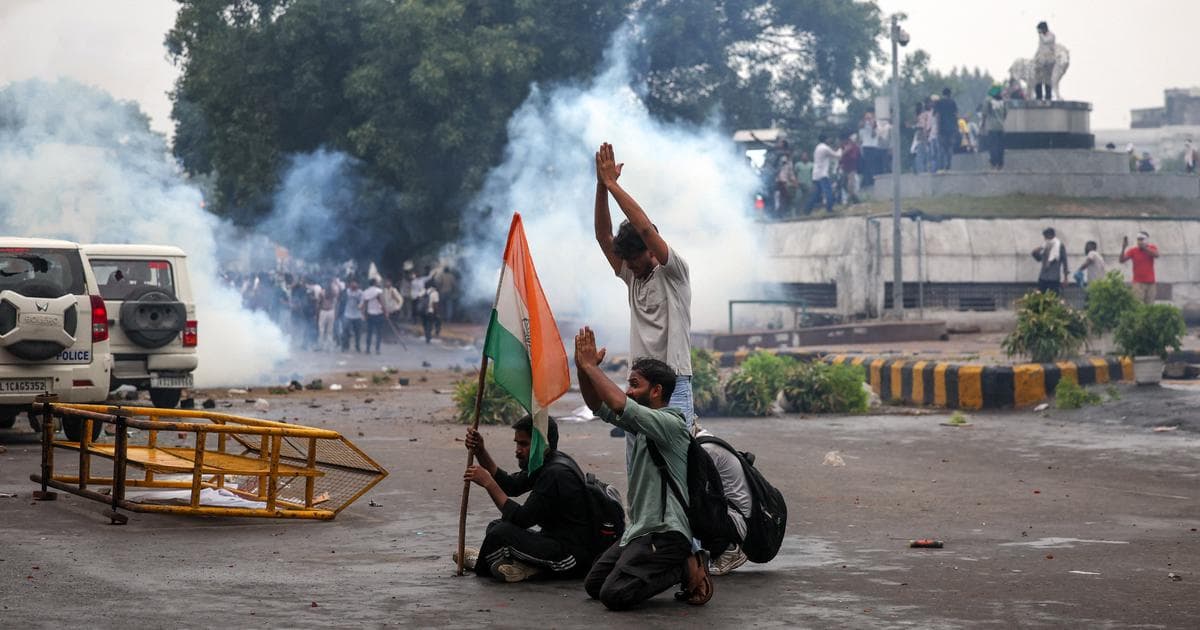
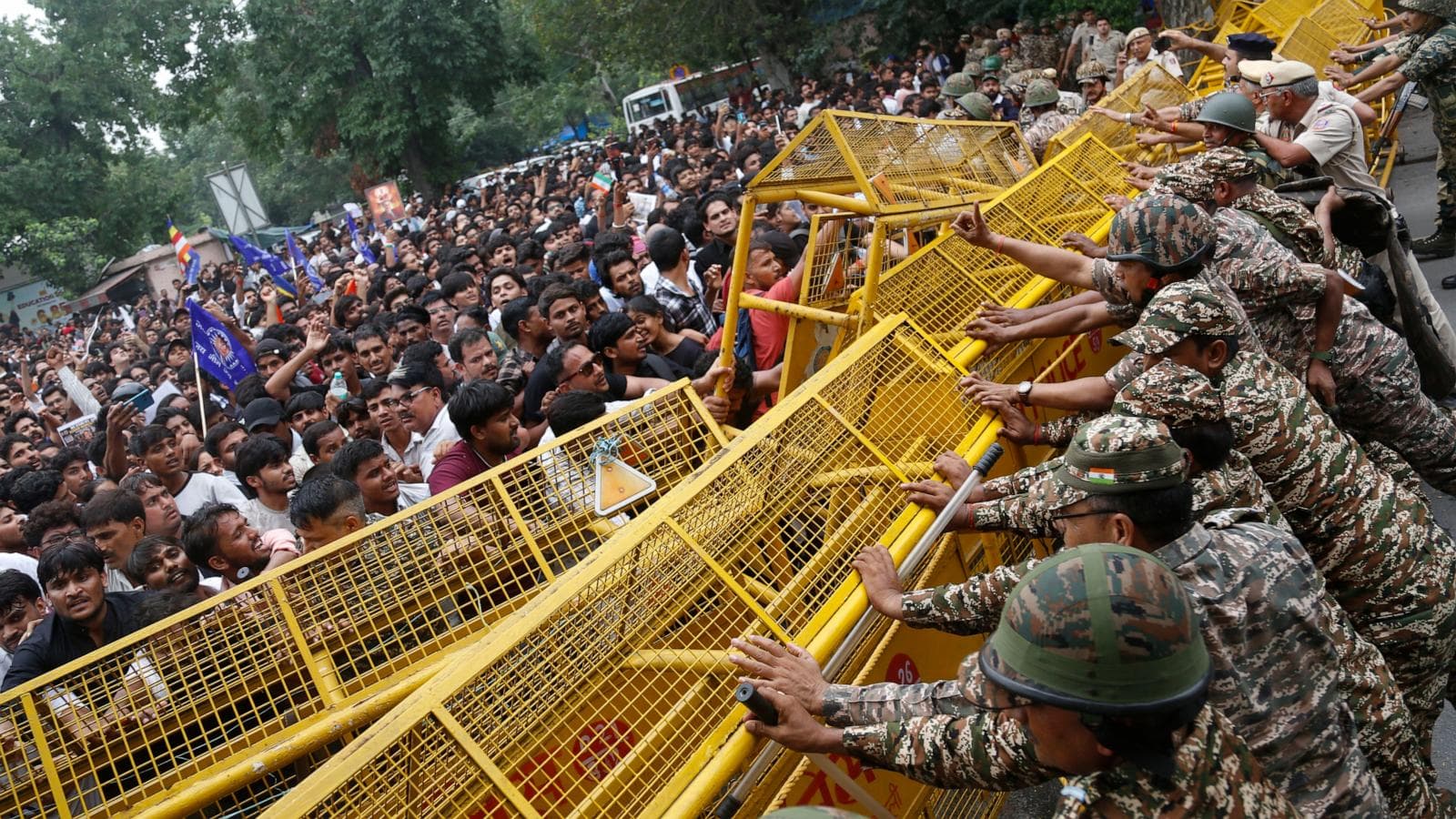
Recent protests by the Cockroach Janta Party (CJP) in New Delhi led to mass detentions by the police.
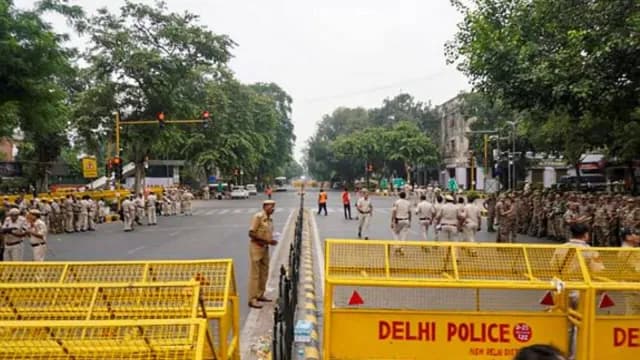
Authorities implemented strict measures including the cancellation of trains, closure of metro stations, internet restrictions, and deployment of barricades.
2. Arrest vs. Detention:
Arrest is a formal legal action leading to the start of criminal proceedings, while detention may involve temporary holding without formal charges.
The Bharatiya Nagarik Suraksha Sanhita (BNSS) allows police to detain individuals under specific circumstances.
3. BNSS Provisions:
Section 170: Police can arrest without a warrant if a cognizable offence is anticipated.
Section 172: Grants police authority to detain or remove individuals who resist lawful orders, a significant addition compared to the previous Criminal Procedure Code (CrPC). It stipulates a 24-hour maximum for such detentions.
4. Judicial Standards and Safeguards:
The distinction between formal arrest and short-term custody can blur, especially in protest scenarios.
Supreme Court rulings that guide police conduct include:
Joginder Kumar v State of UP (1994): Emphasizes that while the power to arrest exists, its justification is crucial.
Arnesh Kumar v. State of Bihar (2014): Advises against automatic arrests for minor infractions.
Mazdoor Kisan Shakti Sangathan v Union of India (2018): States protest restrictions must be regulatory rather than prohibitive.
5. Rights of Detainees and Arrestees:
Article 22 of the Indian Constitution provides the following protections:
Right to be produced before a magistrate within 24 hours.
Right to information regarding the grounds of arrest.
Right to legal representation.
Section 38 BNSS: Allows arrestees to meet their chosen lawyer during interrogation.
Section 43(5) BNSS: Prohibits the arrest of women between sunrise and sunset except under judicial supervision.
6. General Protections During Arrest:
The Supreme Court in DK Basu v. State of West Bengal (1997) laid out essential safeguards, including:
Visible name tags for officers.
Witnessed arrest memos.
Recording of injuries.
Notification of family members regarding the arrest.
7. Preventive Powers and Police Conduct:
Police may claim preventive powers to maintain order during protests, utilizing Section 163 of the BNSS to enforce prohibitory orders.
The consequences of not adhering to lawful orders can shift detention to arrest if a First Information Report (FIR) is filed, as per Section 223 of the Bharatiya Nyaya Sanhita (BNS).
8. Current Context:
High-profile detainees include political figures amidst ongoing debates on the legality and morality of police actions during protests.
Legal interpretations of detention practices remain contested and subject to judicial scrutiny.
This summary encapsulates critical legal frameworks and rights associated with detention, addressing the ongoing protests and the application of specific provisions under Indian law as governed by constitutional directives and judicial precedence.
Key Terms & Concepts
Bharatiya Nagarik Suraksha Sanhita
Legal framework for detention
Section 170
Allows preventive arrest without warrant
Section 172
Empowers police to detain non-compliant individuals
Section 223
Defines offense for disobeying orders
Article 22
Rights for arrested or detained persons
Supreme Court
Judicial oversight on arrests
Joginder Kumar v State of UP (1994)
Established limitations on arbitrary arrests
Arnesh Kumar v. State of Bihar (2014)
Protocol against automatic arrests
Mazdoor Kisan Shakti Sangathan v Union of India (2018)
Clarified protest regulations
DK Basu v. State of West Bengal (1997)
Established arrest safeguard protocols
Mind Map for UPSC Civil Services Revision
Related UPSC Civil Services Current Affairs Articles
Crackdown on Protesters: Significant preemptive action by the Delhi Police included detaining political leaders, former Chief Ministers, lawyers, journalists, students, and activists even before protests initiated.
Supreme Court Ruling: On October 11, 2026, the Supreme Court directed the Delhi Police to allow free movement of people, subject to law and order requirements.
Legal Framework on Preventive Detention
Definition: Preventive detention involves detaining a person without trial to prevent future offences.
Applicable Laws:
National Security Act, 1980 (NSA): Authorizes detention if it’s determined to pose threats to national security or public order.
Code of Criminal Procedure, 1973 (Sections under BNSS): Empower officials to issue urgent orders for maintaining public order and preventing immediate harms.
Judicial Oversight and Constitutional Safeguards
Judicial Review: Preventive detention orders can be challenged and are subject to judicial review under Article 226/227 of the Constitution and Section 401 of BNSS.
Supreme Court Precedents:
Babulal Parate v. State of Maharashtra (1961): Established that preventive powers must not be exercised arbitrarily and should be for genuine emergencies.
Maneka Gandhi v. Union of India (1978): Highlighted that restrictions on personal liberty must be just, fair, and reasonable.
Khudiram Das v. State of West Bengal (1975): Emphasized necessity of communicating grounds of detention for accountability and transparency.
Constitutional Provisions Relevant to Detention
Article 14: Asserts equality before the law.
Article 19: Secures fundamental freedoms including speech and assembly.
Article 21: Guarantees the right to life and personal liberty.
Article 22: Offers specific safeguards against arbitrary detention:
22(4): Prohibits detention beyond three months without review by an Advisory Board.
22(5): Ensures detainees are informed of the grounds for their detention and provided a chance to contest it.
Court's Directives Regarding Recent Protests
The Supreme Court instructed that:
Metro and rail services should operate normally.
Barricades must be reviewed and should not obstruct lawful movement.
Job performance of lawyers and journalists should not be hindered.
Compliance report is required by October 13, 2026, regarding detentions, including details on restrictions.
Historical Context of Preventive Detention in India
Colonial Roots: The framework for preventive detention evolved from colonial laws like the Rowlatt Act (1919).
Post-Independence Laws: Including the Preventive Detention Act, 1950, and the Maintenance of Internal Security Act (MISA), which were expanded and later repealed.
Contemporary Acts: The NSA and amendments to the Unlawful Activities (Prevention) Act (UAPA) have shaped current preventive detention laws.
Concerns and Future Implications
Continuing judicial scrutiny and the evolving interpretation of personal liberty indicate a delicate balance between national security and fundamental rights.
The recent Supreme Court rulings underline an increasing concern over potential misuse of preventive detention powers and the importance of preserving constitutional safeguards in the face of state security measures.
Key Points for Examination
Critical Examination of Preventive Detention: Understanding its legal basis, historical evolution, and judicial pronouncements.
Constitutional Articles: Familiarity with Articles 14, 19, 21, and 22 in context of rights vs. state powers.
Judicial Precedents: Recognition of landmark cases that shaped the interpretation of preventive detention.
1989 Expansion: Two additional elections commissioners were appointed to address concerns over CEC's unilateral powers, leading to the ECI operating as a three-member body.
Supreme Court Judgment: Dhanoa's removal was challenged in court; while dismissed, it acknowledged multi-member setups for better decision-making.
Restoration of Multi-member Structure: After a brief return to a single-member model, the ECI reverted back to three members under T N Seshan's CEC term (December 1990), amidst efforts to reinforce the Commission's independence.
Legislation Affecting Structure:
The Chief Election Commissioner and Election Commissioners (Conditions of Service) Act, 1991: Established the CEC's status equivalent to Supreme Court judges with a retirement age of 65, and ECs with a retirement age of 62.
Amendments in 1993: Expanded the ECI to three equal members; amended the law to include provisions for decision-making mechanisms regarding the transaction of business within the Commission.
Funding Mechanism:
The ECI operates with an independent budget finalized in consultation with the Finance Ministry, generally aligning with the Commission's recommendations.
Additional Responsibilities:
Beyond conducting elections, the ECI advises on disqualifications of sitting MPs/MLAs due to corrupt practices.
Cases of electoral misconduct referred to Supreme and High Courts often consult the ECI concerning disqualifications and prescribed durations.
Summary of Key Judicial Rulings:
T N Seshan Case: The Supreme Court upheld the appointment of multiple commissioners and clarified that it was crucial for effective functioning and decision-making within the Commission.
Implications for Governance:
The ECI’s authority is central to maintaining the integrity of electoral processes in India, highlighting the importance of its structural independence and operational autonomy amidst demands for the removal of individuals in its leadership.
Current Context:
Protests have emerged regarding the conduct and leadership of the ECI, emphasizing the need for public confidence in electoral fairness and the institutional integrity of election management in India.
Ethical dilemmas faced by civil servants should be evaluated based on whom they ultimately serve, reinforcing the need for accountability and public trust in institutions.
Roles and Responsibilities
Civil servants must act with integrity, which includes providing honest assessments and ensuring their work benefits the public, particularly marginalized groups.
Government Schemes and Policies
While specific schemes were not named in the article, the ethos derived from the philosophies of the leaders mentioned could influence policies aimed at social upliftment and equitable governance.
Legal and Constitutional Framework
The article implies a need for adherence to constitutional values in governance, though specific articles or laws are not cited.
Importance of Accountability
Emphasizes the expectation that bureaucrats must uphold moral and ethical standards, with decisions reflecting a commitment to serving the community rather than seeking personal gain or succumbing to hierarchical pressures.
Conclusion
A well-functioning democracy relies on ethical civil service where officials embody the values of service, integrity, and accountability. This lays the foundation for restoring public trust and ensuring government actions align with the welfare of all citizens, especially the underprivileged.
Overall, the discussion provided a philosophical framework necessary for civil servants, urging them to reconcile their duties with ethical and moral imperatives in serving the public.
Right of Reply:
News items must include responses from individuals or parties involved in allegations.
Updates should be made promptly upon request from concerned parties, with updated dates noted.
Content Management:
Process for editing or removing false content upon request by affected parties.
Emphasis on transparency and correction of misinformation.
Intellectual Property Rights:
Respect for copyrights and trademarks.
Requirement for permissions when using copyrighted material, with implications for fair use.
Responsible Reporting:
Special sensitivity in reporting criminal matters and cases involving minors, ensuring preservation of presumption of innocence.
Specific caution in covering sexual offenses and social justice issues, adhering to Sections 67, 67A, and 67B of the IT Act against obscene and inappropriate material.
Grievance Redressal:
Implementation of grievance mechanisms in compliance with the Information Technology (Intermediary Guidelines) Rules, 2011.
Grievance officers must resolve complaints within a month.
Training and Awareness:
Regular staff training on existing laws impacting journalism, including:
Right to Information Act
Copyright Act
Laws on defamation and child protection (POCSO, Juvenile Justice Act).
Emphasizes caution in identifying victims in sensitive cases and promotes guidelines for communal harmony in reporting.
Judicial and Policy Dimensions:
Ongoing commitment to ethical digital journalism reflects a self-regulatory approach that aims to maintain high standards while respecting fundamental rights as enshrined in the Indian Constitution.
Conclusion:
The establishment of the Code demonstrates a proactive approach by the Digital News Publishers Association towards maintaining ethical standards in digital journalism, promoting accountability, and ensuring adherence to legal provisions, thereby enhancing trust in the media ecosystem.
Section of Attempted Rape (IPC 376 read with 511): Requires evidence of an attempt at penetration; the High Court found a lack thereof in this case.
Trial Details: The trial court had previously convicted Pathak under IPC Sections 376 and 342, sentencing him to three years of rigorous imprisonment and a fine for attempting rape and wrongful confinement, respectively.
Incident Timeline: The assault occurred on January 19, 2008, in Chhaya Studio, Amarpur, where the accused allegedly isolated the victim under the pretext of showing her a photograph, leading to the alleged sexual attack.
FIR Registration: The First Information Report (FIR) was lodged the day following the incident, triggering the legal proceedings against Pathak.
Judicial Examination Ahead: The Supreme Court will review the submissions made, indicating a potential reassessment of the legal standards regarding sexual assault and the interpretation of consent and modesty under Indian law.
This case emphasizes ongoing discussions about the definition and judicial interpretation of sexual violence in India, as well as the need for sensitivity and accuracy in legal language concerning victims of sexual crimes.
 iAspirants