iAspirants
Current AffairsPrelims PYQsUPSC CSE SyllabusUPSC CSE StrategyBlogsPricing
Login
iAspirants
Current AffairsPrelims PYQsUPSC CSE SyllabusUPSC CSE StrategyBlogsPricingContact UsLoginSignUp
iAspirants

Your AI-powered companion for UPSC preparation.

Study Resources

  • Current Affairs
  • Prelims PYQs
  • UPSC CSE Syllabus
  • UPSC CSE Strategy
  • Blogs

Practice & Plans

  • Mains Answer Evaluation
  • Pricing
  • Sign Up
  • Login

Company

  • Home
  • About Us
  • Contact Us
  • FAQs

Legal

  • Privacy Policy
  • Terms & Conditions
  • Return Policy

© 2026 iAspirants, Inc. All rights reserved.

  1. Blogs
  2. National and International Importance

Activist Faces Detention for Rights

Published on: 22-Nov-2026

Source: The Hindu

Share this post

Activist Faces Detention for Rights

Article Summary

  • Individual Profile: Pranab Doley, 40, a first-generation learner, has a background in Arts from Visva-Bharati University and a Master's in Social Welfare from Tata Institute of Social Sciences.

  • Grassroots Organizing: Doley is involved in grassroots activism, notably co-founding:

    • Jeepal Krishak Shramik Sangha (JKSS): A farmers’ rights organization advocating for the rights of farmers in Assam.
    • All Kaziranga Affected Communities’ Rights Committee: Focuses on land rights for communities affected by developments near Kaziranga National Park.
  • Indigenous Land Rights Activism: Doley’s activism centers around indigenous land rights in Assam, which has led to repeated confrontations with the state government.

  • Legal Issues & Detentions:

    • National Security Act (NSA): Doley was detained for 118 days under this act for opposing a luxury hotel project adjacent to Kaziranga National Park.
    • This incident adds to a history of arrests linked to his activism.
  • Kaziranga National Park: A UNESCO World Heritage site, known for its biodiversity and as a protected area for the Indian rhinoceros and other species. Development projects near such significant ecological zones often lead to tensions between development and conservation efforts.

  • National Security Act (NSA): Provides the government with the authority to detain individuals deemed a threat to national security, often criticized for potential misuse against dissenting voices.

  • Constitutional Framework:

    • Article 19: Grants the right to freedom of speech and expression, assembly, and association, which can be invoked in the context of Doley's opposition to state policies affecting indigenous rights.
    • Article 21: Ensures the right to life and personal liberty, which activists often argue is violated during arbitrary detentions under laws like the NSA.
  • Activism Context: The use of the NSA in cases of dissent highlights ongoing tensions between state authority and individual rights in India, particularly concerning environmental conservation and indigenous community rights.

This summary reflects the critical aspects of Doley’s activism and related legal implications within the broader context of constitutional rights and environmental conservation efforts in Assam.

Key Terms & Concepts

Pranab DoleyActivist for land rights
Kaziranga National ParkSite of proposed hotel project
National Security Act (NSA)Law under which detained
Jeepal Krishak Shramik Sangha (JKSS)Farmers' rights organization
All Kaziranga Affected Communities’ Rights CommitteeAdvocacy for local rights
AssamLocation of land rights struggle
2009Year of undergraduate graduation
2011Year of Master's degree completion
Luxury hotel projectControversial development near park
118-day detentionDuration of latest detention

Mind Map for UPSC Civil Services Revision

Turn UPSC Civil Services Current Affairs Into Exam-Ready Notes

Reading National and International Importance current affairs is half the work. Revise them with ready-made notes and test what actually stuck.

  • Daily UPSC Civil Services current affairs analysis
  • Revision notes, mind maps & MCQs
  • Prelims mock tests with instant results

Related UPSC Civil Services Current Affairs Articles

Transforming Urban Transportation in India
National and International Importance22-Nov-2026

Transforming Urban Transportation in India

Summary Notes on Urban Mobility and Innovations in India

1. Organizational Framework:

  • World Resources Institute (WRI) India: Focused on urban transition, energy transition, and food, land & water transition. Works with governments and civil society on sustainable development.
Practise Mains answer writingUpload a handwritten answer and get it evaluated

2. Urban Transportation Challenges:

  • Increasing traffic congestion in Indian cities due to underdeveloped public transportation and high reliance on private vehicles.
  • The liberalization of 1991 has led to increased per capita income, altering public transportation infrastructure demands.
  • Government policies predominantly incentivize private vehicle usage, necessitating a shift towards comprehensive public infrastructure.

3. Policy Recommendations:

  • Move towards integration of transportation services, promoting public transport over private vehicle dependency.
  • Learning from global examples like Paris, cities can implement more dedicated cycling lanes and congestion management strategies.

4. Transport Analytics Hub:

  • A digital tool aimed at enhancing understanding of city-level mobility through indicators such as:
    • Modal share of transport modes used by citizens.
    • Average trip length and road safety statistics.
    • Data on electrification rates of vehicles and accessibility to public transport.
  • Information developed is visualized and made accessible to support city planning.

5. Global Innovations Impacting Urban Mobility:

  • Technologies like CityData.AI for mobility analytics, Optibus for bus operation optimization, and demand-responsive transport platforms (e.g., Via) are changing how cities manage transport efficiencies.
  • Adaptive traffic signal systems recommended to facilitate smoother traffic and better public transport prioritization.

6. Legal Considerations and Infrastructure Needs:

  • Congestion pricing discussions in cities like Delhi and Mumbai emphasize the need for supportive infrastructure, highlighting the hesitance due to inadequate alternative routes.
  • Traffic management reliant on technology must be scaled up in cities, integrating various transport networks for cohesive operation.

7. Last-Mile Mobility Solutions:

  • Station Access and Mobility Program (STAMP) aims to enhance last-mile connectivity by integrating technology and mobility services, encouraging the co-existence of various transport modes based on distance and cost.

8. Engagement with Startups:

  • WRI collaborates with Indian startups for solutions to urban mobility challenges through a structured accelerator framework, focusing on behavioral nudges for transport usage.
  • Examples include initiatives like Tummoc, developing transport planning apps, benefiting from partnerships with corporations and public agencies.

9. Prominent Indian Startups in Urban Mobility:

  • Nayan Tech: Analyzes traffic and driver data using AI.
  • Street Surge Technologies: Implements route optimization using data analytics.
  • Videonetics: Utilizes video surveillance and automated number plate recognition for traffic enforcement.
  • Startups enhancing public transport like Chalo and innovations in autonomous driving from Minus Zero.

Conclusion: Increasing urbanization and vehicular reliance in India present significant challenges for transportation systems. Implementing integrated technological solutions and evolving public policy can improve mobility outcomes, foster sustainable practices, and enhance accessibility to vital urban services.

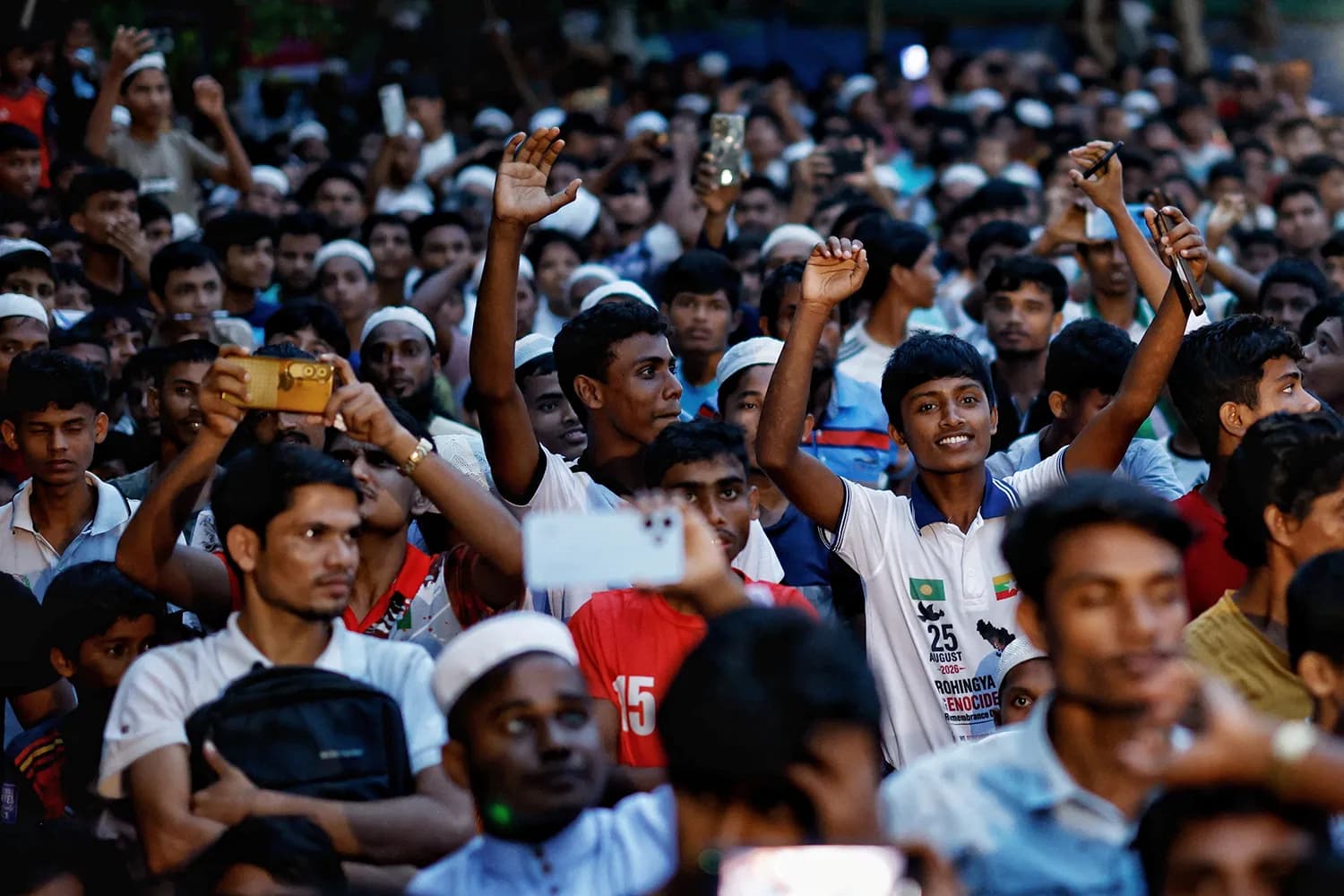
ICJ Rules Genocide Against Rohingya
International Relations21-Nov-2026

ICJ Rules Genocide Against Rohingya

International Court of Justice (ICJ) Ruling on Myanmar

Key Facts and Legal Precedents:

  • The ICJ ruled that Myanmar is guilty of genocide against the Rohingya minority during the military campaign of 2016-17.
  • This marks a significant precedent as it is the first time a state has been found guilty of genocide under the 1948 Genocide Convention.
  • The court utilized the “specific intent” (dolus specialis) principle to establish genocidal intent based on overwhelming evidence.

Historical Context:

  • The Rohingya have faced prolonged persecution, exacerbated by the 1982 citizenship law, rendering the majority stateless.
  • The 2017 military operations in northern Rakhine State led to mass killings and sexual violence, forcing over 700,000 Rohingya to flee to Bangladesh.

Judicial Implications:

  • The ICJ highlighted that the evidence points to genocidal intent being the only reasonable conclusion for the atrocities committed.
  • This ruling could influence ongoing cases, such as South Africa's case against Israel regarding actions in Gaza.

Challenges to Enforcement:

  • Although the verdict represents a moral victory, enforcement poses significant challenges:
    • Only the UN Security Council can implement ICJ rulings.
    • Russia and China, which support Myanmar’s junta, hold veto power in the Security Council.
  • On the same day as the ruling, the US, Russia, and China collectively called for reform of the UN and also criticized bodies like the International Criminal Court.

Humanitarian Situation:

  • Bangladesh, hosting about 1.2 million Rohingya, does not formally recognize them as refugees, which restricts their movement and employment opportunities.
  • Conditions in refugee camps are worsening amid dwindling aid.
  • Malaysia has begun sending Rohingya back to Myanmar and plans to resettle 10,000 in Turkey.
  • India has adopted a similar stance, undertaking expulsions of Rohingya individuals.

Recommendations for International Response:

  • There is a pressing need for countries to exert pressure on Myanmar to heed the ICJ ruling.
  • Suggested actions include facilitating internal investigations, and ensuring restitution and compensation for the affected Rohingya population.

Conclusion:

The ICJ's ruling against Myanmar signifies a critical development in international law but indicates a complex geopolitical landscape that may hinder the resolution of the Rohingya crisis. The plight of the Rohingya continues despite a landmark judicial verdict, underlining the vital role of international cooperation in addressing humanitarian issues.

Fossil Discovery in Narmada Valley
National and International Importance19-Nov-2026

Fossil Discovery in Narmada Valley

Summary Notes on Palaeoloxodon Namadicus Discovery in Madhya Pradesh

Fossil Discovery:

  • A fossilized jaw potentially belonging to Palaeoloxodon namadicus, a prehistoric straight-tusked elephant, was found in Raisen district, Madhya Pradesh, estimated to be 400,000 to 500,000 years old.
  • Size of the Jaw: Approximately 75 cm in length and 25 cm in width; features distinctive molars with 7 to 9 parallel ridges.

Research Team:

  • Involved experts:
    • Dr. Hitkishor Goswami
    • Dr. Ravi Upadhyay
    • Dr. Kunwar Wajahat Shah
  • Geological Survey of India (GSI) inspected the site on November 13, 2023.

Geological Context:

  • Fossil found in yellowish soil associated with the Baneta formation, indicative of the Pleistocene epoch (approximately 700,000 to 30,000 years ago).
  • Geological layers are critical for dating fossils and understanding the era when these elephants lived.

Potential for Further Discoveries:

  • Nearby bone fragments indicate that the site may yield more fossils, including complete skeletons.
  • Other prehistoric animals such as horses and rhinoceroses may also be discovered in the surrounding areas due to varying geological strata.

Historical Significance:

  • The Narmada Valley has historical importance for human evolution, requiring more systematic investigations.
  • Prior dinosaur fossil discoveries in India date back to 1822, with numerous species identified across various Indian states.

Recommendations:

  • A call for the administration to notify and protect the discovery site.
  • Coordination with the Archaeological Survey of India (ASI) for a thorough excavation and geological survey is suggested to unearth more fossils.

Conclusion: This discovery may significantly contribute to our understanding of prehistoric life in India and the evolutionary history of elephants. Potential actions must be taken to ensure the preservation and study of the site for future research.