iAspirants
Vulture Population Decline in India
Published on:
Share this post
Article Summary
Vulture Conservation and Electrocution Threats in India: Exam-Focused Notes
Population Decline
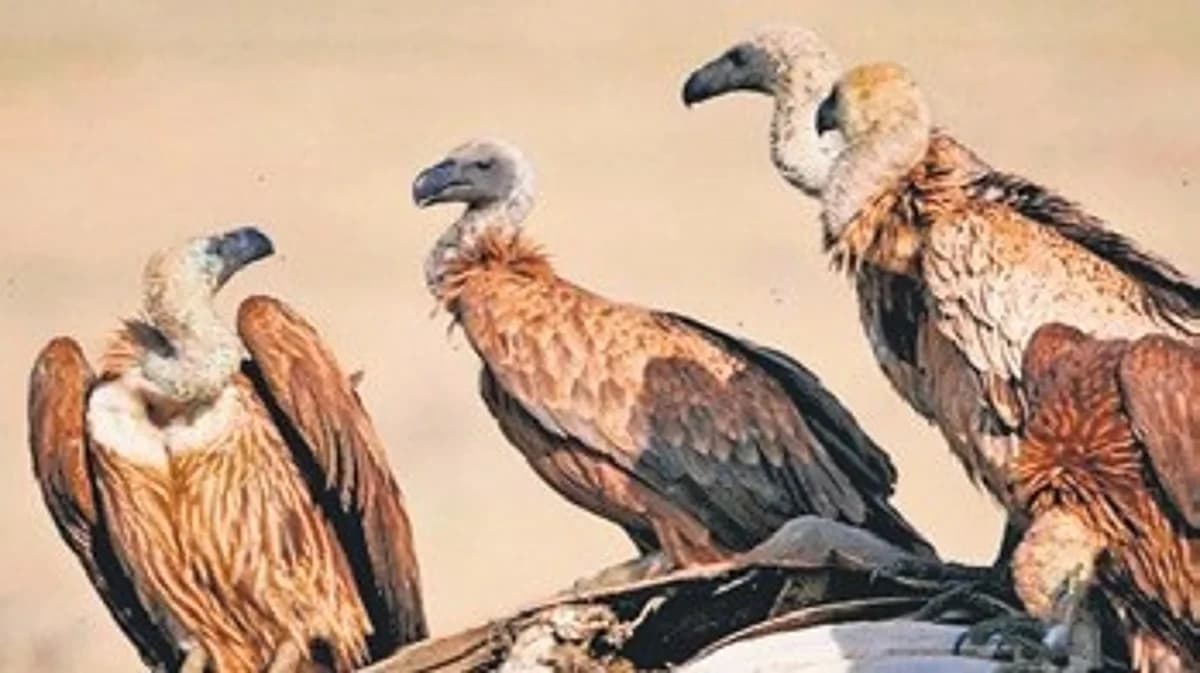
- Vulture Population Crash: India witnessed a dramatic 99.5% decline in vulture populations from 1980s (approx. 40 million) to 2007, attributed mainly to the veterinary drug diclofenac.
Chemical Threat and Legislative Action
- Government Ban: The Indian government banned diclofenac due to its kidney toxicity in vultures. Additional bans in 2023 targeted other NSAIDs including aceclofenac and ketoprofen to further protect vultures.
Economic and Health Impact
- Public Health Costs: A 2024 study published in the American Economic Review estimated that human mortality due to the increased rabies spread (linked to declining vulture populations) rose by 4%, costing India approximately $69.4 billion annually.
Electrocution Hazard
- Electrocution Risk: The danger posed by the expanding power infrastructure, notably electrocution, is now seen as an escalating threat to vultures, exacerbated by their nesting habits (only 50% of historic nesting sites occupied as of a 2025 survey) and their attraction to open landscapes with predictable food sources.
- Vulture Characteristics: The large wingspans of vultures increase the risk of electrocution by contacting two power conductors simultaneously.
Conservation Strategies
- Site Reallocation: Relocating livestock carcass dumps away from high-tension power infrastructure could mitigate electrocution risks. For example, a study observed positive outcomes from relocating a dump 2.4 km from high-tension lines in Uttarakhand.
- Electrocution Documentation: Avian electrocution is likely under-reported in India as dead birds may be removed by humans or consumed by scavengers, highlighting the need for better monitoring.
- Infrastructure Modifications: Recommendations include:
- Insulating power lines.
- Increasing the gap between energized and grounded components to prevent access by vultures.
- Installing safe perches away from power lines.
Judicial and Policy Insights
- Vulture conservation policies need integration within broader climate and power infrastructure initiatives to ensure effective protection measures are enforced.
Scientific Research Findings
- Studies published in journals such as the Journal of Threatened Taxa and evaluations for the State Climate Resilient Power System Development Project underline the urgent need for action regarding avian electrocution mortality and conservation methods.
Conclusion
The decline of vulture populations in India necessitates robust legislation, informed by scientific research, to mitigate not just the chemical threats from livestock medications but also the rising risk of electrocution due to inadequate power infrastructure. Effective conservation strategies should be interdisciplinary, combining ecological insight with power distribution planning.
Key Terms & Concepts
| diclofenac | painkiller harmful to vultures |
| 2023 | year of additional NSAID bans |
| 4 crore | vulture population in 1980s |
| 99.5% | vulture population decline by 2007 |
| $69.4 billion | economic cost of human mortality |
| 50% | vultures nesting at historic sites |
| 2024 | year of human mortality study |
| 2.4 km | distance to relocate carcass dump |
| State Climate Resilient Power System Development Project | assessment of power project impacts |
| Journal of Threatened Taxa | publication of related study |
| Egyptian vulture | species affected by electrocution |
| Uttarakhand | location of recent studies |
| electrocution |