iAspirants
Understanding the Importance of Isthmus
Published on:
Share this post
Article Summary
Exam-Focused Notes on the Panama Canal
Geographic and Historical Context
- Isthmus Definition: A narrow strip of land connecting two larger landmasses, surrounded by water on both sides. Example: Isthmus of Panama (77 km long).
- Great American Biotic Interchange (GABI): Historical migratory events facilitated by the Isthmus of Panama.
Engineering and Construction
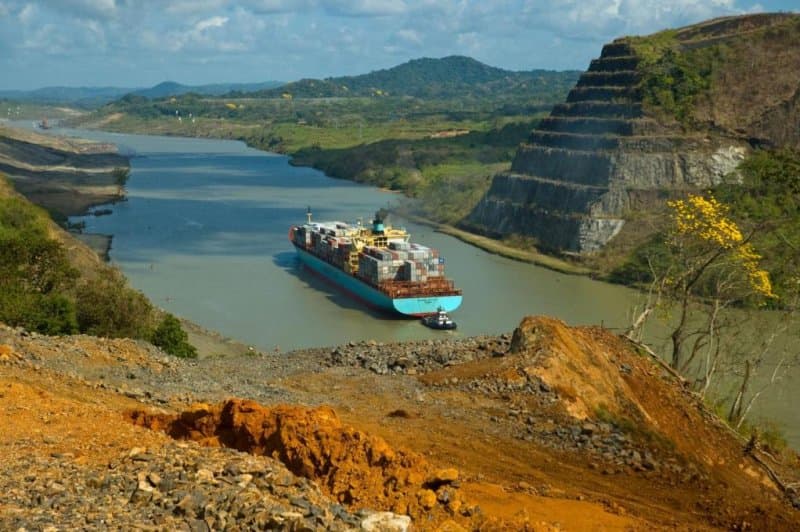
- Panama Canal: Initiated in 1903, revolutionized global shipping since its opening on August 15, 1914.
- Ferdinand de Lesseps: French engineer behind the initial Suez Canal, later attempted Panama Canal but failed.
- Adolphe Godin de Lepinay: Proposed a lock-based canal system, which the U.S. ultimately adopted.
- Construction Challenges: Tropical diseases like yellow fever and malaria, harsh working conditions resulted in significant mortality during construction.
U.S. Involvement and Legal Framework
- Treaty: Hay–Bunau-Varilla Treaty (November 18, 1903) allowed U.S. construction and control of the canal.
- Theodore Roosevelt: Recognized as the "father of the Panama Canal.” Key accomplishments include the establishment of the Panama Canal Zone and acquisition of French assets.
Operational Milestones
- First Passage: The first ocean-going vessel (S.S. Ancon) transited the canal on August 15, 1914.
- Control Timeline:
- 1914-1979: Exclusively U.S. controlled.
- 1979-1999: Shared control.
- Post-1999: Full control reverted to Panama.
Economic Significance
- Over 1 million vessels have transited since 1914, averaging 10 hours for crossing.
- Trade Efficiency: Savings of up to 15,000 km for vessels traveling from U.S. east to west coasts, versus circumventing South America via Cape Horn.
- Current operational capacity strained, leading to increased tariffs and wait times due to rising traffic linked to geopolitical tensions (e.g., disruptions in the Strait of Hormuz).
Strategic Importance
- The Panama Canal is pivotal for international trade, especially given the current geopolitical climate and its impact on global shipping routes.
Environmental Considerations
- Highlighted the importance of managing tropical diseases during construction.
Summary
The Panama Canal represents a monumental achievement in engineering, impacting global trade routes since its completion. The U.S. involvement not only reflects historical geopolitical maneuvers but also significant diplomatic agreements that shaped Panama's autonomy and trade capabilities. The canal continues to play a crucial role in international shipping and economic efficiency.
Key Terms & Concepts
| Isthmus of Panama | Connects North and South America |
| Panama Canal | Revolutionized global shipping |
| Great American Biotic Interchange (GABI) | Evolutionary migration event |
| Hay–Bunau-Varilla Treaty | Allowed U.S. canal construction |
| Theodore Roosevelt | Key figure in canal construction |
| Suez Canal | Earlier global shipping route |
| 1903 | Year of Panama independence |
| 1914 | Year Panama Canal opened |
| 1999 | Control transferred to Panama |
| 15,000 km | Distance saved by canal |
| Strait of Hormuz | Disrupted trade route |
| More than a million vessels | Traffic through the canal |