iAspirants
Unconditional Cash Transfer Schemes in India
Published on:
Share this post
Article Summary
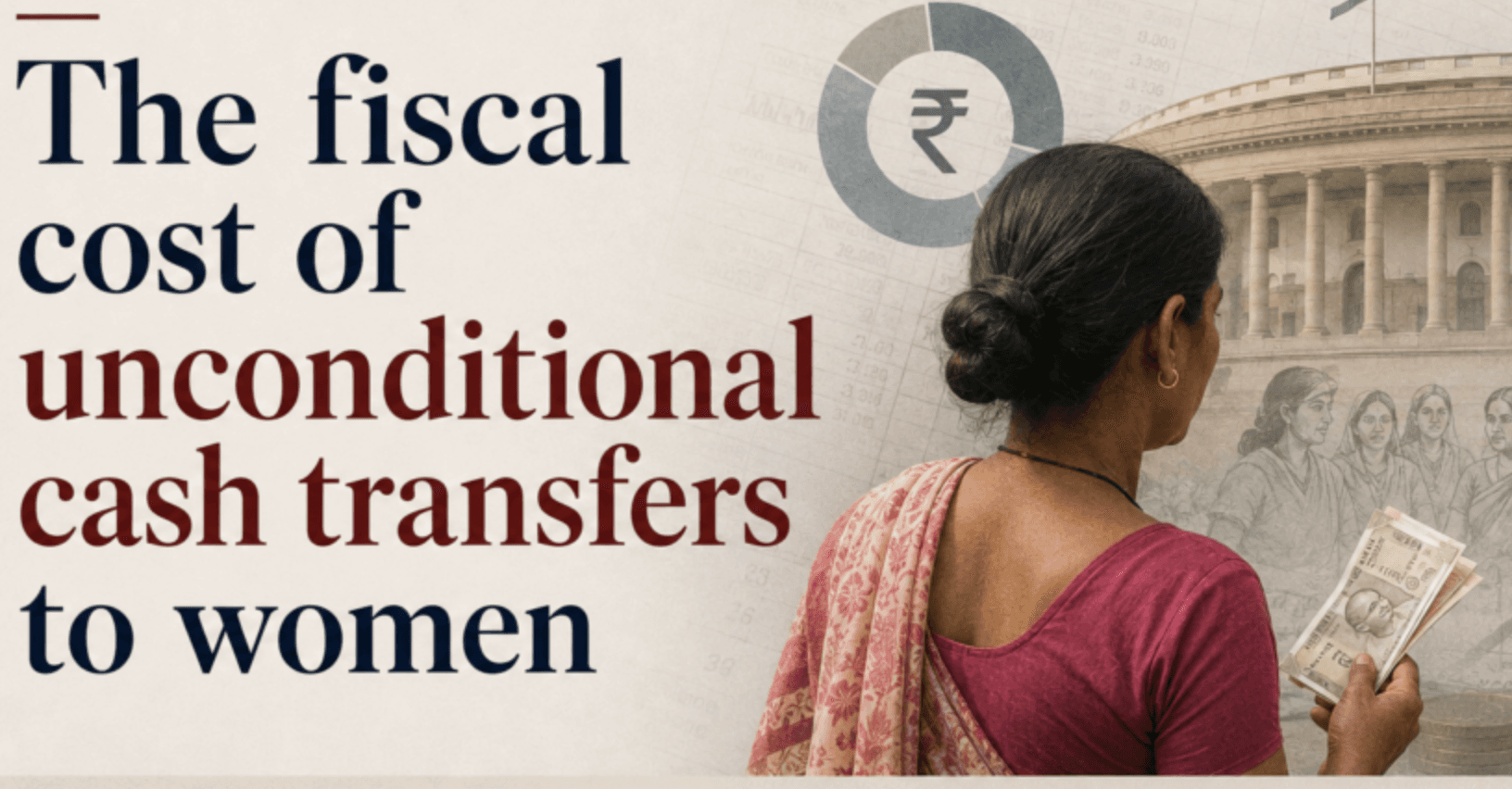
Exam-Focused Notes on Unconditional Cash Transfer (UCT) Schemes in India
Overview of UCT Schemes
- Importance: UCT schemes, introduced since 2020, are seen as electoral strategies particularly aimed at women voters.
- Key Examples:
- Kalaignar Magalir Urimai Thittam (Tamil Nadu)
- Lakshmir Bhandar (West Bengal)
- Gruha Lakshmi Yojana (Karnataka)
Economic Data
- Projected Expenditure: By 2025-26, states are expected to spend around $18 billion on UCTs, predominantly benefiting women.
- Budget Impact: UCT financing can lead to expenditure switching or larger fiscal deficits, limiting productive investments.
Constitutional References & Policies
- Sustainable Development Goals: UCT initiatives partially support SDG 5.4, which underscores the importance of recognizing women’s unpaid domestic and care work.
Challenges of UCT Programs
Beneficiary Identification:
- Reliance on proxy indicators (land ownership, electricity consumption, household assets) can cause:
- Inclusion Errors: Non-eligible households receiving benefits.
- Exclusion Errors: Eligible households missing out on benefits.
- Reliance on proxy indicators (land ownership, electricity consumption, household assets) can cause:
Political Costs: Perceived and actual errors in beneficiary targeting could influence voter preferences negatively.
Noteworthy Scheme Implementations
Kalaignar Magalir Urimai Thittam:
- Initially promised ₹1,000/month for all women-headed households.
- Adjusted eligibility criteria due to fiscal constraints in September 2023.
- First covered 1.13 crore women; expanded by 16.94 lakh beneficiaries in December 2025.
- Total scheme cost for 2025-26 is ₹13,807 crore.
Lakshmir Bhandar:
- Launched in 2021 to assist women with monthly stipends, faced controversy over including non-resident citizens.
Political Dynamics
- Electoral Consequences: Recent UCT implementations have not guaranteed electoral victories, raising questions about the effectiveness of such schemes in securing voter loyalty.
- Dissatisfaction Among Beneficiaries: Issues with eligibility lead to public grievances, impacting political support.
Alternatives and Recommendations
Conditional Cash Transfers (CCT):
- Linking benefits to desirable social outcomes, such as educational enrollment (e.g., Tamil Nadu’s Midday Meal Scheme), results in fewer grievances and maintains the welfare goal without extensive political costs.
Designing Future Welfare Policies: Recognizing the tension between economics (favoring targeted programs) and politics (favoring broader inclusion) can help in formulating better welfare strategies.
Summary
While UCT schemes aim to empower women and support economic stability, they encounter significant political and administrative challenges. Future welfare policies may benefit from implementing conditional benefits to minimize political backlash and enhance developmental outcomes.
Key Terms & Concepts
| Unconditional Cash Transfer (UCT) | financial support to women |
| Kalaignar Magalir Urimai Thittam | cash assistance to women |
| Lakhsmir Bhandar | monthly assistance to women |
| Gruha Lakshmi Yojana | financial support for women |
| Sustainable Development Goal 5.4 | recognition of unpaid work |
| $18 billion | expected state expenditure on UCTs |
| ₹1,000 | promised monthly cash |
| ₹13,807 crore | cost of UCT scheme 2025-26 |
| 1.13 crore | women covered initially |
| 16.94 lakh | additional beneficiaries added |
| September 2023 | launch date of scheme |
| December 2025 | date of adding beneficiaries |
| Midday Meal Scheme |