iAspirants
Transforming Plastic Waste Management in India
Published on:
Source: PIB
Share this post
Article Summary
Exam-Focused Notes on Plastic Waste Management in India
Key Concepts and Initiatives
Swachh Bharat Mission (SBM):
- Launched on October 2, 2014, aims to improve waste management systems in India.
- Focuses on collection, segregation, and recovery of waste.
Single-Use Plastic Ban:
- Effective from July 1, 2022, bans identified single-use plastic items across India.
- Supports the transition towards sustainable alternatives.
Local Initiatives:
- Trichy City Corporation: Launched campaigns to reduce single-use plastic in markets.
- Engaged 220 vendors across three farmer markets.
- Resulted in saving 2,200 kg of single-use plastic in one year.
- Trichy City Corporation: Launched campaigns to reduce single-use plastic in markets.
Thaila ATM Initiative:
- Implemented in Vita, Maharashtra, providing reusable cloth bags through vending machines.
- Monitored by GSMA technology, ensures stock availability.
- Over 6,000 bags sold, promoting accessibility to reusable options.
Buy-Back Scheme in Andaman & Nicobar Islands:
- Encourages returning used plastic milk pouches for rewards (fresh milk, discounts).
- By November 2024, 17,600 pouches collected, yielding 352 liters of milk.
Waste Recovery and Recycling:
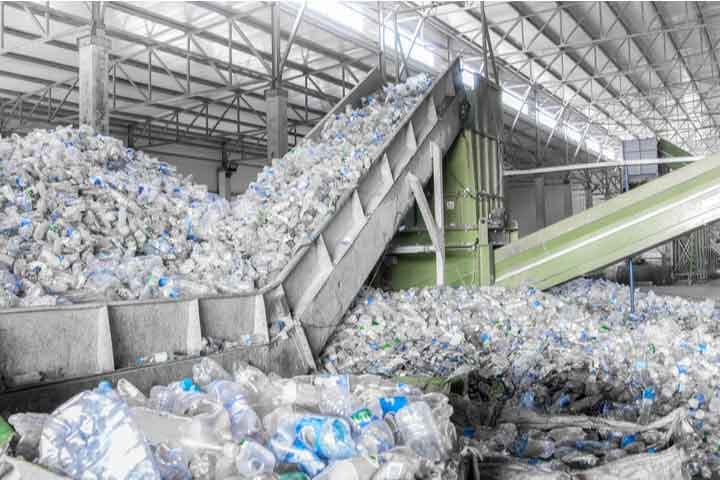
- Bengaluru: Project to convert plastic waste into usable materials.
- Established a recovery facility in 2019, employing 76 sanitation workers during COVID-19.
- Processes waste for use in roads, agricultural pipes, and furniture.
- Bengaluru: Project to convert plastic waste into usable materials.
Multi-layered Plastic Recycling:
- Patiala's Plastic Recycling Facility: Converts hard-to-recycle multi-layered plastics into eco-friendly chipboard.
- Daily production capacity of 10 tons, producing 75-100 chipboards.
- Patiala's Plastic Recycling Facility: Converts hard-to-recycle multi-layered plastics into eco-friendly chipboard.
Economic and Environmental Impact
- Plastic Consumption:
- Bengaluru consumes approximately 16 kg of plastic per person monthly.
- Community Engagement:
- Local self-help groups distribute paper and cloth bags, further promoting sustainable practices.
Constitutional and Policy Framework
- Constitutional References:
- Article 51A (g): Encourages citizens to protect and improve the natural environment.
- Directive Principles of State Policy (DPSP): Article 48A mandates the state to protect and improve the environment.
Future Directions
- The Swachh Bharat Mission aims to further enhance waste processing and material recovery, emphasizing sustainable practices in daily life.
- Local actions highlight the importance of community involvement in reducing plastic waste.
Summary of Results
- Initiatives across cities show significant reductions in plastic usage.
- Emphasis on creating a circular economy through recycling and reusing materials.
- Continuous efforts to educate and engage communities in sustainable waste management practices.
These initiatives reflect India's commitment to addressing plastic pollution through community-driven actions and policy enforcement, contributing to a cleaner and more sustainable environment.
Key Terms & Concepts
| Swachh Bharat Mission | Strengthening waste management systems |
| Single-use plastic ban | Regulation effective from July 2022 |
| Thunippai Thiruvizhai | Promoting reusable cloth bags |
| Trichy City Corporation | Campaign against single-use plastic |
| Thaila ATM | Providing reusable bags easily |
| Andaman and Nicobar Islands | Biowaste buy-back initiative |
| Karnataka State Plastic Association | Monitoring plastic waste statistics |
| Cleanliness Centers | Sorting and processing plastic waste |
| CSR-supported recycling facility | Recycling multilayered plastics |
| November 2024 | Target for milk pouch collection |