iAspirants
Supreme Court Ruling on EIA Regulations
Published on:
Share this post
Article Summary
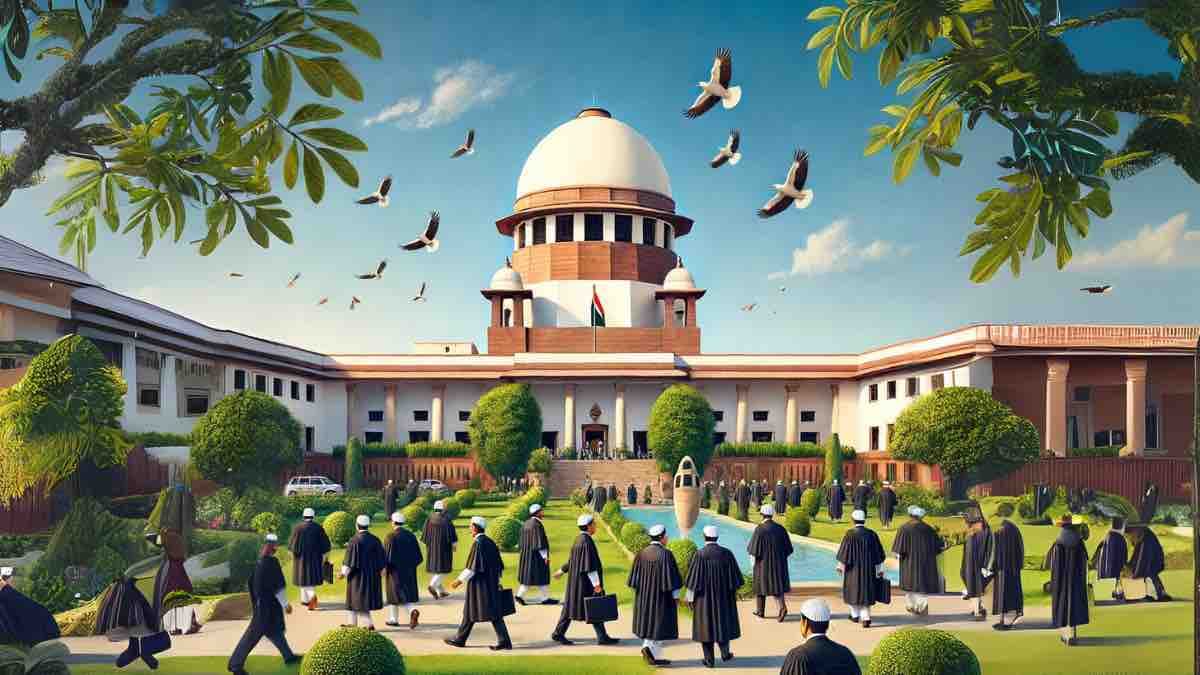
Supreme Court of India Ruling: On July 29, 2026, the Supreme Court, led by Chief Justice Surya Kant, reaffirmed the rule that environmental impact assessments (EIA) must occur before the commencement of construction projects. The ruling quashed a 2021 Office Memorandum allowing post facto clearances, though it permits the Centre to legalize violations through future statutory notifications.
Environmental Norms: The ruling highlights a disconnect between state-level appraisal processes and central laws, as state EIA authorities often discover violations only after projects are completed. This leads to post facto clearances becoming a norm rather than an exception, undermining the integrity of environmental assessments.
Judicial Perspective: The Court's decision draws a distinction between administrative orders and notifications, suggesting that the procedural aspect is more about maintaining respect for environmental norms rather than addressing substantial ecological concerns.
Environmental Amnesty Schemes: The ruling implies that governments may create environmental amnesty schemes akin to tax defaults, raising concerns about the justification for regularizing environmental violations. It suggests a transactional approach to environmental harm, where fines replace imprisonment, transforming compliance into a financial calculation for businesses.
Impact on Environmental Principles: The judgment raises questions about the precautionary principle, which aims to prevent irreversible environmental harm. The Court’s perspective that environmental damage can be quantified and compensated for through fines undermines the principle's intent.
Economic Implications: The Jan Vishwas amendments reduced penalties for environmental violations to civil liabilities, eliminating imprisonment threats. This change allows companies to factor environmental compliance into their business costs, effectively treating regulatory adherence as a manageable expense.
Infrastructure Vulnerability: The ruling has implications for infrastructure projects, particularly in light of increasing incidents of damage from severe weather, such as monsoons. The judgment suggests a need for the Centre to reform the environmental clearance process rather than exploit the ruling to expand amnesty schemes.
Call for Reform: The article emphasizes the need for repairing the environmental clearance apparatus to ensure that ecological costs are adequately assessed and not merely treated as financial liabilities to be settled post violation.
Constitutional Context: The discussion touches on the broader implications of environmental governance in India, potentially invoking Articles related to the right to a healthy environment, which is derived from the right to life under Article 21 of the Constitution.
Environmental Science Insight: The article underscores the interconnectedness of ecosystems and the importance of considering environmental impacts as integral to project planning, rather than as afterthoughts subject to financial penalties.
These points collectively highlight the ongoing challenges in India's environmental governance and the legal frameworks that influence the balance between development and ecological sustainability.
Key Terms & Concepts
| Supreme Court of India | Judicial authority on EIA |
| July 29 Order | Ruling on post facto clearances |
| 2021 Office Memorandum | Quashed by the Court |
| Jan Vishwas amendments | Stripped imprisonment for lapses |
| Environmental Amnesty Schemes | Legalising environmental violations |
| Precautionary Principle | Guiding environmental protection |
| Infrastructure Projects | Subject to environmental scrutiny |
| Monsoon Activity | Impact on project stability |
| Wetlands and Forests | Critical ecosystems at risk |