iAspirants
Study Links Nepal Floods to Climate Change
Published on:
Share this post
Article Summary
Summary of Nepal Flash Flood Study
Key Findings
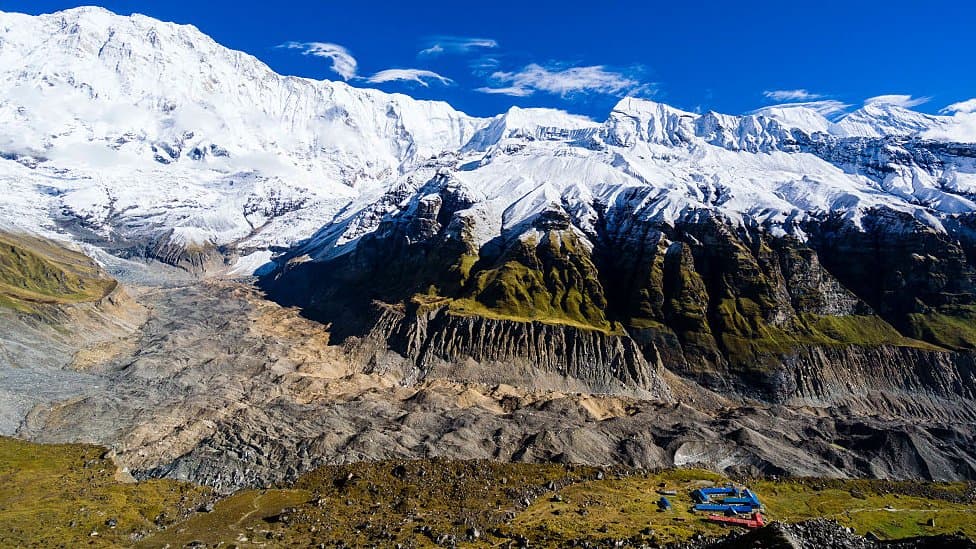
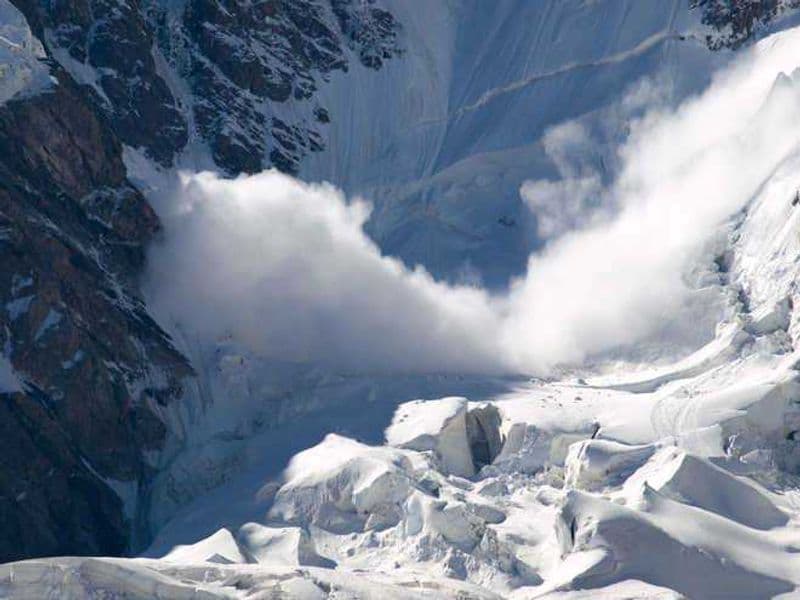
- Event Description: Last month’s flash floods in Nepal were linked to a large-scale avalanche involving approximately 110 million cubic meters of rock and ice from Langtang Lirung peak.
- Area Affected: The avalanche tore off a section of the mountain’s northern face measuring 2.2 sq km (equivalent to about 300 football fields) and reached depths of 50 meters.
- Seismic Impact: The avalanche generated a seismic shock recorded at a magnitude of 5.2.
- Descent Details: The rock and ice fell from a height of 5,150 meters, impacting the valley floor within 7-8 minutes, traveling at an average speed of 170 km/h.
Contributing Factors
- Geological and Climatic Interactions: The study identified a "compound crisis" involving climatic factors (such as glacier thinning and permafrost thawing) and geological instability, exacerbated by climate change.
- Historical Context: The 2015 earthquake (magnitude 7.8) may have weakened the rock mass but its direct contribution to the disaster was not confirmed.
- Climate Change Influence: Human-induced climate change was highlighted as a significant destabilizing factor, causing increased temperatures and altered precipitation patterns.
Scientific Insights
- Avalanche Rarity: Such large rock avalanches are estimated to occur once every 1,000 to 10,000 years.
- Glacier Thinning: The Langtang Lirung glacier has been receding at an accelerated rate, losing mass at about half a meter per year, with a current recession rate of 1-2.3% per annum over the last 16 years.
- Future Risks: Ongoing glacier decline and permafrost degradation are expected to continue, necessitating urgent climate action.
Recommendations
- Monitoring and Data Sharing: The study calls for enhanced observation and hazard monitoring in the Himalayas, as well as trans-boundary data sharing to minimize future risks.
- Transition from Fossil Fuels: A rapid shift away from fossil fuel dependency is essential to mitigate further climate impacts.
Policy Implications
- Climate Finance: There is an urgent need to fulfill climate finance commitments for adaptation, particularly in high mountain regions like the Himalayas.
Conclusion
The study underscores the complex interplay between climate change and geological factors in triggering natural disasters, emphasizing the need for proactive measures in climate policy and environmental monitoring to safeguard vulnerable regions.
Key Terms & Concepts
| Langtang Lirung peak | Source of rock and ice avalanche |
| World Weather Attribution (WWA) | Conducted the study on floods |
| 5.2 magnitude | Seismic shock measurement |
| 2015 earthquake | Possible contributor to disaster |
| 170 kilometres per hour | Average velocity of debris flood |
| 0.5-2.3% per annum | Rate of glacier recession |
| Climate finance commitments | Needed for adaptation measures |
| High Himalaya earth observation | Recommended for hazard monitoring |
| Permafrost degradation | Weakening geological structures |
| Climate change | Destabilizing factor for disasters |