iAspirants
Current AffairsPrelims PYQsUPSC CSE SyllabusUPSC CSE StrategyBlogsPricing
Login
iAspirants

Your AI-powered companion for UPSC preparation.

Quick Links

  • Home
  • About Us
  • Current Affairs
  • Prelims PYQs
  • UPSC CSE Syllabus
  • UPSC CSE Strategy
  • Blogs

Company

  • Pricing
  • FAQs
  • Contact Us
  • Login

Legal

  • Privacy Policy
  • Terms & Conditions
  • Return Policy

© 2025 iAspirants, Inc. All rights reserved.

  1. Blogs
  2. Economic and Social Development

Strengthening Educational Empowerment Initiatives

Published on: 14-Sep-2026

Share this post

Strengthening Educational Empowerment Initiatives

Article Summary

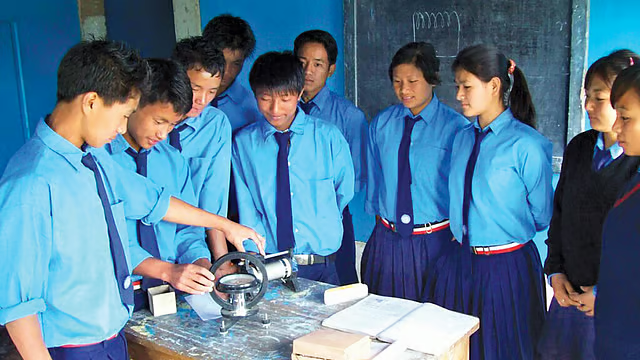
Exam-Focused Notes on Educational Empowerment Initiatives by the Ministry of Social Justice and Empowerment

Government Schemes and Financial Assistance

  1. Pre-Matric Scholarship Scheme:

    • Central Sponsored Scheme for Scheduled Caste (SC) students.
    • Financial assistance released: ₹4,893.03 crores from FY 2014-15 to FY 2025-26.
    • Beneficiaries: Approximately 29.966 million students.
    • FY 2025-26 allocation: ₹562.36 crores benefiting 2.679 million students.
    • Objective: Promote literacy and reduce school dropout rates.
  2. Post-Matric Scholarship Scheme:

    • Aimed at economically weaker SC families for access to higher education.
    • Financial assistance released: ₹46,581.54 crores from FY 2014-15 to FY 2025-26.
    • Beneficiaries: Approximately 61.298 million students.
    • FY 2025-26 allocation: ₹6,186.95 crores benefiting 4.753 million students.
    • Focus on reducing financial barriers post-secondary education.

Constitutional References

  • Articles and Provisions: The schemes align with the principles of social justice and equality as envisioned in the Indian Constitution, specifically Articles related to the Right to Equality (Article 14) and provisions for affirmative action for SC/ST communities.

Digital Reforms and Transparency

  • Implementation of Direct Benefit Transfer (DBT) to enhance transparency in scholarship distribution.
  • Utilization of Aadhaar-based authentication to facilitate beneficiary verification.
  • Introduction of systems to eliminate duplicate beneficiaries and ensure biometric verification.
  • Integration with DigiLocker and API bridge for digital verification of certificates and documents.
  • Enhanced accountability with streamlined processing of scholarship funds through partnerships with UIDAI, NPCI, and PFMS.

Educational Infrastructure and Support

  • The Ministry is enhancing access to quality education for SC, OBC, EBC, and DNT communities through:
    • Scholarships.
    • Residential infrastructure.
    • Overseas education assistance.
    • Coaching initiatives.

Objectives and Future Directions

  • The overarching goal is to improve educational continuity and reduce financial constraints for socially and educationally disadvantaged communities.
  • Continuous financial support and technology-based reforms aim to strengthen educational opportunities for underprivileged groups.

Summary of Achievements (2014-2026)

  • Total Financial Assistance (Pre-Matric + Post-Matric): ₹51,474.57 crores.
  • Total Beneficiaries: Approximately 91.264 million students across both schemes.
  • Emphasis on improving access to high-quality educational institutions and enhancing enrollment ratios for SC students.

Conclusion

The Ministry of Social Justice and Empowerment is committed to educational equity through targeted financial assistance and digital reforms, ensuring that disadvantaged communities have the necessary support to pursue their educational aspirations.

Key Terms & Concepts

Ministry of Social Justice and EmpowermentImplementing educational empowerment programs
Pre-Matric Scholarship SchemeFinancial support for SC students
Post-Matric Scholarship SchemeSupport for higher education of SC students
₹4,893.03 croreFunds allocated for Pre-Matric scholarships
₹46,581.54 croreFunds allocated for Post-Matric scholarships
299.66 lakhTotal beneficiaries for Pre-Matric scheme
612.98 lakhTotal beneficiaries for Post-Matric scheme
Direct Benefit Transfer (DBT)System for scholarship distribution
Financial Year 2021-22Year of DBT implementation for scholarships
UIDAI, NPCI, PFMSIntegrated for scholarship processing
DigiLockerDigital verification of documents

Mind Map for UPSC Civil Services Revision

Turn UPSC Civil Services Current Affairs Into Exam-Ready Notes

Reading Economic and Social Development current affairs is half the work. Revise them with ready-made notes and test what actually stuck.

  • Daily UPSC Civil Services current affairs analysis
  • Revision notes, mind maps & MCQs
  • Prelims mock tests with instant results

Related UPSC Civil Services Current Affairs Articles

BRICS Declaration Highlights Key Issues
International Relations15-Sep-2026

BRICS Declaration Highlights Key Issues

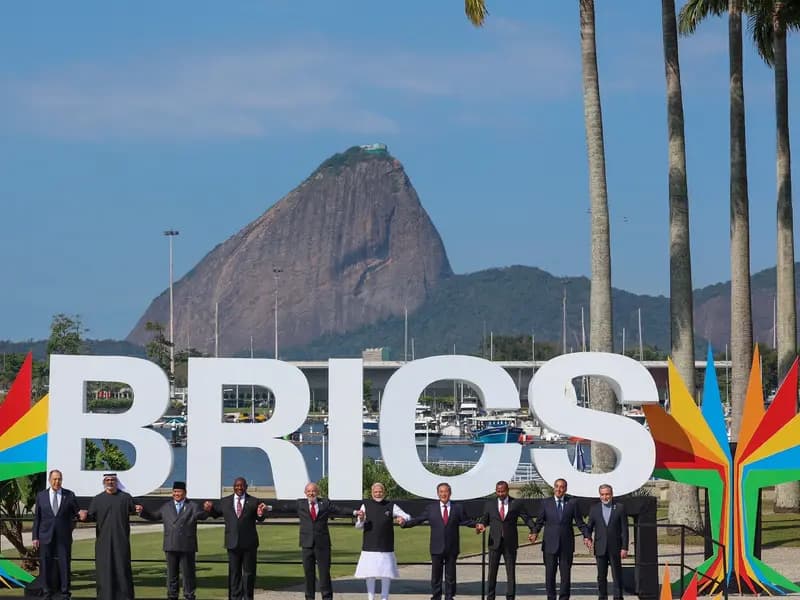
BRICS Declaration Highlights

  1. Consensus Building: The 45-page BRICS declaration emphasizes diplomatic consensus, allowing member nations to achieve their objectives while avoiding contentious issues.

  2. Key Themes Discussed:

  • Trade
  • Health
  • AI (Artificial Intelligence)
  • Tourism
  • Condemnation of Sanctions:

    • The declaration (Para 22) condemns "unilateral coercive measures" and "economic sanctions," a reference to Western sanctions, particularly those imposed by the U.S. on Russia and Iran.
    • It also addresses the "tightening of unilateral blockade measures" in relation to Cuba.
  • Stance on Trade Tariffs:

    • Emphasizes the adverse effects of "indiscriminate rising of tariffs" and opposes "carbon border adjustment mechanisms" indicative of U.S. and EU climate measures.
  • U.S. Influence:

    • Repeated mentions of U.S. tariffs and the effects on BRICS nations, with a noted absence of direct references to former President Trump.
  • Non-Inflammatory Language on Ukraine:

    • Unlike the previous BRICS declarations, the Delhi 2026 document omits any mention of the Ukraine conflict, instead reflecting the geopolitical weight of Russia as a BRICS member.
  • UN Security Council Reform:

    • Reiterates support for Brazil and India in playing a greater role within the UN, highlighting China and Russia's backing as permanent members (Para 27).
  • Position on Terrorism:

    • Condemnation of terrorism was reiterated, mirroring language from the 2025 declaration, specifically condemning a terrorist attack in Jammu and Kashmir with strong language.
  • Support for Global South:

    • Acknowledgment of China’s expansion of zero-tariff treatment to 53 African nations, depicting China as a benefactor amidst global economic sanctions.
    • Support for Iran's WTO accession and mention of Ethiopia in this context.
  • Conflict References:

    • Direct references are made to the Israel-Gaza situation, citing UNSC Resolution 2803, condemning actions prolonging occupation and stressing humanitarian obligations.
    • The document underscores violations against civilian infrastructure and nuclear facilities, attending to international law violations.
  • Judicial Insights:

    • Refers to the International Court of Justice regarding Israel's obligations in humanitarian contexts, particularly related to aid.
  • International Agreements:

    • The declaration reaffirms the collective stance on Palestine and condemns actions that affect Palestinian rights and displacement.
  • Economic Context

    • BRICS nations, including Iran and Russia, are under significant pressure from Western economic sanctions, which influences the economic policies advocated in the declaration.

    Conclusion

    The BRICS 2026 declaration outlines significant diplomatic stances against unilateral sanctions and tariffs while navigating controversial geopolitical topics, maintaining a focus on collective economic benefits and regional stability, particularly in dealings related to trade and conflicts affecting the Global South.

    Rising Inflation and Economic Indicators
    Economic and Social Development15-Sep-2026

    Rising Inflation and Economic Indicators

    Economic Indicators and Inflation Overview

    Inflation Metrics

    • CPI Inflation: Increased to 4.82% in August from 4.45% in July; highest in eight months.
    • Food Inflation: CPI food inflation rose to 5.95% in August from 5.52% in July.
    • Specific items with significant price increases:
      • Sugar: Price index surged 19% from July; 24% higher compared to August 2025, attributed to low production and low inventories. Duty-free imports of 10 lakh tonnes of raw sugar permitted until October 31.
      • Onion: Prices increased by 22% in August compared to July due to delayed planting from late rains.

    Central Bank Dynamics

    • Reserve Bank of India (RBI) is expected to convene from October 5-7; this meeting may drive the first interest rate hike in 3.5 years.
    • Repo Rate: The RBI's last hike was in February 2023, maintaining it at 5.25%.
    • The RBI's target is to maintain CPI inflation at 4% within a 2-6% band.
    • Inflation has been above 4% for three consecutive months.

    GDP Growth

    • India’s GDP growth for the first quarter of 2026-27 was 7.8%, leading economists to advocate for a potential interest rate increase.

    Price Pressure Broadening

    • 314 out of 358 items in the CPI recorded price increases in August (up from 310 in July).
    • 110 items showed inflation rates exceeding 4%, indicating potential widespread price pressures.

    Wholesale Price Index (WPI) Data

    • WPI inflation rose to 9.92% in August, up from 9.78% in July, driven by increases in food and fuel prices.
    • Wholesale food inflation hit a 20-month high of 7.05%.
    • Producer Price Index (PPI) (output measure) rose to 9.81% in August.

    Transition in Inflation Measures

    • The WPI is expected to be phased out by 2031; the output PPI will become the primary measure for inflation at the producer level.
    • Input PPI saw a month-on-month decline of 1.6% in August.

    International Financial Context

    • The U.S. Federal Reserve expected to announce a 25 bps hike in federal funds rate target range to 3.75-4% amidst rising inflation pressures.

    Conclusion

    The rise in inflation metrics and economic growth figures calls for increased scrutiny of the RBI’s upcoming monetary policy decisions. The interplay between supply chain disruptions, festivity demand for specific commodities (like sugar), and broad-based price increases heightens the urgency for potential rate adjustments.

    Analysis of India's Cash Transfer Politics
    Economic and Social Development14-Sep-2026

    Analysis of India's Cash Transfer Politics

    Key Highlights:

    Historical Context:

    • Speenhamland System (1795):
      • English magistrates decided to supplement agricultural wages using parish funds, linking payouts to bread prices and family sizes.
      • Viewed as an early assertion of the human "right to live" by historian Karl Polanyi.
      • Critics argued that this confused the protection of families with market incentives, complicating public finance.

    Current Indian Context:

    • Dole Politics in India:
      • Refers to cash support schemes such as free electricity, transport, and cash transfers.
      • Significant increase in unconditional cash transfers to women from 2 states in 2022-23 to 12 states by 2025-26, totaling an estimated annual cost of ₹1.68 lakh crore (0.5% of GDP).

    Government Schemes:

    • State-specific Schemes:
      • West Bengal: Transitioned from Lakshmir Bhandar to Annapurna Yojana, budgeting ₹36,000 crore for transfers to about 1.3 crore women.
      • Tamil Nadu: Allocated ₹14,412 crore for Kalaignar Magalir Urimai Thogai (2026-27).
      • Assam: Set aside ₹5,000 crore for Orunodoi scheme.

    Economic Indicators:

    • Cash support constitutes 11-24% of monthly income for daily-wage women, and 11-87% for self-employed women (as indicated by the Economic Survey 2025-26).
    • The fiscal implications of cash transfer schemes raise concerns regarding long-term sustainability and effectiveness.

    Constitutional and Legislative Perspectives:

    • The Supreme Court criticized unchecked welfare schemes, emphasizing the need for fiscal prudence and accountability in welfare expenditures.
    • The need for a welfare impact statement that includes objectives, eligibility criteria, expected outcomes, and comprehensive evaluations of the cash transfer impacts.

    Recommendations for Future Welfare Policies:

    • Unconditional cash transfers should be accompanied by robust evidence and assessments of their impacts on poverty, household dynamics, and economic independence.
    • Democratizing welfare politics by making outcomes measurable and data available for scrutiny.

    International Comparative Analysis:

    • Other democracies have established welfare programs like unemployment insurance, food support, and healthcare subsidies, typically bound by eligibility and accountability frameworks.

    Evidence-based Policy Making:

    • Importance of maintaining a systematic dataset of cash transfer expenditures.
    • Recommendations for governmental obligations to provide clear evidence on the expected impacts of welfare schemes.

    Conclusion:

    The effectiveness of welfare programs in India hinges on evidence-based approaches and clear documentation of intent, expenditure, and outcomes. Enhanced scrutiny is crucial for sustainable welfare politics, ensuring benefits genuinely uplift vulnerable populations.

    Empowering Rural Students in Law
    Economic and Social Development14-Sep-2026

    Empowering Rural Students in Law

    Summary of Key Points

    National Law Scholars Programme (NLSP)

    • Initiative Background: Launched in 2019 as a collaboration between Navodaya Vidyalaya Samiti and its alumnus Anoop Maurya.
    • Objective: To provide opportunities for promising students from rural backgrounds to enter India's competitive law schools.
    • Program Structure:
      • A two-year, fully funded residential program targeting students identified from Navodaya schools.
      • Includes outreach to approximately 10,000 students annually.
      • Selection process involves two written exams and an interview.
      • Only 30 students accepted each year, with students based in Hyderabad.

    Educational Impact

    • Student Outcomes:
      • 150 scholars selected over the last seven years; 120 completed the program.
      • 84 students are currently pursuing law, with 54 enrolled in National Law Universities (NLUs).
    • Financial Support: Continuation of financial assistance for students in law schools, covering substantial tuition fees.
    Transparent Coal Auction Boosts Self-Reliance
    Economic and Social Development14-Sep-2026

    Transparent Coal Auction Boosts Self-Reliance

    Exam-Focused Notes on Commercial Coal Mining Auction in India

    Constitutional and Legal Framework:

    • Supreme Court Ruling (2014): The Supreme Court annulled 204 coal blocks, leading to a shift towards a more transparent and rule-based allocation process.
    • Government Policy: Introduction of commercial coal mining auctions on June 18, 2020, by Prime Minister Narendra Modi.

    Key Facts and Data:

    • Number of Blocks Auctioned: 147 coal blocks have been auctioned since the inception of the policy.
    • New Participants: 44 new companies have successfully won coal mining rights.
    • Revenue Generation: The auctions have generated approximately ₹47,500 crore in annual revenue and attracted ₹55,000 crore in capital investment.
    • Employment Creation: An estimated 4.9 lakh jobs have been created through these auctions.
    • Production Growth: Coal production from commercial mines is projected to rise from 12.55 million tons in FY 2023-24 to 23.51 million tons in FY 2024-25.
    BRICS Discuss Trade and Economic Governance
    International Relations12-Sep-2026

    BRICS Discuss Trade and Economic Governance

    Summary of BRICS Finance Ministers and Central Bank Governors (FMCBG) Joint Statement

    1. Concerns Over Trade Measures:

    • BRICS finance ministers emphasized concerns regarding the unilateral imposition of tariffs and non-tariff measures.
    • Such actions are viewed as trade distortions and inconsistent with World Trade Organization (WTO) rules.

    2. Background and Meetings:

    • Recent meetings took place in Jaipur (August 12-13) and Mumbai (September 10) under the theme of “Building for Resilience, Innovation, Cooperation and Sustainability”.
    • The 18th BRICS Summit, hosted by India, will occur in New Delhi on September 12-13.

    3. Composition of BRICS:

    • BRICS comprises 11 nations: Brazil, China, Egypt, Ethiopia, India, Indonesia, Iran, Russia, Saudi Arabia, South Africa, and UAE.

    4. Global Economic Outlook:

    • The FMCBG noted significant headwinds affecting the global economy, including:
      • Geopolitical tensions
      • Trade fragmentation and protectionism
      • Fiscal and inflationary pressures
      • Growing debt and financial vulnerabilities

    5. Reforms in Global Economic Governance:

    • Calls for reforms in Bretton Woods Institutions (IMF and World Bank) to enhance representation of emerging markets and developing economies (EMDEs).
    • Emphasis on a merit-based, inclusive, and transparent selection process for leadership in these institutions.

    6. Quotas and Voting Shares:

    • Advocated for quota realignment reflecting countries’ positions in the global economy.
    • Proposed an increase in quotas and voting shares for EMDEs without adversely affecting developing countries.
    • Suggested the development of a transparent quota formula to safeguard the interests of poorer nations.

    7. Voluntary Financial Contributions:

    • Stressed that any voluntary financial contributions should not affect governance representation, quota allocation, and voting power in multilateral development institutions.

    8. Lima Principles:

    • Reaffirmation that BRICS should promote the increased voice and representation of developing countries through a shareholding realignment correcting their historical underrepresentation.

    Key Takeaways:

    • The collective statement underscores the need for global reforms to improve financial governance, ensure equity among nations in financial power, and address economic challenges facing EMDEs amid a complex global landscape.
    • The focus on sustainability, cooperation, and resilience reflects an ongoing evolution in international economic relationships and governance structures, particularly favoring emerging economies.

    These notes encapsulate critical points relevant for understanding the economic landscape and international relations influenced by the BRICS forum.

    India-EU Free Trade Agreement Proposal
    International Relations12-Sep-2026

    India-EU Free Trade Agreement Proposal

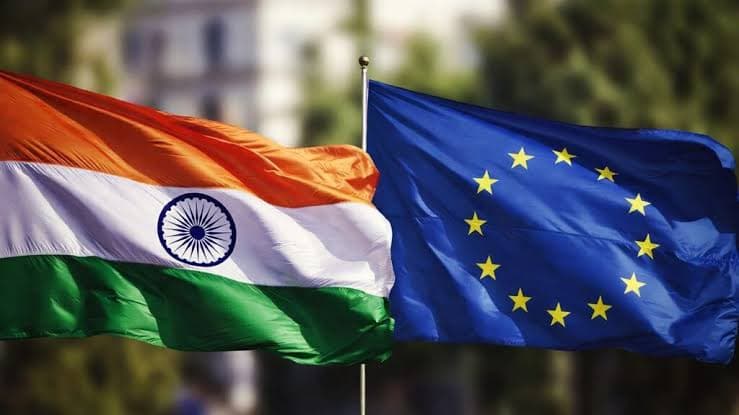
    Summary Notes on India-EU Free Trade Agreement (FTA)

    Background:

    • The European Commission has proposed the conclusion of a FTA between the European Union (EU) and India, pending approval from the European Council. This indicates a potential imminent signing of the agreement.

    Key Details:

    • The FTA is anticipated to be the largest trade agreement between the EU and India.
    • The current trade volume exceeds Euro 180 billion (approx. US $209 billion) annually, supporting around 800,000 jobs in the EU.

    Major Provisions of the FTA:

    • Tariff reductions on 96% of EU goods exported to India, potentially saving around Euro 4 billion annually in duties for European products.
    • The deal aims to facilitate easier access for European companies to the Indian market and enhance competition while lowering consumer prices.
    • For India, the agreement will secure market access for over 99% of its exports by trade value to the EU.
    • It includes commitments in high-value service sectors alongside a mobility framework for skilled Indian professionals.
    Transforming India's Coal Sector Since 2014
    Economic and Social Development12-Sep-2026

    Transforming India's Coal Sector Since 2014

    Summary of SECL Transformation (2014-2026)

    Overview

    • South Eastern Coalfields Limited (SECL), a mini-ratna subsidiary of Coal India Limited (CIL), has undergone significant transformation since 2014 under Prime Minister Narendra Modi’s leadership.
    • The transformation focuses on transparency, efficiency, technology adoption, infrastructure development, operational ease, and energy security.

    Production Statistics

    • Domestic coal production in India surpassed 1 billion tons (1.04 billion tons provisional) for the second consecutive year in FY 2025-26.
    • SECL’s coal production rose from 34.2 million tons (MT) in FY 1985-86 to 176.28 MT in FY 2025-26.
    • SECL contributed approximately 23% to CIL's total production and 17% to India's total coal output in FY 2025-26.

    Employment and Operations

    • SECL employs over 36,000 regular employees and 24,000 contract workers, along with a broad ecosystem of transporters and suppliers.

    Personal Stories

    • Students like Anshita Rani and Vedant Ravindra Deshmukh have shared their experiences of overcoming economic hardships and societal challenges through NLSP.
    • Anshita's journey reflects a marked shift from her beginnings in a crowded, impoverished household to studying law.
    • Vedant's entry into the program came serendipitously, which led him to excel and pursue further legal education.

    Educational Challenges

    • Entry Exam Critique: Anoop Maurya describes the CLAT (Common Law Admission Test) as being "anti-poor," particularly difficult due to the extensive focus on complex English language passages.

    Program Benefits

    • Skill Development: Students engage in various activities to enhance their public speaking, debate skills, and leadership through mentorship and workshops integrated with regular schooling.
    • Community Integration: The program aims to break societal norms, as witnessed by students such as Vaishnavi, who faced familial and societal resistance.

    Future Aspirations

    • Students express a desire to navigate internships and job placements. Anshita and Vedant illustrate the transition challenges faced after completing the program.

    Current Trends in Educational Accessibility

    • Rural Student Empowerment: NLSP represents a critical movement to enhance legal education access for underprivileged backgrounds, fostering future leaders and advocates from diverse socioeconomic contexts.

    Conclusion

    • The National Law Scholars Programme serves as a transformative initiative, not only nurturing legal talent from rural and underprivileged backgrounds but also addressing systemic barriers that hinder access to higher education, particularly in law. The stories of its scholars underscore both the program's successes and the ongoing challenges in their pursuit of legal careers.
  • Overall Production: Total production from captive and commercial blocks is expected to exceed 210 million tons in FY 2025-26, surpassing the 200 million tons mark for the first time.
  • Economic Indicators:

    • Revenue from Allocated Mines: In FY 2025-26, total revenue from allocated commercial mines was approximately ₹3,090 crore.
    • CAGR: Coal production has seen a compound annual growth rate (CAGR) of about 22% over the last decade.
    • Reduction in Imports: Increased domestic production reduces the need for coal imports, enhancing India's self-reliance.

    Government Schemes and Contributions:

    • Revenue Sharing: States benefit from a revenue-sharing mechanism that includes:
      • Competitive bidding revenue share
      • Statutory royalties
      • District Mineral Foundation (DMF) contributions reinvested in mining districts
      • National Mineral Exploration Trust (NMET) contributions for future exploration
      • Goods and Services Tax (GST) revenues

    Technological Innovations:

    • Auction Process: The bidding process is conducted online via the MSTC platform in two phases, ensuring transparency and live presentation of bid documents.
    • Investment Attraction: The policy has encouraged participation from both private sector players and traditional public sector companies like Coal India subsidiaries.

    Impact on Energy Security:

    • The transparent and technology-driven auction process fosters competition among new entrants and government miners, enhancing energy security and sustainability in the coal sector.

    Conclusion:

    The commercial coal mining auction system represents a significant reform in India's mining sector, contributing to economic growth, job creation, and energy self-sufficiency while ensuring transparency and fair competition.

    Impact on Industries:

    • A significant boost to labour-intensive sectors such as textiles, leather, marine products, engineering goods, and automobiles, with tariffs on nearly $33 billion of exports set to decrease to zero upon the agreement's entry into force.

    Strategic Context:

    • The resumption of negotiations in 2022 was influenced by China's growing trade surplus and both India and the EU's intention to diversify supply chains due to reliance on China.
    • The EU previously imposed tariffs up to 35% on Chinese electric vehicles, reflecting a protective stance towards its markets against Chinese imports.

    International Relations:

    • The FTA is taking place amid pressure from the US for India and the EU to reduce dependency on Chinese goods and enhance their manufacturing capabilities.
    • The report from the Delhi Policy Group emphasizes the vulnerability exposed during the COVID-19 pandemic regarding supply chain over-reliance on China.

    Economic Indicators:

    • EU job support from trade: ~800,000 jobs
    • Annual trade volume: Euro 180 billion (~US $209 billion)
    • Savings from tariff reductions: Euro 4 billion annually
    • Tariff elimination potential: 96% of EU goods exports, and nearly $33 billion of Indian exports.

    Constitutional References:

    • The proposals align with international trade policies as outlined in Article 253 of the Indian Constitution, allowing the government to enter into agreements with foreign nations.

    Conclusion:

    The India-EU FTA represents a crucial step towards enhancing trade relations, establishing a framework for future economic cooperation, and promoting resilience against external economic pressures. This agreement may redefine trade dynamics and contribute to a more balanced global economic environment.

  • Key mining operations are located in Korba, with major mines like Gevra, Kusmunda, and Dipka representing a capacity of 185 MT.
  • Infrastructure Development

    • SECL is developing the Chhattisgarh East Railway and East-West Railway Corridor with an investment of approximately ₹13,685 crores and a length of 342.6 kilometers.
    • 11 First Mile Connectivity (FMC) projects initiated with an investment of ₹2,700 crores have a combined annual capacity of 156 MT, improving coal evacuation and reducing carbon footprints.

    Technological Advancements

    • Adoption of surface miners and continuous miners has increased mechanization, with over 88% of coal produced without traditional drilling and blasting methods.
    • Implementation of DigiCoal for monitoring machinery, including the use of drones and CCTV for operational safety.

    Financial Contributions

    • SECL’s net worth rose from ₹9,544 crores (March 2015) to ₹20,457 crores (March 2026), marking a 114% increase.
    • In FY 2025-26, SECL contributed approximately ₹11,830 crores to the central and state governments through taxes and royalties.

    Corporate Social Responsibility (CSR)

    • CSR expenditure increased from ₹43.91 crores (FY 2013-14) to over ₹127 crores (FY 2025-26), a 188% increase.
    • Initiatives include providing 1,078 crores for health, education, skill development, and community infrastructure since 2014-15.

    Environmental Sustainability

    • SECL has scientifically closed 28 abandoned mines and planted 14.36 lakh trees over 571 hectares in FY 2025-26, using advanced afforestation techniques.
    • The company's solar energy capacity has grown to 44 MW from zero in 2014.

    Future Directions

    • SECL aims to support India's goal of becoming a $5 trillion economy by ensuring reliable and affordable coal supply while expanding renewable energy initiatives.
    • The Korba coalfield continues to be a major energy security hub, with expanded rail connectivity supporting additional production bases.

    Conclusion

    SECL’s evolution emphasizes enhanced coal production, financial stability, modern logistics, digital advancements, environmental responsibility, and meaningful community development, showcasing how progressive policy reforms and institutional commitment can leverage the national coal sector's potential.