iAspirants
Seven Years Since Jammu and Kashmir Changes
Published on:
Share this post
Article Summary
Summary of Jammu & Kashmir (J&K) Developments Post Article 370 Revocation
Constitutional References:
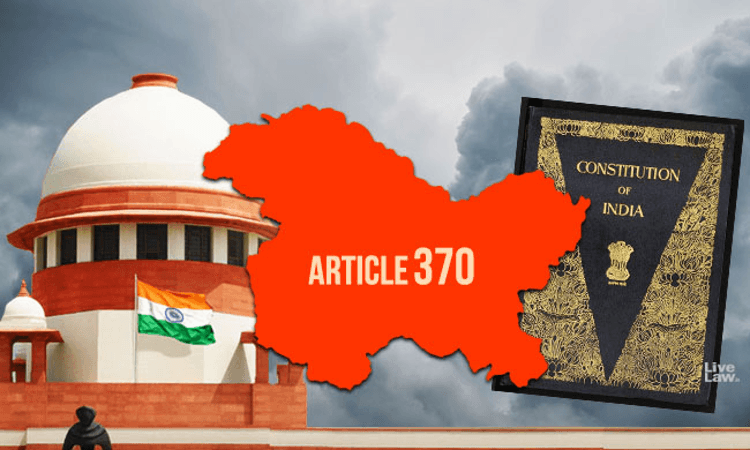
- Article 370 Revocation: On August 5, 2019, the special status of J&K was revoked, followed by the loss of Statehood.
- Emergency Provisions: The revocation and subsequent governance have raised concerns regarding the violation of constitutional principles. Emergency conditions typically last for six months, but have not been lifted for seven years in J&K.
- Role of the Lieutenant-Governor: The administration is now controlled by the Lieutenant-Governor under the 2024 Transaction of Business Rules, who exercises powers typically held by an elected representative, lacking direct accountability to the people.
Judicial Oversight:
- The Supreme Court has not actively enforced timelines for restoring Statehood, despite advising restoration "as soon as possible" four years ago.
- The J&K High Court has criticized the misuse of laws like the Jammu and Kashmir Public Safety Act (PSA).
Economic Indicators:
- J&K Economic Survey 2025-2026: Per capita income in J&K is at 76.6% of the national average, declining from 79.9% in 2013-14.
- Unemployment Rates: Unemployment in J&K is nearly double the national average, with graduate unemployment as high as 23.9%.
Political Climate and Security Measures:
- Heavy military presence observed during events like the Amarnath Yatra, termed historically militarized.
- Citizens face curfews and are often prosecuted under stringent laws like the PSA and the Unlawful Activities (Prevention) Act.
Social Response and Civil Society:
- Mixed responses from the local populace, with significant peace marches following terrorist incidents indicating public rejection of violence.
- Calls for accountability and restoration of Statehood are being led by local political entities like the National Conference and the Congress party.
International Context:
- India's governance approach in J&K has drawn comparisons to colonial practices of subjugation, underscoring significant moral and ethical considerations in governance.
- Criticism highlights that heavy-handed measures may escalate tensions rather than build peace.
Civic and Democratic Elements:
- Calls for a return to an elected administration to ensure democratic accountability and civil rights, establishing essential frameworks for oversight and independent media.
Trends and Historical Context:
- J&K has undergone unprecedented changes, including the first use of pellet guns (2016) and communal delimitation (2022) which altered demographic balances in favor of Hindu-majority constituencies.
- The region is urged to experience positive developments leading towards Statehood restoration.
Future Prospects:
- Renewed political campaigns are pushing for restoring Statehood to J&K, advocating for democratic representation and accountability in governance.
The ongoing situation in J&K remains complex and fraught with challenges following the revocation of special status and Statehood, necessitating careful monitoring and potential reform in governance to ensure peace and economic stability.
Key Terms & Concepts
| Article 370 | Revoked special status of J&K |
| Jammu and Kashmir Economic Survey 2025-2026 | Reports regional economic performance |
| 76.6% | J&K per capita income ratio |
| 23.9% | Graduate unemployment rate |
| Public Safety Act (PSA) | Draconian law for detentions |
| Unlawful Activities (Prevention) Act | Used for arbitrary detentions |
| 2024 Transaction of Business Rules | Set rules for administration control |
| Supreme Court of India | Weakly advised statehood restoration |
| National Conference-Congress alliance | Political coalition seeking statehood |
| highest number of Internet shutdowns | Communication restrictions since 2019 |
| Amarnath yatra 2024 | Most militarized pilgrimage in history |