iAspirants
Current AffairsPrelims PYQsUPSC CSE SyllabusUPSC CSE StrategyBlogsPricing
Login
iAspirants
Current AffairsPrelims PYQsUPSC CSE SyllabusUPSC CSE StrategyBlogsPricingContact UsLoginSignUp
iAspirants

Your AI-powered companion for UPSC preparation.

Study Resources

  • Current Affairs
  • Prelims PYQs
  • UPSC CSE Syllabus
  • UPSC CSE Strategy
  • Blogs

Practice & Plans

  • Mains Answer Evaluation
  • Pricing
  • Sign Up
  • Login

Company

  • Home
  • About Us
  • Contact Us
  • FAQs

Legal

  • Privacy Policy
  • Terms & Conditions
  • Return Policy

© 2026 iAspirants, Inc. All rights reserved.

  1. Blogs
  2. Polity and Governance

Parliament Special Session Delimitation Bill

Published on: 27-Nov-2026

Source: The Hindu

Share this post

Parliament Special Session Delimitation Bill

Article Summary

  • Parliament Session: Special sitting of Parliament called from November 30, 2026 (Lok Sabha) and December 2, 2026 (Rajya Sabha), concluding on December 3, 2026. Last record of a continuous session was 87 days in 2008.

  • Delimitation Bill: Government likely to table an amended Delimitation Bill, with the Union Cabinet scheduled to meet on November 27, 2026, to clear it.

  • Key Proposals of Amendments:

    1. Increase in Lok Sabha Seats: A uniform 50% increase in seats.
    2. Census Basis: Extension of freeze on using the 1971 Census for determination of proportional strength for 25 years.
    3. Redrawing Constituencies: Utilize the 2011 Census for redistricting constituencies within states.
  • Constitutional References: The approach replicates provisions in the Constitution (Eighty-fourth Amendment) Act, 2001.

  • Constitutional Context:

    • Articles 81 and 82 detail provisions regarding the allocation and adjustment of parliamentary seats based on the Census.
    • The current freeze on seat allocation has an inbuilt sunset clause, ceasing when Census data after 2026 is published.
  • Political Dynamics:

    • Opposition response led by Congress, with accusations against the government regarding constitutional integrity.
    • Recent changes in seat allocation dynamics due to party mergers and support arrangements, including:
      • 20 TMC MPs merging with NCPI.
      • Shiv Sena MPs aligning with the Shinde faction.
      • YSR Congress indicating support.
  • DMK’s Position: Uncertain stance; claims of potential loss of seats if the amendment is not supported, as losing representation could lead to a loss of 12 Lok Sabha seats.

  • NDA's Confidence Level: Government claims possible support of at least 358 MPs in the Lok Sabha, approaching the required strength for passage in voting. Previous votes in April showed 298 for and 230 against the Bill.

  • Judicial Context:

    • Delimitation issues ongoing beneath the Lok Sabha Speaker's review, with TMC's split being contested.

These points encapsulate the current legislative developments pertaining to the Delimitation Bill and the broader political and constitutional implications within India's parliamentary framework.

Key Terms & Concepts

Delimitation BillAmended legislation introduction
Lok SabhaLower house of Parliament
Rajya SabhaUpper house of Parliament
Constitution (Eighty-fourth Amendment) Act, 2001Basis for delimitation changes
Articles 81 and 82Prevent readjustment of seats
1971 CensusBasis for Lok Sabha seats proportion
2011 CensusNew basis for redrawing constituencies
358 MPsExpected support for the bill
540 MPsTotal MPs present and voting
April 2026Previous vote on the Bill
298 votesVotes in favor of the Bill
230 votesVotes against the Bill

Mind Map for UPSC Civil Services Revision

Turn UPSC Civil Services Current Affairs Into Exam-Ready Notes

Reading Polity and Governance current affairs is half the work. Revise them with ready-made notes and test what actually stuck.

  • Daily UPSC Civil Services current affairs analysis
  • Revision notes, mind maps & MCQs
  • Prelims mock tests with instant results

Related UPSC Civil Services Current Affairs Articles

Hasrat Mohani's Dissent in Constitution
Polity and Governance27-Nov-2026

Hasrat Mohani's Dissent in Constitution

Exam-Focused Summary on Hasrat Mohani and Constitution Making in India

Key Facts and Historical Context:

  • Date of Constitution Adoption: November 26, 1949.
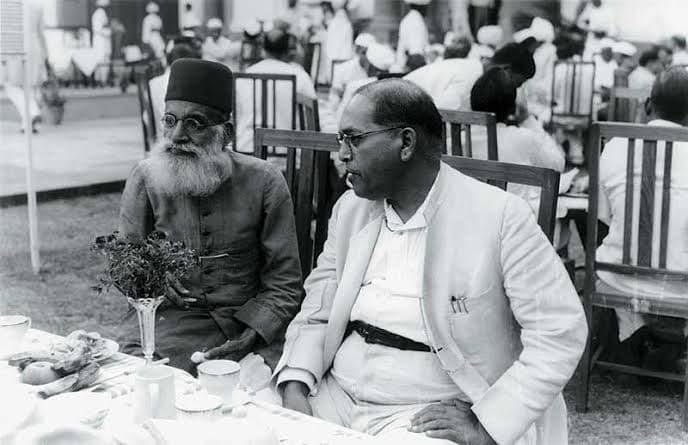
  • Key Figure: Maulana Hasrat Mohani, a prominent Urdu poet, journalist, and freedom fighter, known for his dissenting views.
Practise Mains answer writingUpload a handwritten answer and get it evaluated
  • Background: Born in the 1880s, educated at Mohammadan Anglo-Oriental College, where he actively engaged in political discourse and anti-British sentiments.
  • Constitutional References:

    • Mohani was part of the Constituent Assembly but was one of the three members who refused to sign the final draft of the Constitution on January 26, 1950.
    • He objected to the Montagu-Chelmsford Reforms and the Nehru Report (1928), which proposed a framework for self-governance.
    • Proposed a federal Constitution emphasizing provincial autonomy and challenging centralization of power.

    Political Ideology and Activism:

    • Mohani's political views shifted but included associations with various parties: Indian National Congress, Muslim League, and the Communist Party.
    • Founded the Azad Party in 1931, advocating for a federal structure.
    • Criticized the dominant influence of the Congress during Assembly proceedings and proposed greater autonomy for all regions, including princely states.

    Significant Events and Proposals:

    • 1921: Advocated for complete independence at the Congress session.
    • 1942: Proposed a plan for a confederation of five federations comprising autonomous provinces.
    • November 4, 1948: Called for the postponement of Constitution discussions until a new Assembly was elected based on a joint electorate.

    Dissent in the Constituent Assembly:

    • Mohani opposed the introduction of provisional constitutions without finalizing the Union's structure, highlighting concerns over federalism.
    • Faced dismissal from leaders like Nehru and Patel, reflecting a lack of support for his radical views.
    • Argued against the framing of minority rights, advocating for universal civil rights to avoid entrenched inferiority of Muslims.

    Key Judicial and Legislative Interactions:

    • Despite repeated efforts to influence the Constitution, many of his amendments and proposals were ultimately rejected or excluded from formal considerations.
    • His critiques emphasized a need for a more inclusive political framework, steering away from communal politics.

    Economic and Political Context:

    • His actions were contextualized against the background of India's struggle for independence and the formative years post-independence, where the dynamics of power, representation, and communal identity were fiercely debated.

    Legacy:

    • Though dissenting, Mohani’s role in the Assembly highlighted the tension within the Assembly between central authority and provincial rights.
    • His dramatic stand against the Constitution reflects broader themes of ideological struggle, individual conviction, and the complexities of early Indian governance.

    This summary captures the significant contributions of Hasrat Mohani in the context of the Indian Constitution's making, emphasizing his dissent, political activities, and constitutional vision.

    Supreme Court Ruling on Karthigai Deepam
    Polity and Governance27-Nov-2026

    Supreme Court Ruling on Karthigai Deepam

    • Judicial Proceedings and Contempt Petitions:

      • The Supreme Court has allowed a contempt petition concerning the failure to light the Karthigai Deepam at Deepathoon, following an earlier court order issued on November 20, 2026.
      • The petition filed by Rama Ravikumar demands a personal affidavit from the Tamil Nadu Chief Secretary regarding government decisions, including the Chief Minister’s involvement.
    • Constitutional References:

      • The contempt plea argues that the non-compliance with the Supreme Court’s November 20 order violates Articles 14 (Right to Equality) and 16 (Equality of Opportunity in Public Employment) of the Indian Constitution.
      • It invokes Article 142, which empowers the Supreme Court to pass any order necessary for doing complete justice in any matter pending before it.
    • Government Schemes and Policies:

      • The Supreme Court ordered the lighting of the ceremonial lamp at Deepathoon to occur within seven days (by a subsequent date within the Karthigai month), under strict oversight by the Chief Secretary and supported by an independent Court Commissioner and Central Reserve Police Force.
    • Court Direction and Compliance Issues:

      • All relevant physical and electronic records related to the Supreme Court's directive must be preserved and presented.
      • The previous actions by state authorities, including the issuance of orders and purported reports concerning preparedness, have raised questions about adherence to judicial mandates.
    • Role of Religious and Local Authorities:

      • The Board of Trustees for the Arulmigu Subramaniaswamy Temple did not authorize individuals for the lamp-lighting team before the intended lighting date of November 24, which is under scrutiny.
      • A separate contempt petition addresses potential misuse of an injunction by state authorities, which allegedly restricted public attendance at the ceremony and disregarded the court's instructions.
    • Judicial Review of State Actions:

      • Several petitions were filed concerning alleged failures by individuals within the Tamil Nadu administrative framework, such as the Commissioner of the Hindu Religious & Charitable Endowments Department and the District Collector.
    • Public and Political Impact:

      • The issue has mobilized protests outside the Thirupparankundram temple, highlighting community unrest regarding compliance with the court’s ruling around a significant religious observance.
    • Historical Significance of Karthigai Deepam:

      • Karthigai Deepam is a prominent festival involving the lighting of lamps, which has cultural and religious significance in Tamil Nadu, necessitating adherence to established traditions and judicial rulings to maintain public sentiments.

    This summary highlights key judicial developments, constitutional implications, and the political relevance of the court's involvement in religious ceremonies.

    Celebrating India's Constitutional Legacy
    Polity and Governance26-Nov-2026

    Celebrating India's Constitutional Legacy

    Constitutional References:

    • Constitution Day is celebrated on November 26; the adoption took place in 1949.
    • Articles 370 and 35A historically limited constitutional implementation in Jammu and Kashmir; these were abrogated in 2019.
    • Importance of Articles 38 and 39, which focus on Social and Economic Justice, and the responsibilities of citizens through the principle of Kartavya.

    Government Schemes and Policies:

    • PM Awas Yojana: Aims to provide pucca homes, enhancing dignity.
    • Ujjwala Yojana: Provides LPG connections to reduce health hazards from cooking smoke.
    • Ayushman Bharat: A health insurance scheme for low-income families, promoting social justice.
    • MUDRA and PM-SVANidhi: Initiatives for providing collateral-free credit to small entrepreneurs and street vendors, facilitating economic justice.
    • Digital Technology: The UPI platform increases financial inclusion, making opportunities accessible.
    • 81st, 102nd, and 103rd Amendments: Introduced major reforms including the Goods and Services Tax (GST) and reservation for Economically Weaker Sections (EWS).

    Judicial Rulings and Committees:

    • The 102nd Amendment conferred constitutional status to the National Commission for Backward Classes.
    • Past amendments such as the First Amendment (1951) and 42nd Amendment during the Emergency limited fundamental rights and judicial review.

    Economic Indicators:

    • A World Bank report indicates that 50 crore Indians have escaped poverty, enhancing the future prospects for their families.

    Historical Context and Events:

    • Acknowledgement of the 75th anniversary of the First Amendment (restricting freedoms) and the 50th anniversary of the 42nd Amendment (altering institutional power balance).
    • The abolition of Naxalism has allowed marginalized communities to exercise their constitutional rights without fear.

    International Agreements and Treaties:

    • None mentioned.

    Science & Technology Updates:

    • None mentioned.

    Women's Rights and Representation:

    • Initiatives for women's legislative representation faced opposition, underscoring the ongoing struggle for gender equality in governance.

    National Development Goals:

    • A vision for a Viksit Bharat by 2047, focusing on "India First" and the principle of Kartavya.

    Additional Notes:

    • Emphasis on the necessity of active opposition roles in democracy, urging cooperation in constitutional duties rather than obstruction.
    • Historical figures like Dr. Babasaheb Ambedkar are recognized for their foundational role in shaping the Constitution.

    This concise summary encapsulates critical constitutional references, government initiatives, historical amendments, economic progress, societal issues, and projected future goals integral to understanding the constitutional landscape in India.

    Constitution Day and Its Significance
    Polity and Governance26-Nov-2026

    Constitution Day and Its Significance

    Exam-Focused Notes on Constitution Day and the Constituent Assembly

    1. Constitution Day (Samvidhan Divas):

    • Celebrated annually to commemorate the adoption of the Indian Constitution.

    2. Constituent Assembly:

    • Formation: Established following the Cabinet Mission Plan in 1946 to draft the Indian Constitution.
    • Composition:
      • Total members: 299
        • Elected members from British provinces: 229
        • Nominated members from princely states: 70
    • Election Process: Members were elected by the provincial assemblies, marking the first step towards India's self-governance after British rule.

    3. Significance of the Constitution:

    • The Constitution is the supreme law of India, providing the framework for governance and establishing fundamental rights and duties of citizens.
    • It is founded on principles such as justice, liberty, equality, and fraternity.

    :

    Bilkis Bano's Struggle for Justice
    Polity and Governance25-Nov-2026

    Bilkis Bano's Struggle for Justice

    Summary of Key Points

    1. Case Background:

      • Bilkis Bano was a victim of a horrific communal crime in March 2002, where 14 family members were killed, and she was gang-raped.
    2. Judicial Ruling:

      • The Supreme Court of India recently suspended the sentences of two out of the eleven convicted individuals in Bilkis's case, releasing them on bail. This decision faced significant backlash as it was made without giving Bano an opportunity to be heard.
    3. Previous Judgments:

      • The Supreme Court's 2024 judgment, authored by Justice B V Nagarathna, reversed earlier remission granted to the convicts in 2022, labeling their crimes as “grotesque and diabolical,” motivated by communal hatred.
      • The past leniency shown by Gujarat authorities included unprecedented paroles averaging three years.
    4. Legal Precedents:

      • The case highlights constitutional principles, particularly regarding life sentences. In Gopal Vinayak Godse v State of Maharashtra (1961), life imprisonment was established as lasting for the convict's lifetime unless lawfully remitted.
      • The interpretation of what constitutes “rarest of rare” crimes in sentencing, especially for brutal communal crimes against women, remains inconsistent. Similar brutalities in past cases saw harsher penalties, indicating a discrepancy in judicial perspectives.
    5. Bail Considerations:

      • One convict was granted bail on the grounds of "disability," the specifics of which remain undisclosed. This contrasts sharply with previous rulings that denied bail based on different criteria of severity.
    6. Judicial Integrity Concerns:

      • The selective application of leniency for convicts in communal crimes raises fundamental concerns about public confidence in the judicial system and the principle of equal justice enshrined in the Constitution.
    7. Articles and Rights Implied:

      • The overall context relates to Articles of the Indian Constitution, which uphold the right to justice and equality before law under Article 14 and the right to life and personal liberty under Article 21.
      • The judgments reiterate the commitment to combating communal violence and ensuring justice for marginalized sections, particularly women.
    8. Impact on Society:

      • The leniency towards the convicts is likely to set a dangerous precedent, impacting not only Bilkis’s pursuit of justice but also the broader societal commitment to fair and equitable treatment under the law for all citizens.
    9. Community and Societal Implications:

      • The outcomes of such cases may deter victims from seeking justice, undermine the public's faith in the judiciary, and perpetuate systemic biases against marginalized communities.
    10. Calls for Reassessment:

    • The situation necessitates reevaluation of criminal justice approaches concerning communal violence and assurances that judicial processes remain aligned with the fundamental rights promised in the Constitution.

    Conclusion

    The recent developments in the Bilkis Bano case challenge the integrity of the judicial system, highlighting potential disparities in how communal violence is addressed in terms of punishment and leniency. There is a consequent call for safeguarding the principles of justice, equality, and constitutional rights within the legal framework.

    4. Articles and Provisions
    • The Constitution of India consists of numerous articles that define the powers and responsibilities of the government and the rights of individuals. Noteworthy articles include:
      • Article 14: Right to equality.
      • Article 19: Right to freedom of speech and expression.
      • Article 21: Right to life and personal liberty.

    5. Key Historical Context:

    • The formation of the Constituent Assembly was a pivotal moment in India's transition to a democratic state post-independence.
    • The drafting process involved extensive deliberation and debate reflecting diverse perspectives from various regions and communities within India.

    Summary

    Constitution Day or Samvidhan Divas underscores the critical role of the Constituent Assembly in shaping India's constitutional democracy, emphasizing the democratic principles embedded in the Constitution and the importance of citizen rights and government accountability.