iAspirants
Pallikaranai Marsh Environmental Debate
Published on:
Share this post
Article Summary
Summary of Pallikaranai Marsh Environmental and Development Issues
Environmental Significance
- Pallikaranai Marsh: One of Tamil Nadu’s critical wetlands, originally covering about 50 sq km, now reduced to approximately 698 hectares; designated as Reserve Forest in 2007.
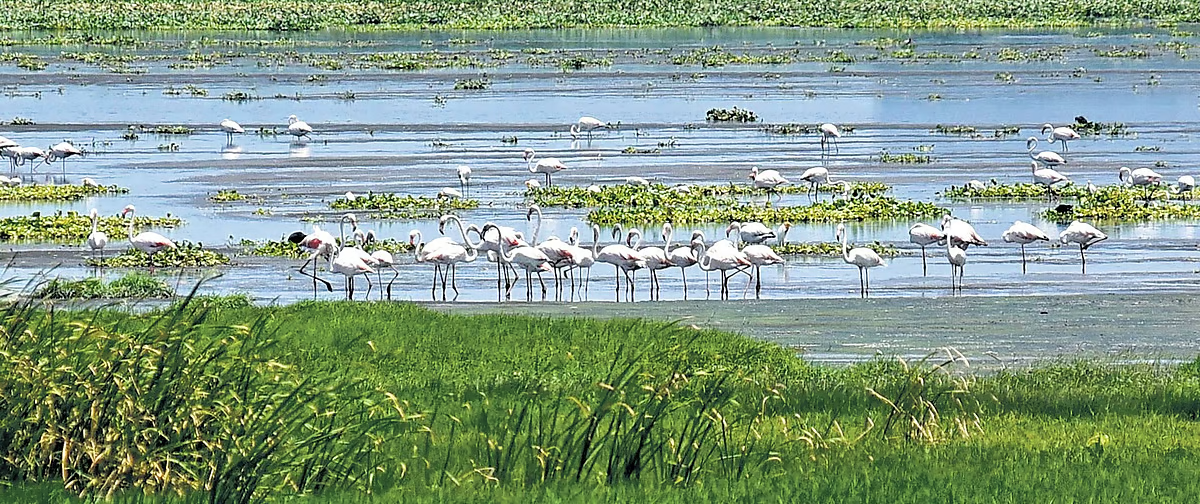
- Biodiversity: Supports over 175 species of birds, 50 species of fish, and more than 100 plant species, including various reptiles and amphibians. Recognized as a vital urban biodiversity hotspot.
- Functions: Acts as a natural sponge, regulates drainage for Chennai, filters pollutants, and supports groundwater recharge. Key for flood management, especially post-2015 Chennai floods.
International Recognition and Legal Framework
- Ramsar Convention: In 2022, an additional 550 hectares were added under Ramsar status, totaling 1,247.54 hectares; acknowledges the ecological importance but does not inherently prohibit development.
- Wetlands (Conservation and Management) Rules, 2017: Mandates the delineation of wetland boundaries and the preparation of an Integrated Management Plan (IMP) based on scientific studies and public consultation.
Regulatory Developments
- National Green Tribunal Directive (September 2025): Directed that no planning approval or construction be granted within 1 km of the Ramsar site until a comprehensive study is complete to identify the zone of influence.
- Chennai Metropolitan Development Authority (CMDA) Circular: Instructed planning authorities to refrain from processing applications within the Ramsar site and its designated zone.
Impact on Residents and Urban Development
- Affected Population: Residents report inability to build, renovate, or secure loans against properties due to regulatory freeze impacting at least 3,000 residents.
- Economic Concerns: Local property market suffering; concerns include loss of significant revenue from property taxes and registration fees, estimated at ₹10,000 crore annually across Velachery and Adyar areas.
Official Perspectives
- TNSWA’s Position: Maintains the 1 km zone is a temporary measure; emphasizes that scientific validation will inform the final management and delineation of boundaries for sustainability.
- Environmental Health: Experts advocate for careful management of surrounding landscapes—highlighting that changes outside the marsh could negatively affect its ecological integrity.
Community Interactions
- Residents' Sentiment: Many long-term residents feel disenfranchised; they argue that the balance between conservation and the rights of established residents needs reassessment.
- Welfare Associations: Some advocate for conservation efforts but insist on protecting existing residents' rights and needs.
This summary encapsulates the ongoing debate between environmental preservation and urban development challenges faced by communities surrounding the Pallikaranai Marsh, highlighting critical legal frameworks, ecological importance, and social implications.
Key Terms & Concepts
| Pallikaranai marsh | Critical ecological asset |
| Tamil Nadu State Wetland Authority (TNSWA) | Wetland authority managing conservation |
| Ramsar Convention | International wetland protection recognition |
| Integrated Management Plan (IMP) | Framework for wetland management |
| Wetlands (Conservation and Management) Rules, 2017 | Indian policy for wetland governance |
| Southern Bench of the National Green Tribunal (NGT) | Judicial authority on environmental issues |
| Chennai Metropolitan Development Authority (CMDA) | Responsible for urban planning |
| Bay of Bengal | Water body connected to marsh |
| Chennai floods of 2015 | Event highlighting wetland importance |
| 1,000 years | Estimated age of the marsh |
| 175 species of birds | Indicates biodiversity richness |
| 698 hectares |