iAspirants
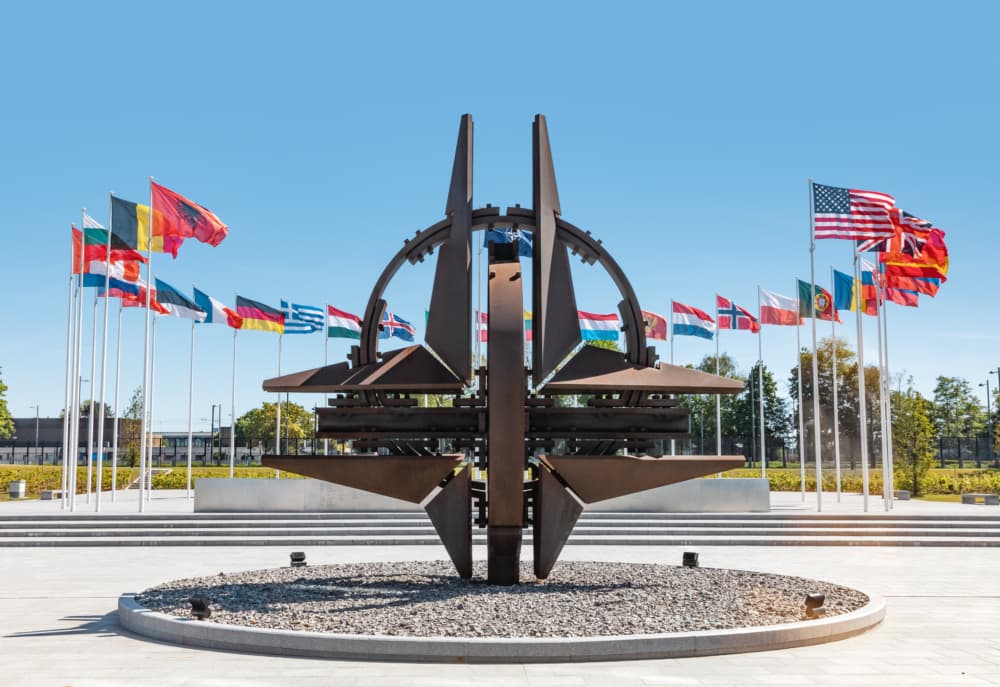
NATO's New Strategic Defense Framework
Published on:
Share this post
Article Summary
NATO's Evolution and Strategic Rebalancing
Overview
- The United States has shifted its expectations of Europe in terms of defense, urging European allies to take on primary responsibility for their own security.
- The U.S. National Security Strategy (November 2025) emphasizes NATO as America's principal alliance while advocating increased European defense spending and responsibilities.
Key Developments
U.S. Military Presence:
- Post-Russia's invasion of Ukraine in 2022, U.S. troop levels in Europe were heightened to around 100,000.
- By 2025-26, the U.S. reduced its troops in Europe to approximately 75,000-80,000, reverting closer to pre-war levels.
NATO Summit 2026:
- The 36th NATO Summit in Ankara reaffirmed commitments under Article 5 (collective defense).
- NATO members pledged €70 billion in military assistance for Ukraine in 2026.
- There is a push for European-led defense capabilities, enhancing NATO's defense industrial base.
Historical Phases of NATO
- NATO 1.0 (1949-1991): Relied on U.S. nuclear power to deter the Soviet Union.
- NATO 2.0 (1991-2022): Expanded eastwards after the Soviet collapse, but European defense expenditure declined.
- NATO 3.0 (Post-2022): Europe takes on a greater role in conventional defense, while the U.S. focuses on strategic deterrence.
Economic and Defense Spending Targets
- Budget Commitments:
- NATO members committed to a defense spending target of 3.5% of GDP by 2035 at the 2025 Hague Summit.
- Germany has doubled its defense expenditure since 2023 to meet this target by 2029.
Challenges and Dependencies
- European nations still rely on U.S. capabilities, including:
- Intelligence, surveillance, satellite support, and strategic airlift.
- Issue of building independent military ecosystems as U.S. rapid reaction forces are reduced.
Implications for Global Strategy
- A stronger European defense capability may enable the U.S. to refocus on the Indo-Pacific, thus impacting global power dynamics, particularly regarding China.
- For India, a capable Europe can enhance defense manufacturing partnerships in areas like:
- Advanced technology, artificial intelligence, cybersecurity, and space.
Strategic Opportunities for India
- The transition in NATO can be viewed as a strategic opportunity for India to strengthen ties with both the U.S. and Europe.
- Enhanced cooperation can boost India’s defense industry and technological capacity while maintaining strategic autonomy.
Conclusion
- NATO's evolution reflects a significant shift towards European self-reliance in defense, with broader implications for geopolitical dynamics, particularly concerning the Indo-Pacific and relations with nations like India.
Key Terms & Concepts
| North Atlantic Treaty Organization (NATO) | Military alliance established in 1949 |
| National Security Strategy of the United States | Details NATO's role and expectations |
| 5% of GDP | New defense spending benchmark |
| 1,00,000 personnel | U.S. troop strength in Europe post-invasion |
| 2026 NATO Summit in Ankara | Reinforced transition commitments |
| €70 billion | Military assistance pledged for Ukraine |
| 3.5% of GDP | Core defense spending target by 2035 |
| Germany | Doubling defense expenditures since 2023 |
| Indo-Pacific | Region for U.S. strategic focus |
| Poland | Country involved in NATO defense |
| Russia | Country viewed as a security threat |
| Ukraine | Subject of military assistance commitment |