iAspirants
Modi's Act East Policy Initiatives
Published on:
Share this post
Article Summary
Summary of Key Points on India's Act East Policy and PM Modi's Visit
Act East Policy Overview
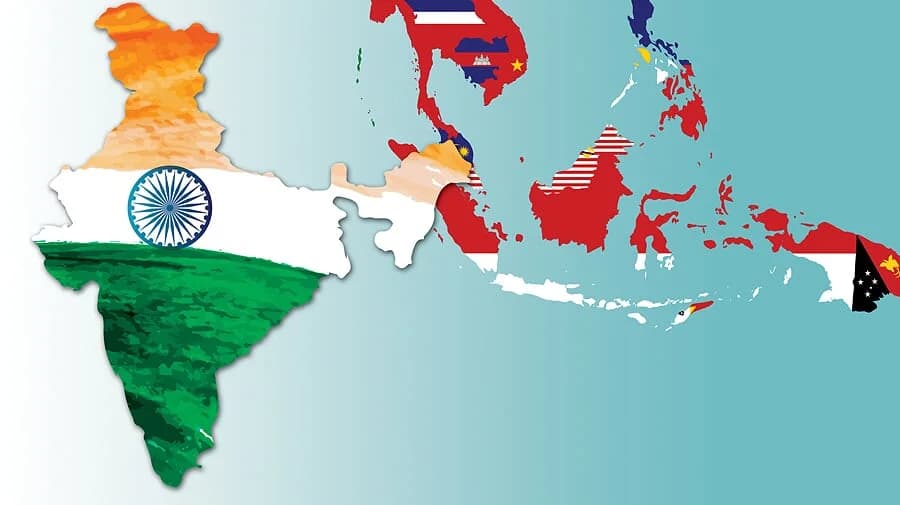
- Strategic Shift: Transition from the "Look East Policy" (1991) to "Act East Policy" initiated by PM Modi at the 12th ASEAN-India Summit (2014).
- Objective: To enhance economic cooperation, cultural ties, and strategic relationships with countries in the Indo-Pacific region.
- Geographic Scope: Extended beyond Southeast Asia to the wider Asia-Pacific.
- Cultural and Trade Historical Linkages: India has historical ties to East Asia, emphasizing cultural and trade relations.
Economic and Strategic Dimensions
- Hard and Soft Power: Integration of both aspects into foreign policy, with focus on security, culture, and connectivity.
- Global Responsibilities: India aims to assume greater responsibilities globally, correcting historical neglect of the Asia-Pacific region.
- Response from the US: Anticipated India's role as a security partner in the Indian Ocean region.
Regional and Global Engagement
- Indo-Pacific Emergence: Concept reflects the evolving geopolitical landscape, prompted by increased assertiveness of China.
- Quad Cooperation: Revitalization of cooperation among the four democracies (USA, India, Japan, Australia).
- Collective Action Necessity: Rising non-conventional threats like illegal fishing, piracy, drug trafficking, and natural disasters require regional collaboration.
Initiatives
- SAGAR, IPOI, MAHASAGAR: Initiatives under the Act East Policy focusing on security, cooperation, and economic collaboration in the region.
Challenges
- Regional Political Instability: Issues in neighboring countries (Pakistan, Myanmar, Bangladesh, Nepal, Sri Lanka) affecting India's strategic positioning.
- Infrastructure Deficiencies: Northeast India's lack of adequate infrastructure as a barrier to establishing it as a gateway to East Asia.
- Inconsistencies: Divergent positions of extra-regional powers, particularly the U.S., could complicate India's strategy.
Diplomacy and Regional Stability
- Balance in Policy: Need to ensure that the Act East Policy does not appear overly strategic, which could destabilize the region.
- Partnerships: Enhanced cooperation with ASEAN nations and positioning India as a responsible maritime power.
Conclusion
PM Modi’s engagement with Indonesia, Australia, and New Zealand through the Act East Policy exemplifies India's commitment to fostering deeper ties in the Indo-Pacific. While there are significant opportunities for collaboration, challenges in infrastructure and regional politics need to be addressed for sustained success in the initiative.
Key Terms & Concepts
| Act East Policy | Promotes economic and cultural ties |
| 12th ASEAN-India Summit | Platform for strategic policy declaration |
| SAGAR initiative | Focus on security in Indian Ocean |
| IPOI initiative | Fosters Indo-Pacific cooperation |
| MAHASAGAR initiative | Enhances maritime security cooperation |
| Quad | Strategic cooperation among democracies |
| Indo-Pacific | Geopolitical concept for regional strategy |
| IUU fishing | Non-conventional security threat |
| Illegal migration | Necessitates regional collective action |
| Cultural ties with East Asia | Enhances historical linkages |