iAspirants
Major Indian Space Missions Overview
Published on:
Share this post
Article Summary
Summary of Key Developments in Space Technology and Applications
Major Satellite Missions
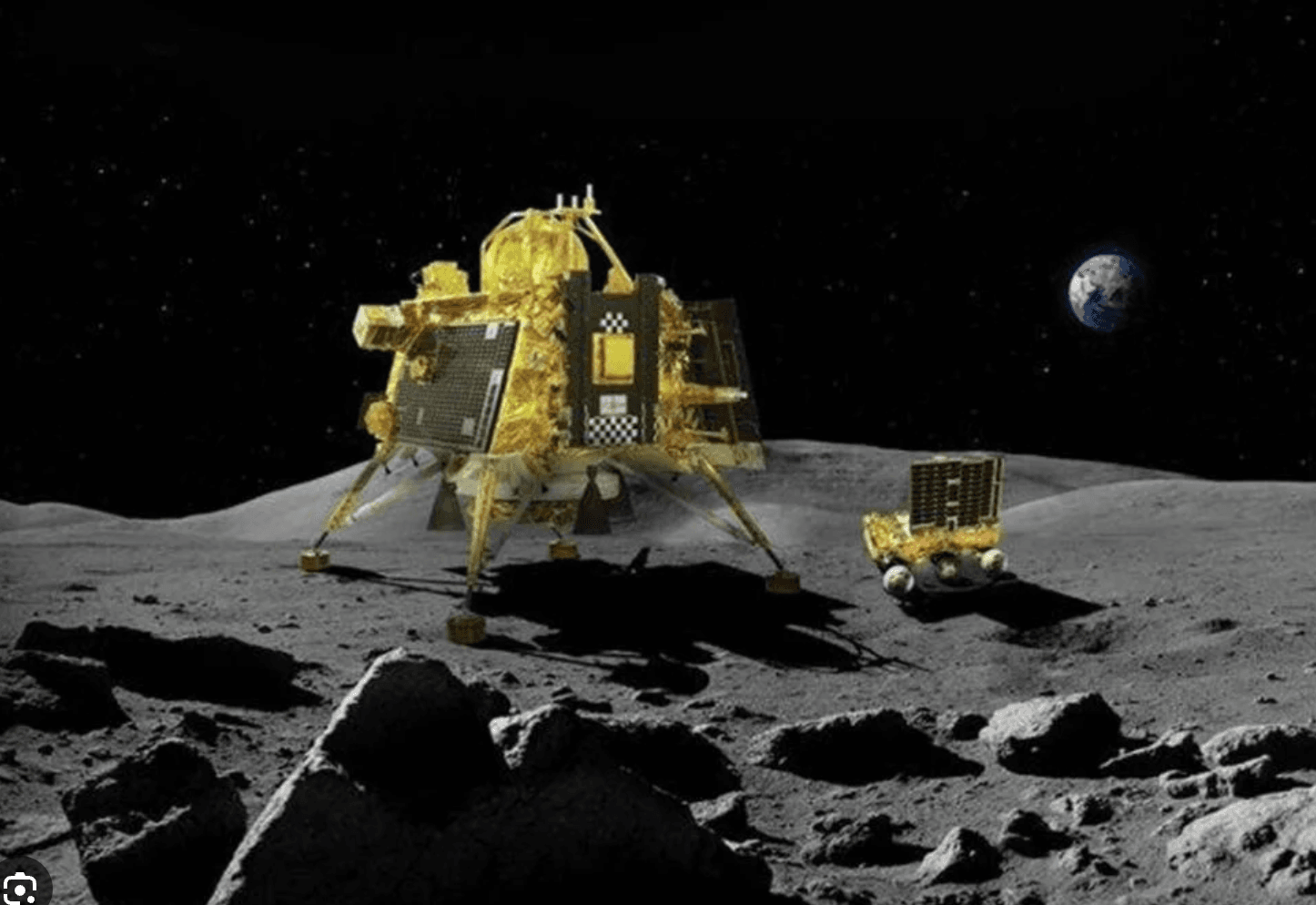
Chandrayaan-3:
- Launched on July 14, 2023.
- Achieved soft landing near the Moon's south pole on August 23, 2023.
- Objectives included safe landing, rover navigation, sulfur detection, and measurement of lunar soil temperature.
Aditya-L1:
- Launched on September 2, 2023.
- India’s first space-based solar observatory, set to study solar corona, photosphere, and chromosphere from a halo orbit around the Sun-Earth L1 point (January 2024).
Exposat:
- Scheduled launch on January 1, 2024.
- India’s first dedicated X-ray polarimetry mission designed to study bright astronomical X-ray sources like pulsars and black holes.
SPADAX (Space Docking Experiment):
- Launch planned for December 30, 2024.
- Will demonstrate autonomous docking/undocking, power transfer, and orbiting, positioning India as the fourth country to showcase space docking technology.
NISAR:
- Launch on July 30, 2025.
- A dual-frequency radar Earth observation satellite developed jointly by NASA and ISRO.
GSAT-7R (CMS-03):
- India’s most advanced indigenous military communication satellite aimed at enhancing the Indian Navy's strategic communication capabilities.
Applications of Space Technology
Agriculture:
- Satellite-based crop area/yield estimation, soil moisture products supporting major crops and PMFBY (Pradhan Mantri Fasal Bima Yojana).
- Operational systems include GeoCrest, potato crop monitoring, and VEDAS-based geospatial yield estimation.
Disaster Management:
- Real-time satellite-based monitoring for floods, landslides, cyclones, forest fires, and droughts.
- Issued over 890 flood-related products and alerts for 11 major landslide events.
- Developed the Landslide Atlas and techniques for landslide warnings based on rainfall thresholds.
Governance:
- Geospatial technologies aiding in MGNREGA (Mahatma Gandhi National Rural Employment Guarantee Act), watershed activities, and disaster management planning.
- Approximately 6.93 crore MGNREGA activities and 6.89 lakh watershed activities geotagged.
Urban Infrastructure:
- Supported initiatives like urban water management, property tax mapping, and disaster management.
Satellite Communication:
- Enhanced connectivity in rural areas, supporting initiatives like BharatNet and Digital India.
- Facilitated tele-education, tele-medicine, and disaster management.
Future Missions and Technologies
Gaganyaan:
- India’s first human spaceflight program aimed at demonstrating human spaceflight capability.
Venus Orbiter Mission:
- Dedicated mission to study the atmosphere, surface, and geological environment of Venus.
Chandrayaan-4:
- Mission to land on the Moon and return lunar samples to Earth.
Chandrayaan-5 (Lunar Polar Exploration):
- Collaborative mission with JAXA for in-situ study of lunar surface and subsurface resources.
Government and Policy Framework
- The advancements are supported by policies from the Prime Minister's Office, Ministry of Personnel, Public Grievances and Pensions, and the Department of Space.
- Future applications include AI/ML-based agricultural systems, irrigation management, and monitoring of reservoir stability.
Conclusion
India's space technology initiatives demonstrate significant advancements in satellite missions and applications across agriculture, disaster management, governance, and urban infrastructure, positioning the country as a leader in space exploration and technology utilization.
Key Terms & Concepts
| Chandrayaan-3 | Soft landing on Moon |
| Aditya-L1 | Solar observation satellite |
| Exposat-1 | X-ray polarimetry mission |
| Spadex | Autonomous docking technology |
| NISAR | Dual-frequency radar satellite |
| GSAT-7R | Military communication satellite |
| PMFBY | Crop insurance scheme |
| MGNREGA | Rural employment guarantee scheme |
| NDEM 5.0 | National emergency management database |
| AI/ML based systems | Crop estimation and forecasting |
| Gaganyaan | Human spaceflight program |
| Venus Orbiter Mission | Study Venus atmosphere |
| Chandrayaan-4 |