iAspirants
Current AffairsPrelims PYQsUPSC CSE SyllabusUPSC CSE StrategyBlogsPricing
Login
iAspirants

Your AI-powered companion for UPSC preparation.

Quick Links

  • Home
  • About Us
  • Current Affairs
  • Prelims PYQs
  • UPSC CSE Syllabus
  • UPSC CSE Strategy
  • Blogs

Company

  • Pricing
  • FAQs
  • Contact Us
  • Login

Legal

  • Privacy Policy
  • Terms & Conditions
  • Return Policy

© 2025 iAspirants, Inc. All rights reserved.

  1. Blogs
  2. Environment and Ecology

Kigali Amendment Turns 10 Today

Published on: 15-Oct-2026

Source: Indian Express

Share this post
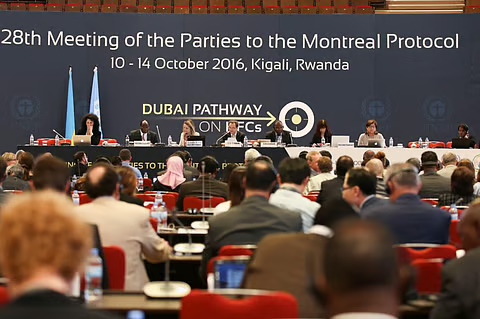
Kigali Amendment Turns 10 Today

Article Summary

Kigali Amendment to the Montreal Protocol - Key Facts and Implications

1. Introduction to Kigali Amendment:

  • Date of Agreement: Adopted on October 15, 2016; entered into force in January 2019.
  • Purpose: Phases down the use of hydrofluorocarbons (HFCs), which are potent greenhouse gases used as refrigerants.
  • Significance: Aims to prevent between 0.3°C to 0.5°C of global warming by 2100, crucial for achieving the Paris Agreement targets of keeping temperature rise below 2°C.

2. Background of the Montreal Protocol:

  • Initial Agreement: Established in 1987 to phase out ozone-depleting substances (like chlorofluorocarbons, CFCs).
  • Ozone Layer Recovery: Nearly 99% of controlled substances eliminated; the layer is recovering.

3. Impact of HFCs:

  • Warming Potential: HFCs can have a warming impact hundreds to thousands of times greater than CO2.
  • Rapid Growth in Demand: With increasing global temperatures, demand for cooling solutions is significantly rising, especially in developing countries like India.

4. India's Responsibilities under Kigali:

  • Ratification Year: India ratified the amendment in 2021.
  • Production Freeze: HFC production and consumption must be capped at an agreed baseline by 2028.
  • Reduction Timeline:
    • 10% reduction by 2032.
    • 85% reduction by 2047.
  • Current Demand: Cooling accounts for over 10% of annual electricity demand, with projections of more than doubling by 2035.

5. Economic and Environmental Considerations:

  • Efficiency Improvements: Enhancements in cooling efficiency can significantly reduce electricity consumption and emissions.
  • Multilateral Fund: Established in 1991 to assist developing countries in transitioning away from HFCs, it has helped avoid 50 billion tonnes of CO2 emissions by funding technology changes.

6. Global Participation and Challenges:

  • Current Status: As of October 2026, 175 parties have joined the Kigali Amendment.
  • Next Steps: Focus on refrigerant recovery and safe disposal during appliance servicing and disposal; revitalization of "Friends of the Kigali Amendment" coalition.

7. Potential for Expansion:

  • Model for Other Pollutants: The success of the Kigali Amendment could inform future agreements to phase down other short-lived climate pollutants (SLCPs) like methane and black carbon, which also significantly impact climate.

8. Future Directions for Effective Policy:

  • Binding Agreements: There is a proposal for binding international agreements akin to the Montreal Protocol to address methane emissions globally, especially from oil and gas sectors.
  • Sector-Specific Solutions: Various sources of super pollutants would require tailored obligations to effectively reduce emissions and support compliance.

Conclusion: The Kigali Amendment represents a key international effort to mitigate climate change effects by regulating substances that contribute to global warming. Its success is closely linked to ongoing participation, technological advancements, and cooperative financial mechanisms aimed at supporting developing nations in their transition to more sustainable cooling solutions.

Key Terms & Concepts

Kigali AmendmentPhase down HFCs
Montreal ProtocolOzone-depleting substances regulation
Hydrofluorocarbons (HFCs)Common refrigerants investigated
Federated States of MicronesiaProposed HFC inclusion in Protocol
MauritiusProposed HFC inclusion in Protocol
October 15, 2016Kigali Amendment adopted
January 2019Kigali Amendment in force
Paris AgreementLimiting global warming goals
International Energy Agency (IEA)Report on electricity consumption
2035Cooling demand projected to double
Multilateral FundFunds compliance costs for developing nations
50 billion tonnes of CO2Emissions avoided from Fund

Mind Map for UPSC Civil Services Revision

Turn UPSC Civil Services Current Affairs Into Exam-Ready Notes

Reading Environment and Ecology current affairs is half the work. Revise them with ready-made notes and test what actually stuck.

  • Daily UPSC Civil Services current affairs analysis
  • Revision notes, mind maps & MCQs
  • Prelims mock tests with instant results

Related UPSC Civil Services Current Affairs Articles

Chhattisgarh Blackbuck Translocation Initiative
Environment and Ecology14-Oct-2026

Chhattisgarh Blackbuck Translocation Initiative

Summary of Key Points from the Blackbuck Translocation Initiative in Chhattisgarh

Conservation Efforts:

  • Translocation of Blackbucks: 50 blackbucks are to be translocated to Gomarda Wildlife Sanctuary in Chhattisgarh from Barnawapara Wildlife Sanctuary. This is part of a larger revival strategy after the species disappeared from the region over 50 years ago due to poaching and habitat loss.
7 US cents per tonne
Cost of Fund's benefit
MethaneShort-lived climate pollutant
Black carbonSource of warming: soot
European UnionInternational methane agreement

Historical Context:

  • Extinction: Blackbucks were locally extinct in the region by the 1970s, prompting conservation efforts to reintroduce them.

Previous Conservation Success:

  • In a similar initiative, 77 blackbucks were successfully translocated to Barnawapara Sanctuary from various zoological parks between 2017-2018, leading to a population increase to over 150.

Wildlife Protection Legislation:

  • Wildlife Protection Act, 1972: Blackbucks are listed under Schedule 1, categorizing them as an endangered species that require strict protection measures.

Habitat and Environmental Context:

  • Geographical Proximity: Gomarda and Barnawapara sanctuaries are situated 70 kilometers apart and share environmental characteristics favorable for blackbucks, such as good water availability and grasslands.

Economic Implications:

  • Wildlife Tourism: The translocation initiative aims to enhance wildlife tourism in Gomarda Sanctuary, fostering local employment opportunities.

Government Recognition:

  • Prime Minister Narendra Modi acknowledged the blackbuck conservation effort during his public address in April 2026, indicating governmental support for wildlife protection initiatives.

Future Prospects:

  • Plans are in place for potential similar translocation efforts across other sanctuaries, highlighting a broader commitment to wildlife conservation in India.

Relevant Figures:

  • Current Blackbuck Population in Barnawapara: Over 150 after successful translocation efforts.
  • Total Blackbucks Translocated to Barnawapara: 77 from multiple zoological sources.

Conclusion:

This initiative represents significant progress in wildlife conservation strategies in India, demonstrating effective habitat restoration and population management efforts through legislative support, community engagement, and governmental endorsement.

Delhi's Fireworks and Air Pollution Issues
Environment and Ecology14-Oct-2026

Delhi's Fireworks and Air Pollution Issues

Summary of Key Points

Judicial Rulings and Constitutional References

  • Supreme Court of India:
    • November 2016: Suspended licenses for the sale of fireworks in NCR due to PM2.5 levels exceeding 700 µg/m³.
    • September 2017: Relaxation of suspension to protect license holders and livelihoods.
    • October 2018: In the Arjun Gopal and Others vs. Union of India judgment, allowed reduced-emission "green crackers", banned joined firecrackers ("laris"), and imposed a two-hour window for bursting.
    • Latest order permits next-generation joined green crackers but does not enforce a total ban, citing public sentiment.

Environmental Data and Pollution Sources

  • Air Quality Metrics:
    • In 2025, the PM2.5 average post-Deepavali reached 488 µg/m³, highest since 2021, with hourly concentrations peaking at 675 µg/m³.
  • Contributors to Pollution:
    • Major sources include construction dust, vehicle emissions, stubble burning, and climatic conditions. Fireworks are not the sole contributors but can cause acute spikes during severe pollution periods.

Government Schemes & Environmental Research

  • Green Crackers:
    • Promoted by the Council of Scientific and Industrial Research-National Environmental Engineering Research Institute (CSIR-NEERI), which forecasts a PM10 reduction of 45%-60% with the new generation.
    • However, actual pollution reduction gains may diminish with increased usage of these "cleaner" options.

Challenges in Implementation and Regulation

  • Enforcement Issues:
    • The Commission for Air Quality Management has reported unauthorized sales of QR codes used for verifying manufacturer legitimacy.
    • Lack of testing facilities in Delhi complicates enforcement of the regulations.
    • Past challenges included police difficulties in distinguishing green crackers from conventional ones during 2018-2019.

Implications for Public Health and Policy

  • There is a collective need for manufacturers to transition to the formal sector and ensure regulations are practiced effectively.
  • Public awareness on the health impacts of fireworks must be enhanced to mitigate air and noise pollution levels during festive seasons.

Conclusion

The interplay of legal decisions, pollution metrics, and regulatory challenges highlights the ongoing struggle in Delhi and the NCR, where public health, environmental sustainability, and regulatory enforcement converge amidst the festive use of fireworks.

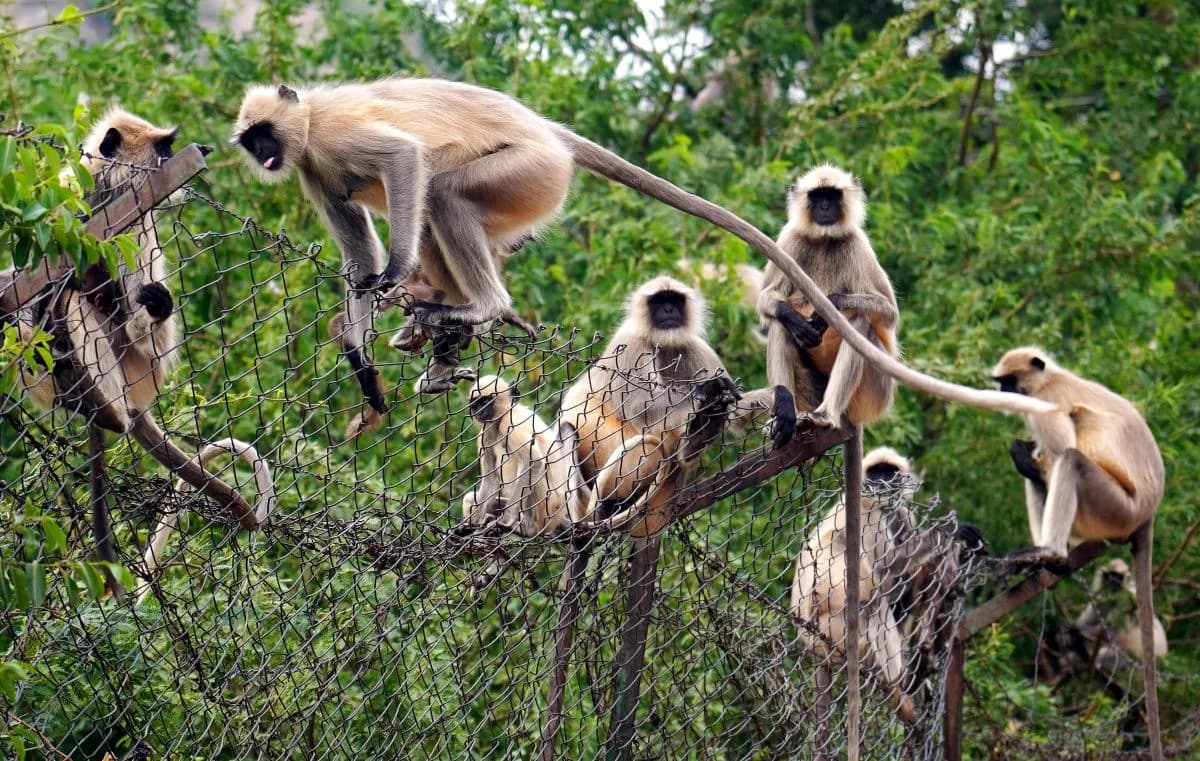
Langur Menace in Chhattisgarh Village
Environment and Ecology14-Oct-2026

Langur Menace in Chhattisgarh Village

Summary of Langur Problem in Chhattisgarh's Devgaon Village

  1. Background: The village of Devgaon, located in Bemetara district, Chhattisgarh, has been facing significant issues with grey langurs, which have increasingly intruded into residential areas over the past decade. Residents report frequent disruptions from langurs raiding kitchens and causing property damage.

  2. Wildlife Protection Act, 1972: Grey langurs are protected under Schedule II of the Wildlife (Protection) Act, 1972. This act prohibits their hunting, capturing, or harming, and constitutes a criminal offense.

  3. Incident Overview:

    • Recent viral video claims that 22 langurs were killed, triggering a Forest Department inquiry.
    • Villagers allegedly hired a 'hunter' for rice to manage the langur population, a move that has raised significant controversy.
    • Reports suggest the issue affects around 50 villages in the Bemetara-Nawagarh block, indicating a broader regional challenge.
  4. Community Responses:

    • The village has employed a security guard to patrol the area, marking the second instance in ten years where such a measure has been taken to deter the animals.
    • Residents have attempted various methods, like laying thorny twigs on roofs, to protect their property from langur intrusions.
  5. Health and Safety Issues: Residents report physical injuries and safety concerns due to langur interactions. For instance, a 65-year-old resident injured her foot while trying to escape a langur encounter.

  6. Contributing Factors:

    • Experts indicate habitat loss due to agricultural expansion as a primary reason for increased human-animal conflicts. The destruction of natural bunds and trees has forced langurs into human habitats as they seek food and shelter.
    • Effective solutions suggested include providing safe habitats for langurs to encourage them away from human settlements.
  7. Forest Department's Role:

    • Forest officials have verified claims of frequent complaints and interventions but express that numerous villagers do not consult or inform them before employing personal guards.
    • The Superintendent of Police emphasized that hiring guards requires the district collector's permission, which was not obtained in this case.
  8. Current Status: At present, the village continues to grapple with the langur issue, and frustration among residents is growing due to a perceived lack of effective solutions and support from authorities. Many feel abandoned in addressing the persistent wildlife conflict.

This case illustrates the complexities of human-wildlife interactions, the importance of wildlife protection laws, and the necessity for community cooperation with regulatory bodies for sustainable coexistence.

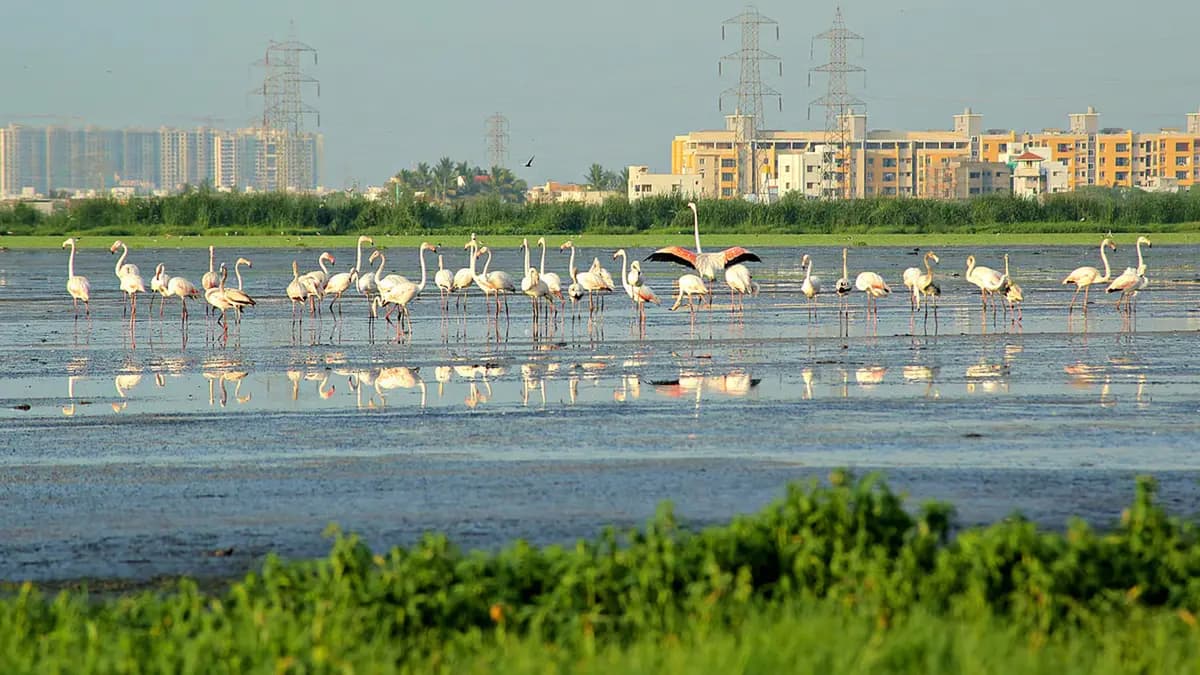
Chennai Wetlands Interim Regulation Established
Environment and Ecology13-Oct-2026

Chennai Wetlands Interim Regulation Established

Summary of News Article: Key Facts and Legal Provisions

  1. Context and Background:

    • The National Green Tribunal (NGT) imposed a construction ban in a one-kilometre radius around the Pallikaranai marshland in Chennai due to environmental concerns.
  2. Interim Zone of Influence (ZoI) Established:

    • The Tamil Nadu State Wetlands Authority (TNSWA) released an interim ZoI that impacts approximately 128.19 hectares.
    • A list of 36 survey numbers has been identified for inclusion in the interim ZoI as part of the ongoing legal processes led by the NGT.
  3. Judicial Proceedings:

    • The First Division Bench, comprised of Chief Justice Sushrut Arvind Dharmadhikari and Justice G. Arul Murugan, is reviewing the TNSWA's report and will provide orders accordingly.
    • The Confederation of Real Estate Developers Association of India (CREDAI) Chennai chapter challenged the NGT ban but expressed satisfaction with the TNSWA's rapid identification of the interim ZoI.
  4. Scientific and Regulatory Mechanisms:

    • The TNSWA's report emphasizes that construction activities may be regulated rather than completely banned within the interim ZoI.
    • Specific prohibitions include:
      • Blocking or altering hydrological pathways, natural drains, and established channels.
      • Dumping solid waste, construction debris, and untreated sewage into connected watercourses.
  5. Regulatory Framework:

    • Construction projects will require a no-objection certificate from the district-level wetlands management committee.
    • The proposed regulatory framework aims to ensure development does not compromise the ecological character of the Pallikaranai Ramsar site.
  6. Future Steps:

    • The final ZoI will be established following scientific assessments and compliance with the Wetlands (Conservation and Management) Rules, 2017.
  7. Constitutional and Legal Framework:

    • Relevant legal provisions include the Wetlands (Conservation and Management) Rules, 2017, which outline governance on wetland conservation in India.
    • The actions align with India's commitments to environmental conservation and sustainable development as defined in the Directive Principles of State Policy (DPSP) under Articles 48A (protection and improvement of environment and safeguarding of forests and wildlife) and 51A (g) (duty to protect and improve the natural environment).

This interim resolution by the TNSWA aims to balance ecological needs with property rights and development in Chennai, emphasizing a regulated approach to environmental conservation.

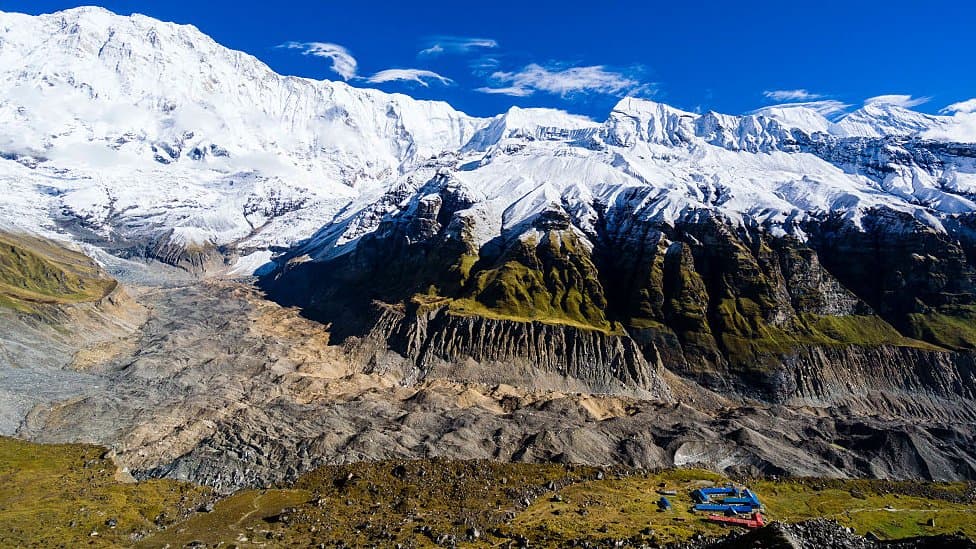
Climate Resilience in Indian Himalayas
Environment and Ecology13-Oct-2026

Climate Resilience in Indian Himalayas

Summary of Key Facts and Data on Climate and Environmental Risks in the Indian Himalayan Region

Climate Change Impact and Statistics:

  • The Indian Himalayan Region (IHR) is facing severe climate-induced disasters; frequent occurrences are noted.
  • Warming trends in high mountains of Asia are around 0.3°C per decade, double the global average.
  • Reports (2026) by the International Centre for Integrated Mountain Development (ICIMOD) indicate that ice-loss rates in the Hindu Kush Himalaya (HKH) have doubled since 2000.
  • Western Himalaya exhibits warming faster than central and eastern areas, particularly night-time minimum and winter temperatures.
  • A study highlights that 90% of the Himalayas risk year-long drought if global temperatures rise by 3°C.

Glacier Dynamics:

  • Glaciers are retreating due to rising temperatures, with thermal profiles shifting from −6°C to −20°C to −2°C, leading to increased melting.
  • Meltwater contributes to glacier instability, enhancing the risk of avalanches, landslides, and debris flows.
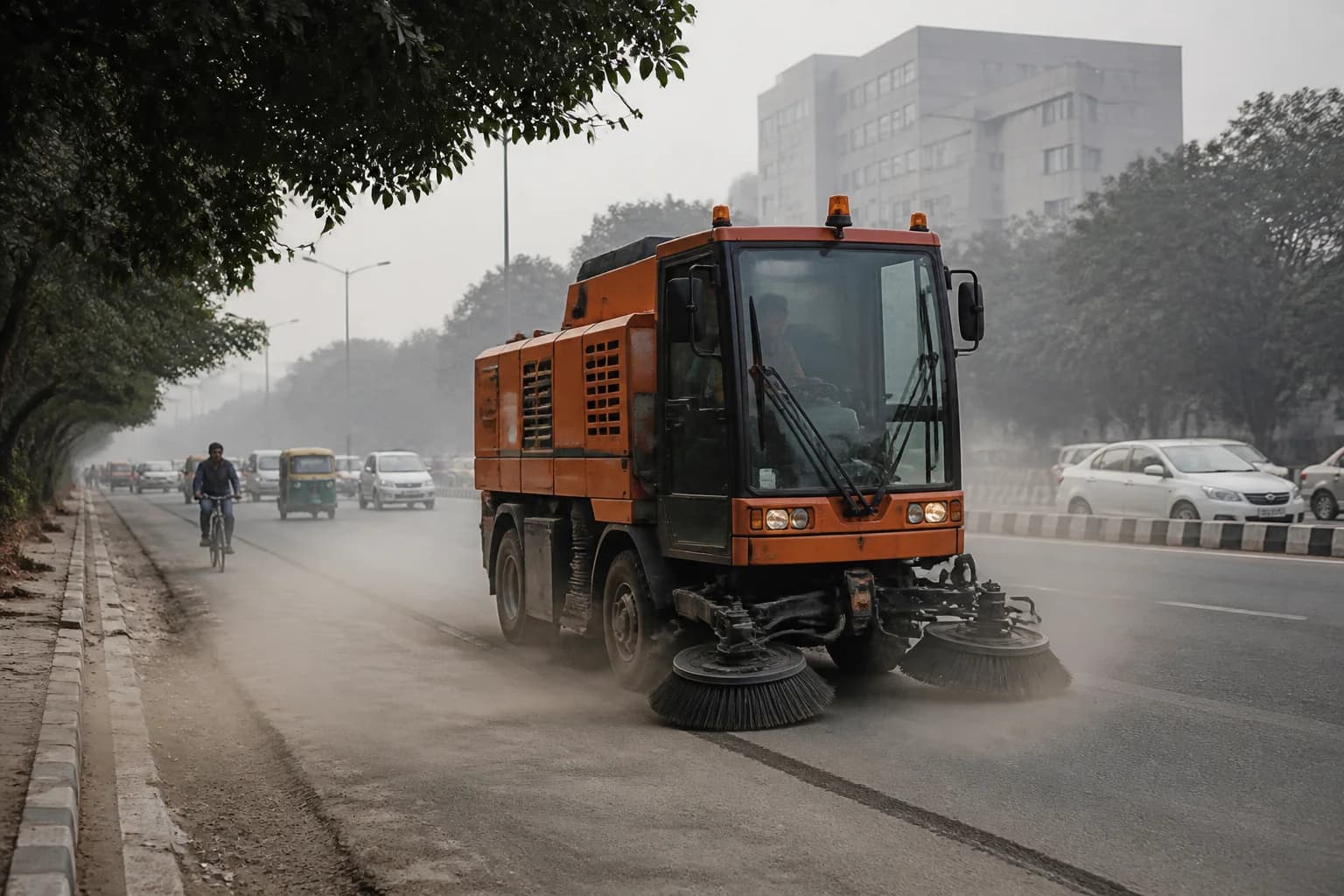
Delhi's Road Sweepers Initiative Delayed
Environment and Ecology13-Oct-2026

Delhi's Road Sweepers Initiative Delayed

Summary of Delhi's Air Pollution Mitigation Efforts and Delays

Key Facts

  • Mechanical Road Sweepers (MRS): Delhi government planned to deploy 140 MRS machines to reduce dust pollution, including 70 large machines for wider roads and 70 smaller machines for narrower lanes.
  • Projected Cost: ₹900 crore over the next 10 years.
  • Current Status: As of October 2026, none of the MRS machines have arrived, with only a work order issued for 70 large MRS machines expected by the end of November.

Constitutional and Legal Context

  • Implementation Entity: The Municipal Corporation of Delhi (MCD) is responsible for executing the purchasing and operational execution of the MRS, funded by the Delhi government.
  • Outsourcing: Operations are outsourced to private firms through competitive bidding rather than purchasing the fleet outright.

Delays and Challenges

  • Permafrost acts as a stabilizer in high-altitude environments and its melting poses risks to geologic stability.
  • Events and Incidents:

    • On August 26, 2026, a significant event involved a 5.2 magnitude shake recorded by USGS, which triggered a collapse of ice and rock from Langtang Himal, causing a flash flood termed an “inland tsunami” down the Bhote Koshi river.

    Government and Policy Recommendations:

    • High-altitude monitoring: Urgent need for satellite and drone surveillance to monitor geological stability.
    • Real-time sensors for hydrological and acoustic monitoring of glacier-fed rivers are essential for early warning systems.
    • The Avay Shukla Committee and Ravi Chopra Committee propose stringent conditions for hydropower projects above 2,200 metres elevation.
    • Development projects in the Himalayas should undergo rigorous environmental impact assessments with a proposed moratorium on actions pending reassessment.

    Hydraulic Projects:

    • The Chenab-Beas river-linking project, which entails an 8.7-km tunnel at an elevation of 3,140 metres, needs reevaluation due to potential environmental hazards.

    International and Regional Cooperation:

    • Emphasis on regional collaborative efforts is vital for data sharing to mitigate the impact of environmental disasters.
    • The need for a shared disaster management framework has been identified to enhance preparedness.

    Constitutional and Legal Framework:

    • The need for adherence to Article 21 of the Indian Constitution, which ensures the right to life, emphasizing the importance of a safe environment as part of this right.
    • Regional policies should align with Sustainable Development Goals (SDGs) and climate commitments within international frameworks.

    Environmental and Economic Indicators:

    • Climate risks threaten not only ecosystems but also local livelihoods, which are heavily dependent on stable weather patterns and snowmelt.
    • The Himalayan ecosystems’ health is directly tied to economic activities, including agriculture and tourism, making climate resilience critical for the region's sustainable development.

    This summary underscores the urgent need to address the environmental challenges in the IHR through informed, cooperative, and sustainable approaches, integrating scientific data and legal frameworks to navigate the climate crisis effectively.

    • Missed Deadlines: The initial timeline set for deployment was the end of July 2026. The project has faced multiple delays including:
      • Proposal approval delays from the Delhi Cabinet.
      • Changes in implementation plans following objections from MCD.
      • Issues related to the approval of the Standing Committee in MCD.

    Environmental Impact and Data

    • Source of Pollution: An IIT-Kanpur study indicated road dust contributes 56% of PM10 emissions and 38% of PM2.5 emissions in Delhi.
    • Project Phases:
      • Phase 1: Deployment of 250 water sprinklers with anti-smog guns.
      • Phase 2: Integration of 70 MRS machines with 210 water sprinklers.

    Government Schemes and Policies

    • Ambitious Plan: Announced on January 28, 2023, aimed at “world-class transformation” of roads.
    • Funding Route: Originally proposed through the Public Works Department but later allocated directly to MCD due to jurisdictional challenges.

    Issues with Alternative Measures

    • Temporary Hiring Proposal: MCD suggested hiring 30-40 temporary MRS machines for immediate use; this plan was rejected by the Commission for Air Quality Management (CAQM) due to the inclusion of diesel trucks.

    Political Context

    • After the February 2025 elections, the BJP government intervened to revive and revise the project, leading to further implementation delays.

    This summary encapsulates the vital details surrounding the deployment of mechanical road sweepers in Delhi, focusing on the governmental strategies, expected environmental impacts, and the significance of the measures amid persistent air quality challenges.