iAspirants
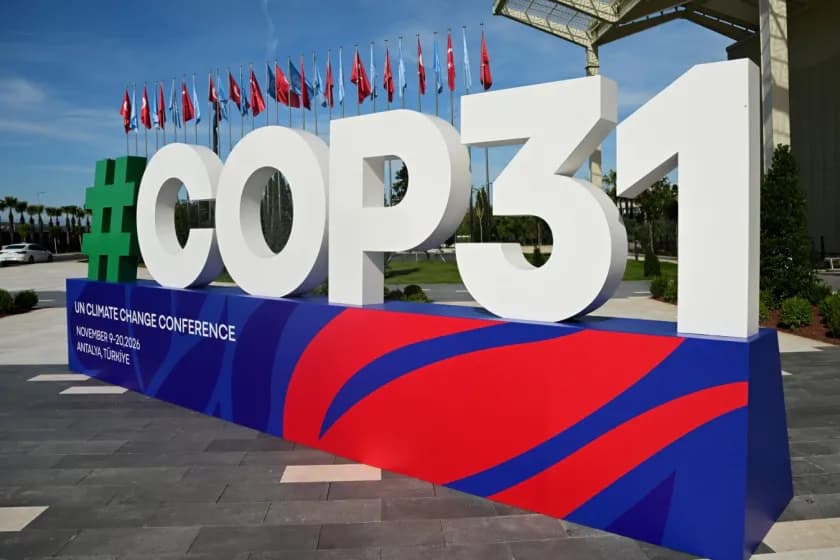
India's Role at COP31 Climate Talks
Published on:
Source: Indian Express
Share this post
Article Summary
COP31 and Climate Financing: Key Points
1. Climate Finance Goal
- Agreed Target: Developed countries are urged to mobilize $300 billion annually by 2035 for climate finance, following an interim target of $100 billion.
- Current Financing Sources: These funds are mobilized through bilateral channels, multilateral development funds (e.g., World Bank), and climate-specific multilateral funds (e.g., Green Climate Fund), which also leverage private investments.
2. Challenges
- Political Constraints: The push for increased funding is hindered by political challenges in the United States and fiscal constraints in Europe.
- Private Sector Reliance: Developed countries may focus more on commercial investments to meet the financial goals, which are often inadequate for adaptation needs — these typically provide public benefits without generating direct revenue.
3. Green Climate Fund (GCF) Policy Issues
- Loan-Contribution Policy: GCF is considering removing the cap on total aggregate loan contributions and counting guarantees as equivalents of grants.
- Example: A $100 million guarantee might only provide a $15 million grant-equivalent value.
- Financial Obligations: Currently, 67% of public climate finance as of 2024 is in loans, and only 29% is grant-based.
4. Impact on Vulnerable Countries
- Vulnerable Economies: Small island states and poorer countries, which contribute minimally to climate issues, are the most affected by climate shocks yet find it challenging to service sovereign debt.
- Budget Constraints: Increasing debt servicing limits available funds for addressing climate resilience and other domestic needs, thus exacerbating vulnerabilities.
5. Recommendations for India
- Advocacy for Grants: India should advocate for a specified minimum amount of annual public grant finance targeted for adaptation in climate-vulnerable countries. This aligns with Article 9.4 of the Paris Agreement, which emphasizes the need for grant-based resources for adaptation.
- Historical Context: India has historically championed the principle of Common but Differentiated Responsibility (CBDR) at international climate negotiations, emphasizing the responsibilities of developed nations toward those they have historically contributed less to climate change.
6. Importance of Preparedness Investments
- Public Value of Investments: The need for investments in preparedness, such as warning systems and emergency planning, was highlighted by recent events (e.g., Nepal floods) that demonstrated the importance of avoiding direct financial returns for guaranteed public benefits.
Conclusion
COP31 represents a critical juncture for India to reaffirm its commitment to climate justice and advocate for the necessary grant financing to support adaptation efforts, particularly for vulnerable nations. The ongoing discussions around financing models highlight the complexities faced by developing countries in addressing climate impacts while managing fiscal responsibilities.
Key Terms & Concepts
| COP31 | Climate finance negotiation summit |
| $300 billion | Annual climate finance goal by 2035 |
| $100 billion | Previous climate finance goal |
| Green Climate Fund | Public green multilateral fund |
| OECD | Organization reporting on climate finance |
| 67% | Loans accounted for public climate finance in 2024 |
| 29% | Grants accounted for public climate finance in 2024 |
| Article 9.4 of the Paris Agreement | Recognizes need for public funding |
| Nepal floods | Example of need for preparedness investment |
| Common but Differentiated Responsibility (CBDR) | Principle India supports in climate negotiations |