iAspirants
HomeAbout UsCurrent AffairsPrelims PYQsPricing
Login
iAspirants
HomeAboutBlogsFAQsPricingLogin
Privacy PolicyTerms & ConditionsReturn PolicyContact Us

© 2025 iAspirants, Inc. All rights reserved.

  1. Blogs
  2. Science and Technology

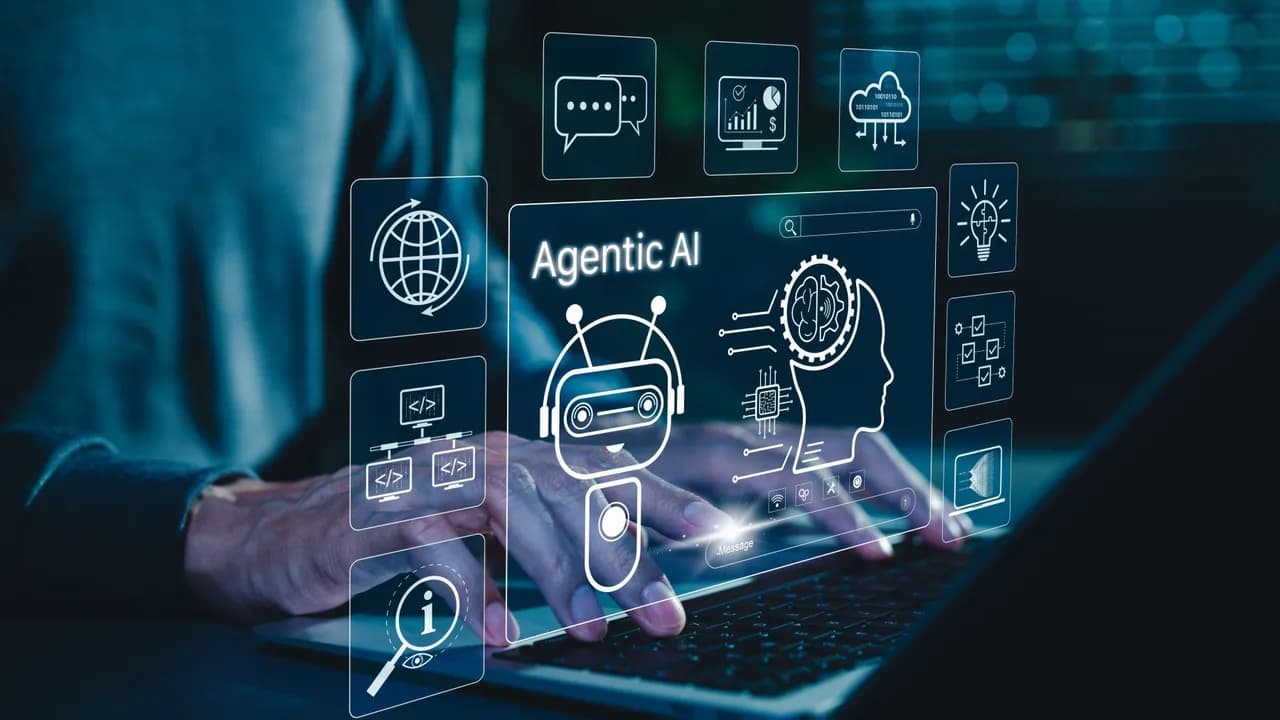
India's Initiative in Agentic AI

Published on: 20-Aug-2026

Share this post

India's Initiative in Agentic AI

Article Summary

Summary of Key Points on Indigenous Agentic AI Technology Collaboration

1. Government Initiative:

  • The Department of Science and Technology (DST) through the Technology Development Board (TDB) is promoting the commercialization of indigenous Agentic AI technology to establish India as a global leader in AI.

2. Collaboration Details:

  • TDB has signed an agreement with One2X Tech Private Limited, based in Delhi, to assist in the commercialization of their indigenous agentic AI platform, Fixit.

3. Definition of Agentic AI:

  • Agentic AI allows systems to understand objectives, make decisions, and perform coordinated actions in business processes, moving beyond traditional AI applications that assist users in information retrieval.

4. Technical Features of Fixit:

  • Integrates multi-agent orchestration, contextual memory, AI reasoning, reinforcement learning, real-time decision-making, and secure tool execution.
  • Designed to enable controlled and auditable deployment of AI in enterprise environments with safeguards, observability, and human oversight.

5. Initial Focus and Application:

  • The platform is initially aimed at the real estate sector, which requires sustained engagement and coordinated execution due to lengthy purchasing processes and high transaction values.
  • The platform can automate complex, multi-step workflows across various industries.

6. Concept of AI Workforce:

  • The project aims to develop the concept of an "AI workforce," where specialized AI agents handle repetitive tasks, allowing human teams to focus on creativity, judgment, relationships, strategy, and entrepreneurship.

7. Economic Impact:

  • The initiative is geared towards empowering startups, MSMEs, and small enterprises with operational capabilities traditionally requiring larger teams and infrastructure.

8. Statements from Officials:

  • TDB Secretary Rajesh Kumar Pathak emphasized the need for India to not only adopt but also create and commercialize indigenous AI technologies, which can transform enterprise operations and expansion.

9. Vision for Future:

  • The CEO of One2X Tech highlighted the potential for small businesses to build their own AI workforce, enabling them to operate with capabilities akin to larger organizations.

10. Broader Implications:

  • This collaboration aligns with the Indian government's broader vision of developing competitive and self-reliant AI capabilities on a global scale.

Conclusion:

The collaboration between TDB and One2X Tech represents a significant step in advancing India’s indigenous AI capabilities and aims to revolutionize business operations through the deployment of agentic AI technologies. This initiative could foster innovation and enhance the operational landscape for businesses, especially small and medium enterprises.

Key Terms & Concepts

One2X Tech Private LimitedCommercializing indigenous AI technology
Department of Science and Technology (DST)Facilitating AI advancements in India
Agentic AIEmerging form of AI technology
FixItIndigenous AI platform for enterprises
AI orchestrationCoordination between AI agents
Multi-agent orchestrationFacilitating complex workflows
Reinforcement learningTechnique for AI decision making
ObservabilitySystem monitoring capability
AI workforceConcept for automating tasks
Real estate sectorInitial focus area for deployment
Indian GovernmentSupporting global AI competitiveness

Mind Map for UPSC Civil Services Revision

Turn UPSC Civil Services Current Affairs Into Exam-Ready Notes

Reading Science and Technology current affairs is half the work. Revise them with ready-made notes and test what actually stuck.

  • Daily UPSC Civil Services current affairs analysis
  • Revision notes, mind maps & MCQs
  • Prelims mock tests with instant results

Related UPSC Civil Services Current Affairs Articles

AI's Impact on Health Data Diversity
Science and Technology21-Aug-2026

AI's Impact on Health Data Diversity

Summary of Key Points:

  1. Global Diabetes Statistics:

    • Over 10% of adults worldwide live with diabetes, with projections of 125 million individuals in India by 2045.
    • South Asians face higher risks and earlier onset of diabetes compared to other populations.
  • Genetic Research Bias:

    • A significant lack of diversity exists in genomic datasets, with over 86% of genetic studies focused on European ancestry, and South Asians representing less than 1% in critical databases such as the NHGRI-EBI GWAS Catalogue (2005-2025).
    • This underrepresentation hampers the development of accurate predictive models and tailored healthcare solutions for South Asians.
  • Health Disparities:

    • South Asians are disproportionately affected by diseases such as type 2 diabetes, cardiovascular disease, and asthma.
    • Polygenic risk scores derived from European datasets are less effective when applied to South Asian health, indicating the need for localized genetic data.
  • Diverse Genetic Landscape:

    • Research indicates that South Asia has one of the world's most genetically diverse human populations, yet many studies fail to consider this diversity.
    • The GenomeIndia Project, launched in 2020, aims to document genetic variations unique to Indian populations and has already identified over 40 million variants.
  • Need for Localized Research:

    • Current health research funding and biobanking efforts in low- and middle-income countries (LMICs) are inadequate. Only about 10% of global health research funding focuses on health needs in LMICs, despite them experiencing over 90% of potential years of life lost.
    • There's a call for increased funding, infrastructure, and collaboration among South Asian countries for effective genomics research.
  • Policy Recommendations:

    • A recent perspective from the Lancet Regional Health urges government and health institutions in South Asia to prioritize building local infrastructures for genomic research.
    • Recommendations include regional collaborations among biobanks and establishing systems that allow data sharing across populations.
  • Judicial and Ethical Implications:

    • The underrepresentation of South Asian health data raises ethical concerns regarding equitable health access and rights, highlighting the need for policies that ensure all demographics are adequately represented in health research.
  • Technological Developments:

    • The use of artificial intelligence and machine learning can enhance disease detection and treatment personalization, but this efficacy relies heavily on the availability of diverse and comprehensive datasets.
  • Health Policy Implications:

    • There is a necessity for diagnostics, risk assessments, and treatment protocols to be validated and recalibrated based on South Asian data to improve healthcare outcomes.
  • Cooperation for Futures:

    • Establishing a cooperative framework among South Asian nations is vital to prevent exclusion from genomic advancements, ensuring that local researchers are integral to any research involving their populations.
  • These observations underscore the importance of localized research efforts and equitable health policies that address the unique genetic and health profiles of South Asian populations.

    Impact of AI on Education and Industry
    Science and Technology19-Aug-2026

    Impact of AI on Education and Industry

    Artificial Intelligence in Industry and Education

    1. Impact of AI on Industries:

      • Rapid transformation across sectors, including manufacturing and pharmaceuticals.
      • In fields like generic drugs and biosimilars:
        • AI is enhancing molecule screening and formulation processes.
        • Robotics and machine vision are taking over synthesis and quality control.
        • Antigen design and immune response prediction are benefitting from AI in vaccine development.
        • Robotic systems improve production efficiency in vaccines.
    2. Changing Workforce Dynamics:

      • Anticipated loss of routine jobs due to automation, with a shift towards roles requiring deep domain expertise.
      • Future jobs will demand skills in oversight and critical thinking rather than rote memorization.
    3. Educational Needs and Challenges:

      • The need for higher education to adapt from traditional models of knowledge retention.
      • Emphasis on:
        • Deep understanding of concepts.
        • Quick adaptability to new information and problem-solving at workplace.
      • The dual educational focus:
        • Streamlining content taught.
        • Enhancing experiential learning opportunities.
    4. National Education Policy (NEP) Initiatives:

      • The NEP encompasses a four-year undergraduate program with a research pathway in the final year to build practical knowledge.
      • Proposed improvements:
        • Allow coursework to be completed online to free up students for practical experiences.
        • Call for apprenticeships for students to gain hands-on experience and deal with real-world uncertainties.
    5. Quantitative Data:

      • The ongoing evolution in industries may lead to a significant reduction in entry-level jobs, necessitating a better-educated workforce capable of adaptation.
    6. Judicial and Government Actions:

      • No specific constitutional references, judicial decrees, or government bills mentioned, but the context firmly ties back to ongoing policy reforms in education and labor regulations to address AI impacts.

    Overall, the discourse surrounding AI highlights the urgency for educational reforms to align with the changing demands of the job market driven by technological advancement.