iAspirants
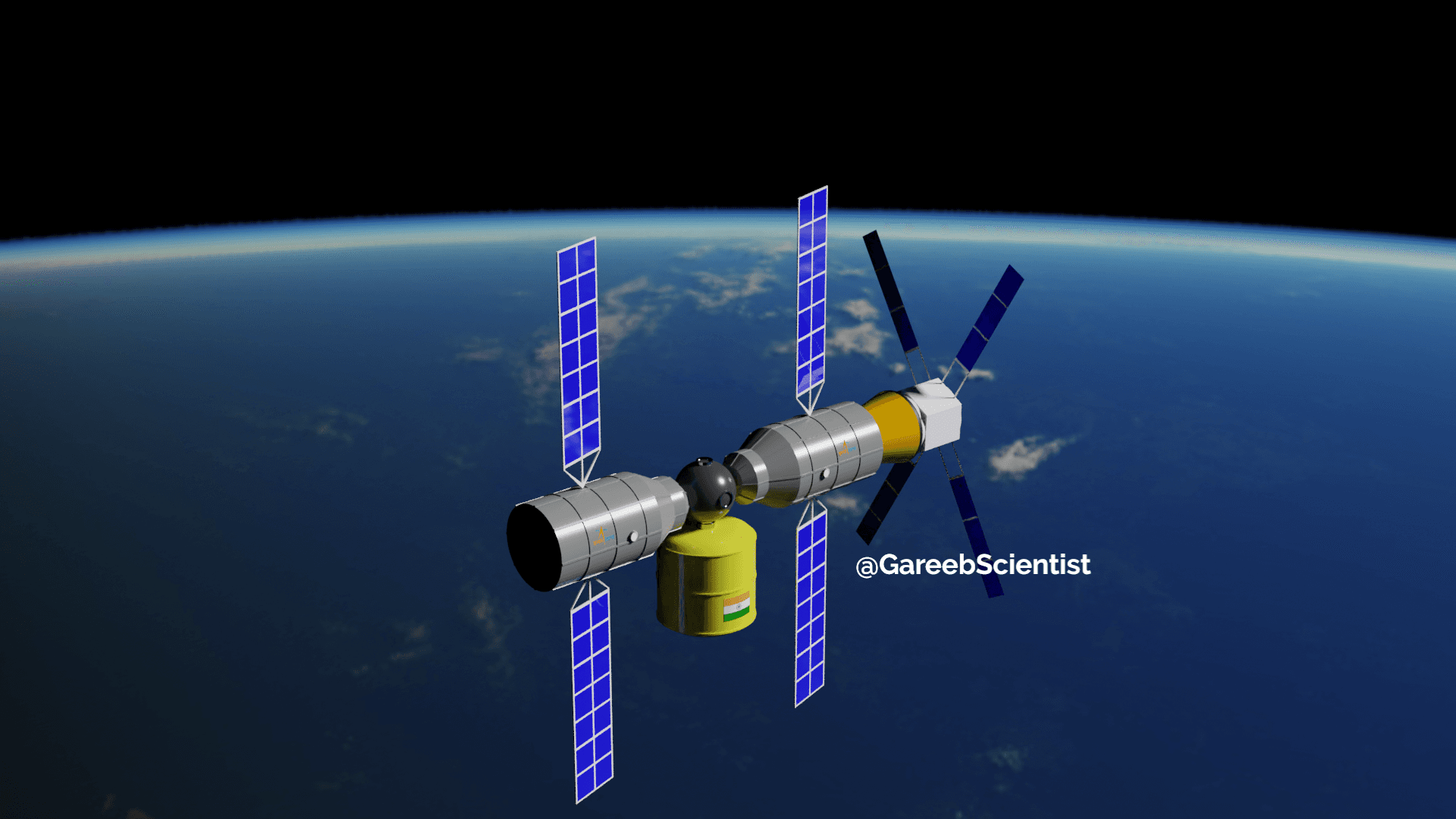
India's Indigenous Space Station Development
Published on:
Share this post
Article Summary
Summary of Indian Human Spaceflight and Indigenous Space Technology Developments
Indigenous Space Station (BAS):
- India plans to establish its first indigenous space station, the Bharat Antrix Station (BAS), comprising five modules by 2035.
- The initial module, BAS-01, is set for development and launch by 2028 as part of the Gaganyaan program.
Gaganyaan Program:
- The program has undergone a scope revision approved by the Union Cabinet in October 2024.
- Key developments include:
- Human-capable launch vehicle (HLVM3).
- Orbital module and crew escape system.
- Ground infrastructure and communication networks.
- Crew recovery operations.
Progress and Achievements:
- Baseline design review and system engineering for BAS-01 are completed with 31 baseline design documents issued.
- Expert committee reviews have been finalized, and subsystem design work has commenced.
- Previous missions (TV-D1, IADT-01, and IADT-02) have been successfully completed.
- Activities for the first unmanned mission (G1) have progressed through various phases.
Technological Developments:
- Development of docking systems, including electrical and mechanical interfaces, has been achieved.
- A successful demonstration of the concept model for the refueling process has been completed.
- Critical technologies for human spaceflight identified include:
- Flight suits.
- Viewports.
- Crew seats.
- Docking technology.
- Currently, some of these components are being procured from external companies.
Indigenous Development:
- The government has approved the indigenous development of critical technologies necessary for human spaceflight.
- Ongoing design and development of prototype hardware are in progress.
- These initiatives aim to establish a technical foundation for the indigenous design and development of the remaining four modules of BAS.
Impact on Self-Reliance:
- The advancements are expected to enhance self-reliance in critical human spaceflight technologies.
- They will foster innovation and the development of high-tech manufacturing essential for human space missions.
Official Statement:
- The information was provided by Dr. Jitendra Singh, Minister of State for Personnel, Public Grievances and Pensions, Atomic Energy and Space, in a written reply in the Rajya Sabha.
Conclusion:
These developments underline India's commitment to advancing its capabilities in human spaceflight through indigenous technologies, emphasizing self-reliance and innovation in the aerospace sector.
Key Terms & Concepts
| भारतीय अंतरिक्ष स्टेशन (बीएएस) | India's first indigenous space station |
| गगनयान कार्यक्रम | Human spaceflight program |
| 2035 | Target year for BAS establishment |
| 2028 | Launch target for BAS-01 |
| बीएएस-01 | First module of BAS |
| 31 | Baseline design documents issued |
| एचएलवीएम3 | Human-capable launch vehicle |
| डॉकिंग सिस्टम | Developed docking technology |
| फ्लाइट सूट | Essential technology for astronauts |
| क्रू एस्केप सिस्टम | Crew safety technology |
| प्रोटोटाइप हार्डवेयर | Hardware design and development |