iAspirants
India's Deep Ocean Exploration Challenges
Published on:
Share this post
Article Summary
Summary of Deep Ocean Exploration and Mining in India
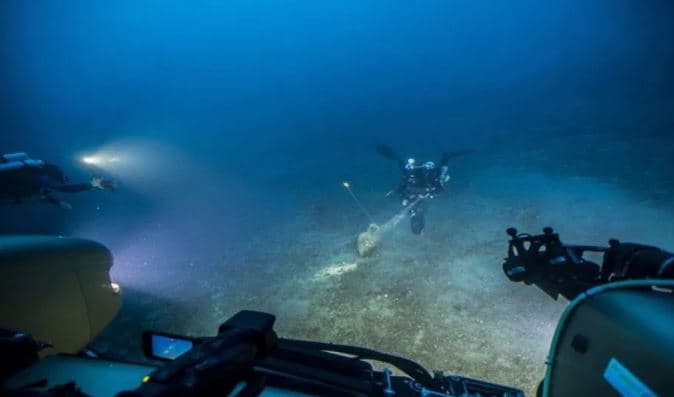
Current Status of Deep-Sea Exploration
- International Seabed Authority (ISA) Contracts: India holds three contracts covering approximately 95,000 square kilometers in the Central Indian Ocean Basin, Central Indian Ridge, and Carlsberg Ridge.
- Estimated Resources: Identified 366 million tonnes of polymetallic nodules containing nickel, copper, cobalt, and manganese.
Technological Advancements
- Deep Ocean Mission: Focused on developing technologies such as:
- Underwater robotics.
- MATSYA-6000 human submersible.
- Deep-sea mining machines tested at depths of 5,270 meters by the National Institute of Ocean Technology.
- Biodiversity Surveys: Explored 19 seamounts, identifying around 1,300 deep-sea organisms, including 23 new species.
Environmental Considerations
- Ecological Impact: The deep ocean is a complex ecosystem that is poorly understood. Large-scale seabed disturbance may have unpredictable consequences.
- Need for Responsible Exploration: Exploration can advance scientific knowledge without committing to commercial mining. Decisions on mining should incorporate high ecological thresholds.
Sustainable Development Principles
- Socio-Ecological Dilemma: Should India prioritize the extraction of deep-sea minerals for energy, electric mobility, and advanced manufacturing, or should it preserve these ecosystems?
- Mission LiFE: Aligns with principles of reducing resource consumption, recycling, and shifting towards a circular economy.
- Enhanced Scientific Responsibility: The principle of "Do we need to mine at all?" should govern future mining decisions instead of minimization of damage in extraction efforts.
Global Environmental Initiatives
- Emphasis on understanding the value of the ocean as an ecological asset beyond mineral wealth.
- Alignment with global environmental paradigms:
- Nature-based Solutions: Strategies that leverage natural processes.
- Sustainable Development Goals (SDGs): Targeting holistic development while conserving ecosystems.
Conclusion
India has the opportunity to lead in deep-sea ecological governance by recognizing the importance of ecological preservation alongside technological advancement. Sustainable development should focus not only on resource extraction but also on the health and integrity of marine ecosystems.
Key Terms & Concepts
| Deep Ocean Mission | Developing deep-sea mining tech |
| International Seabed Authority (ISA) | Three exploration contracts |
| 95,000 square kilometres | Area of exploration contracts |
| 366 million tonnes of polymetallic nodules | Estimated resource available |
| MATSYA-6000 | Human submersible development |
| 5,270 metres | Test depth for mining machine |
| 1,300 deep-sea organisms | Biodiversity collected data |
| 23 species | New species reported |
| Mission LiFE | India's sustainability initiative |
| Nature-based Solutions | Environmental approach principle |
| Sustainable Development Goals (SDGs) | Development framework guidelines |
| Circular Economy | Resource consumption approach |