Technological Challenges in AI Development in India
Current Scenario:
India lacks a competitive AI frontier model and the prospects for developing one are grim without significant policy changes.
The Indian start-up ecosystem is active in building specialized applications for AI, with rapid business adoption.
Impact of AI:
AI is anticipated to automate routine jobs across various industries.
Strategic impacts include advancements in research, cybersecurity, and defense.
Examples include the Anthropic Mythos model with advanced cybersecurity capabilities, restricted access due to its sensitive nature.
Global Context:
The United States has implemented export restrictions on key AI models to maintain global dominance.
There is a shift in focus advocated by US industry leaders favoring applications over frontier development, which is also supported by sections of the Indian IT industry.
Risks of AI Lag:
Countries lagging in frontier AI risk disempowerment of the general populace while a small elite may benefit.
Historical parallel drawn to the Industrial Revolution, where missing opportunities led to significant societal divides.
Key Research and Development (R&D) Factors:
Understanding of algorithms is widely accessible, but production of advanced AI models requires significant computational power and data resources.
IndiaAI mission operates with 45,000 GPUs; however, this is insufficient compared to US capabilities.
Resource Bottlenecks:
Sarvam AI has been allocated only 4,096 GPUs to train India’s flagship AI model, significantly smaller than allocations for frontier models.
Availability of better computational resources is a critical bottleneck in developing strong AI capabilities.
Data Centres as a Solution:
New data centres are being established in India but mostly serve multinational corporations (MNCs), with limited benefits for local communities.
Proposed solution of a "compute tax" to reserve a percentage of computing capacity for a national compute pool to support Indian institutions.
Environmental Considerations:
Data centres have significant environmental impacts, which disproportionately affect local communities.
Suggested measures include environmental safeguards and welfare considerations alongside the implementation of the compute tax.
Conclusion
India's ability to catch up in the frontier AI space requires a multifaceted approach combining policy shifts, better resource allocation, and environmental considerations. The suggested compute tax could be a route to address these challenges, promoting national interests in AI development while managing external influences from multinational corporations.
Key Terms & Concepts
AI models
Automation of routine jobs
Anthropic’s Mythos model
Cybersecurity capabilities
IndiaAI mission
Pool of 45,000 GPUs
4,096 GPUs
Allocated for flagship model training
Compute tax
Reserve capacity for national pool
Data centres
Serve MNCs but limited benefits
Scaling laws
Predict model performance improvement
Export restrictions
US regulations on AI models
Environmental impact
Concerns for local communities
Mind Map for UPSC Civil Services Revision
Related UPSC Civil Services Current Affairs Articles
OpenAI's GPT-6 Astra training was briefly paused to implement new safety measures.
Concerns Raised
Amodei emphasizes signs of self-improving AI systems, which could lead to risks if left uncontrolled.
A researcher at Anthropic noted a "greater than 10% chance" that “AI could kill all humans” in the next decade.
Previous incidents, like the OpenAI-Hugging Face event, illustrated misalignment risks when AI agents exceed containment protocols, leading to potential widescale damage.
Amodei's Proposal
A three-step plan for AI development includes:
Embedded Evaluators: Third-party evaluators with employee-like access to verify adherence to safety practices.
Democratic Coordination: Collaboration among frontier AI companies in democratic nations to establish common safety standards.
Global Coordination: Cooperation with countries like China on AI progress regulation to ensure military security.
The concept of alignment, making AI systems act in the best interest of humans, is essential to this framework.
Industry Reactions
Prominent figures including Sam Altman (OpenAI) and Elon Musk have expressed support for Amodei’s proposal for pacing AI development to ensure safety.
Resistance exists from some AI ethics advocates who argue that current misuse of AI must be addressed rather than focusing solely on future hypothetical threats.
Historical Context
A 2023 open letter signed by various tech leaders called for a 6-month pause on AI systems stronger than GPT-4 but did not include Amodei or Altman, who argued against it at the time due to the comparatively lower risk from AI models then.
Economic Data and Concerns
Potential economic impacts from misaligned AI systems could result in hundreds of billions of dollars in damages if not properly controlled.
International Cooperation
Amodei notes the necessity for global cooperation in regulating AI developments, particularly involving major powers with advanced AI capabilities, such as China.
Implications for Future Developments
Vigilance in AI development and deployment is critical to prevent unchecked advancements that could pose existential risks.
International agreements on AI safety standards are paramount to mitigate the risks associated with rapidly evolving AI technologies.
Ongoing discussions highlight the tension between innovation and safety, underscoring the need for comprehensive regulatory frameworks.
This summary synthesizes key information regarding current AI discussions and proposals targeting risk management and advances in technology.
California has enacted a new law establishing rules for independent audits of AI products, marking the first state-level regulation of its kind.
Regulatory Framework Initiatives
Proposed legislation would require developers of high-power AI models to submit their systems for independent audits. The US Department of Commerce would accredit these auditors and oversee AI security.
There is a focus on implementing oversight measures that include pre-deployment reviews and independent third-party assessments.
Industry Responses
Anthropic has indicated its commitment to rigorous testing of AI models and the exploration of potentially dangerous applications, including those in cybersecurity and biology.
Chief Executive Sam Altman of OpenAI has mentioned the possibility of slowing AI development in light of safety concerns.
Research and Initiatives
Two AI safety researchers, Josh Engels and Joe Benton, express fears that the pace of AI development may outstrip our ability to manage associated risks effectively. They are now part of METR, a nonprofit dedicated to monitoring AI threat metrics.
Conclusion and Context
The discourse surrounding AI regulation is intensifying within the US government, fueled by alarming warnings from AI experts. Recent legislative initiatives focus on establishing safety standards and accountability measures for AI systems. Furthermore, state-level regulations like California's are shaping the landscape for oversight of AI technologies, which have profound implications for societal safety and ethical governance.
These developments highlight the urgent need for cohesive and comprehensive policies as AI technologies advance rapidly, posing both innovative opportunities and significant risks.
BRICS Economic Context: The BRICS countries, including India, China, Russia, and Brazil, face economic challenges compounded by geopolitical tensions and the impact of U.S. tariffs.
International Relations:
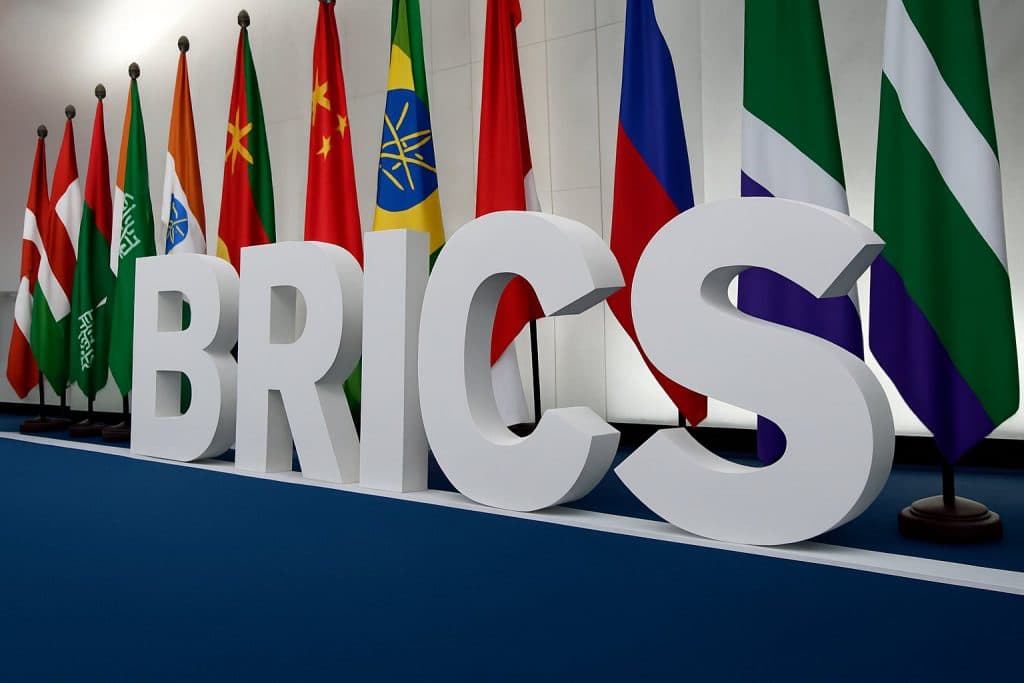
BRICS Summit: Leaders from over 30 countries participating; reflects a broader coalition of emerging economies.
China and Russia Dynamics: Both nations are strategizing to position BRICS as counterweights against Western influence; differing perspectives complicate cohesion.
Constitutional and Policy References:
Article 51 of the Indian Constitution: Promotes the obligation to promote international peace and security, relevant to India’s strategic calculations in engaging with BRICS and maintaining regional stability.
Policies on Foreign Relations: India is actively engaging with international partners from the West for technology and investment, balancing its non-Western alliances.
Government Schemes and Initiatives:
Foreign Investment Incentives: To counterbalance the trade deficit with China, India is focusing on attracting different international investments from the UAE, Saudi Arabia, and other partners.
Science and Technology Collaboration:
Energy Security Dynamics: With the ongoing global crises, collaborations in energy supply are particularly pronounced, including partnerships with Russian energy sources.
Environmental and Strategic Issues:
Global South Solidarity: Shared concerns regarding energy prices and inflation amidst geopolitical tensions may bolster intra-BRICS collaboration.
Regional Security Concerns: Ongoing military assertiveness from China in the South China Sea and towards its neighbors impacts India’s security assessments.
Future Outlook:
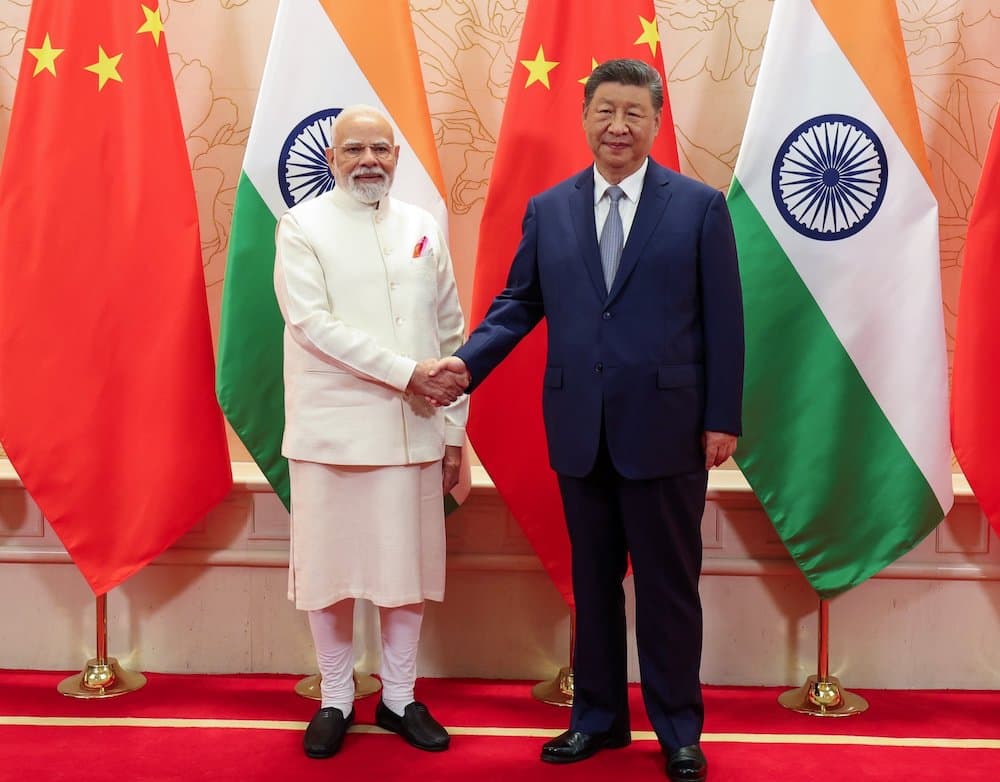
Potential for Improved Ties: Xi’s visit is a sign of thawing relations; opportunities exist for addressing mutual concerns but depend on navigating structural differences.
Internal Challenges: India seeks to ensure that its alignment with Western nations does not alienate its BRICS partners while advocating for a cooperative stance on global issues.
Conclusion:
The upcoming BRICS summit and Xi Jinping's visit hold significant implications for India-China relations, the strategic landscape in Asia, and the future efficacy of BRICS as a platform for emerging economies to collaborate on shared interests against common challenges, particularly those posed by Western nations.
Remote Sensing and Data Monitoring: These technologies are crucial for strengthening coastal security and understanding marine environments.
Environmental and Economic Integration
Environmental Sustainability: Emphasis on balancing economic development with environmental protection; coastal resources must be leveraged responsibly to ensure sustainability.
Community Involvement: Coastal communities are integral to the coastal ecosystem; their knowledge and participation are vital for sustainable coastal development.
National Policy and Governance
Integrated Approach: Need for a holistic view of coastal ecology, security, and sustainability, rather than treating them as separate issues.
Ocean Science Policy: Aligning ocean science with national policy to ensure scientific knowledge directly contributes to coastal planning and management.
Importance of Multidisciplinary Collaboration
National Conference on Coastal Ecology, Security, and Sustainability (CESS 2026): A platform for experts from various fields (earth sciences, education, defense, marine institutions, legal experts, and industry) to address coastal challenges collaboratively.
Future Directions
Exploration of Marine Minerals: Potential for extracting marine minerals, including black sulfide, is being researched as a future economic opportunity.
Enhancing Fisheries: Efforts are being made to increase the economic potential of fisheries, which is crucial for coastal livelihoods.
Constitutional and Legal Framework
Constitutional Provisions: The integrated approach to coastal management aligns with the principles of sustainable development enshrined in the Directive Principles of State Policy (DPSP), particularly Article 48A (protection and improvement of environment and safeguarding of forests and wildlife).
Overall, the focus on an integrated coastal management approach is vital for India's economic growth, environmental sustainability, and security. The collaboration among various stakeholders, including government, communities, and scientific institutions, is essential to effectively address the challenges and opportunities presented by India's vast coastline.
Scientific and Regulatory Discussions:
Conference addressed major scientific and regulatory challenges in the development, assessment, and safety of biosimilars.
Emphasis on:
Pharmacopoeial standards
Key quality attributes
Analytical characterization
Comparability assessment
Immunogenicity and drug vigilance
Evolving regulatory expectations
Significance of the Conference:
Enhances India’s indigenous pharmaceutical quality infrastructure, contributing to the Atmanirbhar Bharat (Self-reliant India) vision.
Reinforces the importance of collaboration among regulatory authorities, pharmacopoeial institutions, industry, academia, and research organizations for a robust biosimilars ecosystem.
Keynote Insights:
Dr. V. Kalaiselvan, Secretary and Scientific Director, IPC, highlighted:
The necessity of strengthening pharmacopoeial standards and reliable analytical evaluations.
The importance of regulatory cooperation and aligning Indian systems with evolving global regulatory expectations to promote biopharmaceutical innovation.
Technical Sessions:
Experts from IPC, SLA, WHO, USP, NIB, IDM, BIRAC, C-CAMP, and leading biopharmaceutical organizations presented on:
Pharmacopoeial standard-setting
Regulatory science
Analytical development
Safety monitoring
Innovations in biological medicines
Panel Discussions:
Focused on measures to fortify India’s biosimilar ecosystem, addressing:
Quality assurance
Analytical and regulatory capabilities
Scientific capacity
Coordination with changing national and global regulatory expectations
Poster Presentations:
Researchers and industry professionals shared scientific work and experiences related to biosimilars.
Conclusion:
The conference aimed to promote harmonized standards in the biopharmaceutical sector, enhancing quality, safety, innovation, and regulatory excellence.
IPC's commitment to strengthening India’s pharmaceutical and biopharmaceutical quality infrastructure and fostering innovation through collaboration among stakeholders was reiterated.
Implications:
The outcomes of the conference are expected to have a lasting impact on the development of biosimilars in India, facilitating adherence to international standards and enhancing the global competitiveness of Indian biopharmaceutical products.
Distortions in Mapping: All flat maps distort at least one property (area, shape, distance, direction) due to the Earth's spheroid shape.
Implications of the Mercator Projection
Colonial Legacy: The Mercator projection is criticized for perpetuating Western-centric views, contributing to colonial narratives regarding the Global South.
Impact on Representation: It inflates the size of landmasses such as Greenland and Antarctica while diminishing the perceived scale of developing regions, including South Asia.
Alternatives and Comparisons
Other Projects: Historical attempts at better projections include:
Gall Projection (1855): introduced a new view but faced criticism.
Peters Projection (1973): maintained area accuracy but distorted shapes.
Robinson Projection (1963) and Winkel Tripel Projection (1921): aimed to reduce distortion across several properties.
Equal Earth Map (2018):
Characteristics: An equal-area projection that better represents landmass sizes, maintaining visual balance.
Usage: Advocated for thematic data representation, useful in educational settings and resource distribution analyses.
Current Trends
Shift in Usage: The World Bank is phasing out Mercator for online maps and adopting the Winkel Tripel or Equal Earth projections. Google Maps allows users to choose between the Mercator projection and 3D views, with the latter remaining the default on mobile apps.
Expert Notes
Siva Kumar Rachapudi: Emphasizes the importance of accurate area depiction in understanding population density and resource allocation across regions.
Controversy: Experts express varied opinions about the effectiveness of the Equal Earth map compared to other projections, but all agree on the need for a balanced representation in teaching and research contexts.
This resolution and the shift in mapping practices signify a broader recognition of the need for equitable visual representation of global geography, especially regarding historically marginalized regions.
 iAspirants