iAspirants
Evolution of Lizards Post Hurricanes
Published on:
Share this post
Article Summary
Summary Notes on Turks and Caicos Anoles Evolution Study
Key Findings:
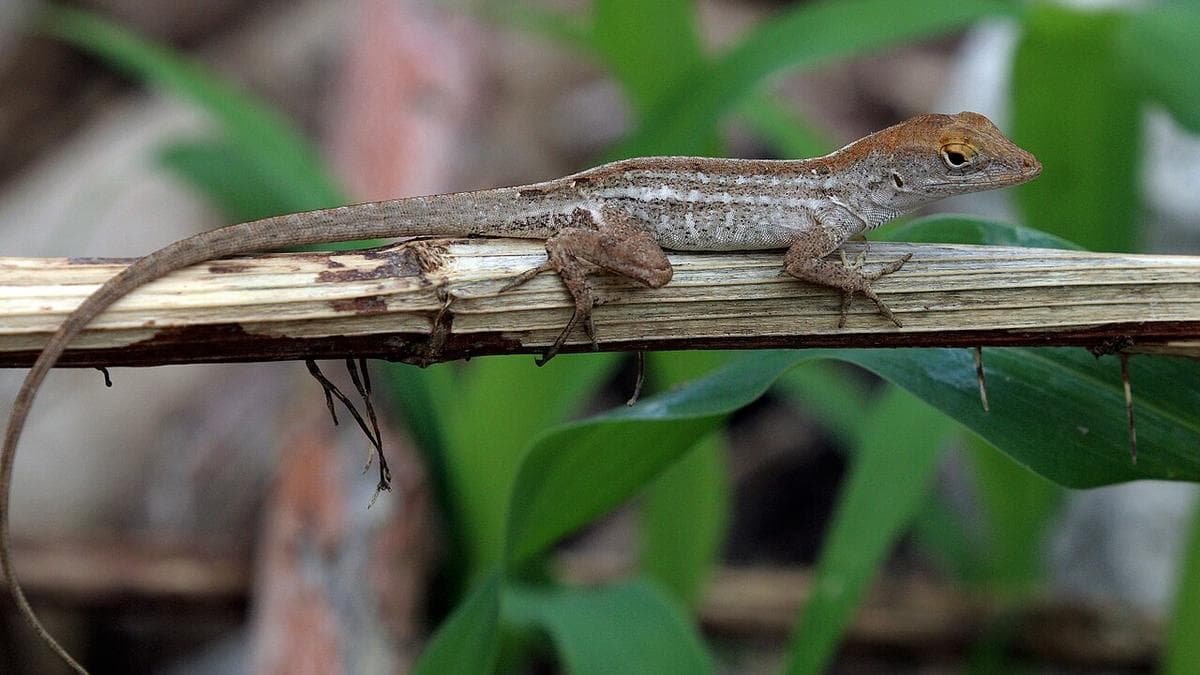
- Species Studied: Turks and Caicos anole (Anolis scriptus).
- Geographical Focus: Pine Cay and Water Cay, islands in the Turks and Caicos.
- Natural Events:
- Hurricane Irma (September 8, 2017) with winds of 265 km/hr.
- Hurricane Maria (September 22, 2017) with winds of 200 km/hr.
- Both hurricanes significantly damaged vegetation and impacted lizard populations.
Evolutionary Changes Observed:
- Morphological Adaptations Post-Storm:
- Longer forelimbs.
- Shorter hind legs.
- Shorter toes on hind legs.
- Larger toepads (front and back).
- Evolutionary trait of a shorter fourth hind toe (previously longest toe) examined.
Genetic Insights:
- Study Publication: Research findings published in Current Biology.
- Gene Frequencies:
- Five genes showed increased frequency post-hurricanes, linked to muscle and skeletal development.
- Notably, hs6st1 gene associated with shorter fourth toe development.
Experimental Methodology:
- CRISPR Technology:
- Applied to brown anole (Anolis sagrei) embryos to investigate the role of hs6st1.
- Resulting phenotype exhibited shorter fourth toes and altered toe cartilage.
- Wind Tunnel Experiment:
- Brown anoles subjected to winds of 118 km/hr.
- Observed behavior indicated that shorter first toe bones improved grip, allowing lizards to cling longer.
Implications for Evolutionary Biology:
- The rapid genetic changes underscore potential adaptive evolution in response to extreme environmental challenges.
- Highlights the significance of studying the impacts of climate change and extreme weather on wildlife populations, potentially observable within a single generation.
Environmental and Scientific Context:
- Extreme Weather Trends: The research emphasizes awareness of increasing frequency and severity of extreme weather events due to climate change and their effects on biodiversity.
- Future Research Directions: Calls for further investigation into evolutionary adaptations in wildlife as environmental conditions evolve.
Conclusion:
The study demonstrates rapid evolutionary changes in lizards due to extreme weather events and signals broader implications for understanding adaptation mechanisms in species amidst climate change.
Key Terms & Concepts
| Hurricane Irma | Category 5 hurricane |
| Hurricane Maria | Category 5 hurricane |
| 265 km/hr | Sustained winds of Irma |
| 200 km/hr | Sustained winds of Maria |
| Anolis scriptus | Species studied |
| Princeton University | Research institute involved |
| Harvard University | Research institute involved |
| hs6st1 gene | Gene linked to traits |
| Current Biology | Journal published findings |
| CRISPR | Gene-editing technology used |
| Wind tunnel | Experimental setup for testing |
| Nature | Publishing journal for evolution study |
| Future extreme weather events | Predicted increase in severity |