iAspirants
Current AffairsPrelims PYQsUPSC CSE SyllabusUPSC CSE StrategyBlogsPricing
Login
iAspirants
Current AffairsPrelims PYQsUPSC CSE SyllabusUPSC CSE StrategyBlogsPricingContact UsLoginSignUp
iAspirants

Your AI-powered companion for UPSC preparation.

Study Resources

  • Current Affairs
  • Prelims PYQs
  • UPSC CSE Syllabus
  • UPSC CSE Strategy
  • Blogs

Practice & Plans

  • Mains Answer Evaluation
  • Pricing
  • Sign Up
  • Login

Company

  • Home
  • About Us
  • Contact Us
  • FAQs

Legal

  • Privacy Policy
  • Terms & Conditions
  • Return Policy

© 2026 iAspirants, Inc. All rights reserved.

  1. Blogs
  2. History

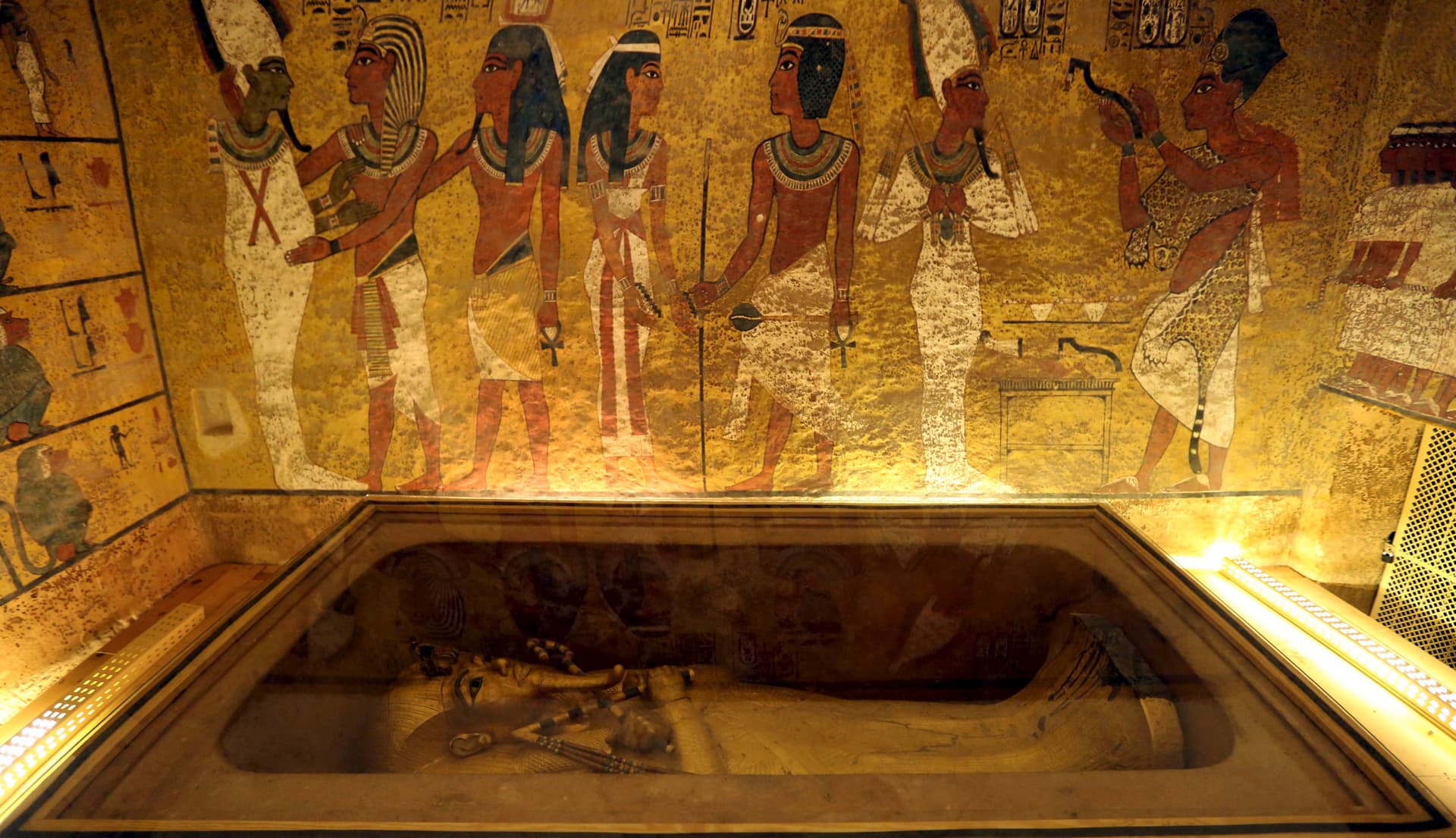
Discovery in Tutankhamun's Tomb Chamber

Published on: 03-Nov-2026

Source: The Hindu

Share this post

Discovery in Tutankhamun's Tomb Chamber

Article Summary

  • Discovery in Tutankhamun's Tomb: The third chamber of Tutankhamun’s tomb was recently opened, revealing significant historical artifacts associated with ancient Egyptian funeral ceremonies.

  • Findings:

    • Small Boats: Two types of boats were discovered:
      • Funeral boats for transporting the deceased from Luxor across the Nile to the tombs.
      • Boats intended for transporting the body from the earth to the afterlife.
    • Statuettes Box: A box containing small statuettes was found, depicting Tutankhamun’s head with the body of a bird or animal, illustrating ancient Egyptian concepts of the afterlife.
    • Chariots: Two unornamented chariots were uncovered, believed to have been used for hunting purposes. These represent the first known discovery of such artifacts.
  • Historical Importance: The items from this chamber, although less ornate than those from the other two chambers, provide valuable insights into ancient Egyptian funerary practices and the cultural significance placed on the afterlife.

  • Cultural Significance: This discovery enhances understanding of the burial customs of pharaohs, reflecting on the rich history and belief systems of ancient Egypt.

Key Terms & Concepts

Tutankhamun’s tombHistorical burial site
Egyptian conception after lifeCultural belief representation
small boatsFuneral transportation
chariotsHunting equipment
Siasash newspaperSource of information
November 2, 2026Date of discovery news

Mind Map for UPSC Civil Services Revision

Turn UPSC Civil Services Current Affairs Into Exam-Ready Notes

Reading History current affairs is half the work. Revise them with ready-made notes and test what actually stuck.

  • Daily UPSC Civil Services current affairs analysis
  • Revision notes, mind maps & MCQs
  • Prelims mock tests with instant results

Related UPSC Civil Services Current Affairs Articles

Racism and Protests in France
National and International Importance29-Oct-2026

Racism and Protests in France

Key Facts and Summary Notes:

Violence and Crime:

  • Date: October 23
  • Location: Trappes and La Verrière, immigrant townships near Paris, France.
  • Incident: Kevin T, a White Frenchman, shot Pengo Bossio Wang, a Black martial arts amateur, killing him, and critically injuring a 12-year-old North African girl, along with three others.
Practise Mains answer writingUpload a handwritten answer and get it evaluated
  • Observations: The violence followed tensions rooted in a high-school protest sparked by issues such as poor school conditions and reform demands.
  • High-School Protests:

    • Causes: Protests by French high schoolers began due to:
      • Deteriorating school infrastructure.
      • Teacher shortages.
      • Overcrowded classrooms.
      • The selection system "Parcoursup", which sorts students early in life.
    • Response from Government: Silence, failing to address underlying issues.

    Escalation and Response:

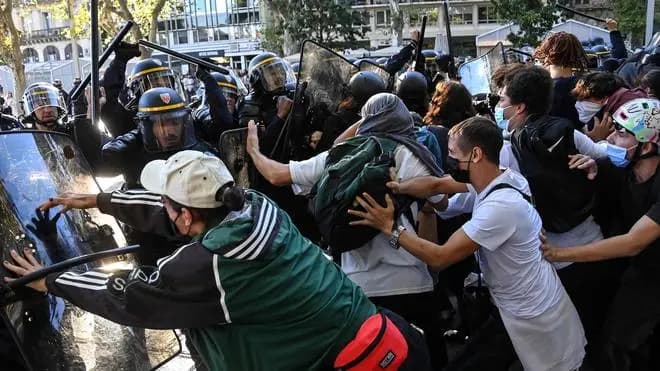
    • Protest Dynamics: The protests began peacefully with school blockades and took a violent turn due to police repression.
    • Student Arrests: Thousands of students aged 14-18 were arrested as clashes escalated.
    • Major Protest: On October 17, an estimated 800,000 people, including trade unions and students, participated in "cost of living" protests which ended in violence attributed to external "les casseurs" groups.

    Political and Social Commentary:

    • President Emmanuel Macron referred to the shooting and subsequent violence as a “turning point” in French history.
    • The results: Apart from the tragic loss of life and injuries, mass unrest incurred significant damage to heritage and property and raised concerns about societal divisions.

    Responsibility and Media Role:

    • Blame Allocation: Various political factions debated responsibility:
      • Far-left: Criticized police for mismanagement and inadequate action against looters.
      • Far-right: Insulting rhetoric directed at immigrants, calling them “suburban riff-raff” and “Allah’s revolutionaries,” which fueled racist sentiments and violence.
    • Media’s Role: Highlighted the responsibility of media in perpetuating division and hate through sensationalism.

    Government Response:

    • Outcomes: After weeks of protests and violence, the French government, led by President Macron, ultimately acknowledged some student demands.
    • Economic Impact: The cost of the unrest ran into billions of euros in damages and arrests, leading to calls for policy and systemic reform.

    Historical Context:

    • The protests are reminiscent of pivotal historical movements in France such as the French Revolution of 1789 and the May 1968 protests, reflecting deep-rooted themes of social justice and civil rights.

    Conclusion:

    This crisis underscores the precarious balance between youth activism, governmental accountability, and societal divisions in contemporary France. It raises vital questions about freedom of expression, media influence, and the role of law enforcement in civil unrest contexts.

    Mary Poonen Lukose's Impact on Healthcare
    Polity and Governance19-Oct-2026

    Mary Poonen Lukose's Impact on Healthcare

    Key Facts and Contributions of Mary Poonen Lukose

    • Historic Significance: Mary Poonen Lukose (1886-1976) was the first female Surgeon General of India and a pioneering figure in improving public health in Kerala.

    • Early Education and Career:

      • Denied admission to study sciences at Maharaja College, she graduated in History from Madras University in 1909.
      • First Indian woman to earn an MBBS from the University of London in 1915.
      • Further training in obstetrics, gynaecology, and paediatrics at Great Ormond Street Hospital.
    • Return to India:

      • Returned to Travancore in 1916 as its first woman doctor and significantly contributed to modern healthcare practices.
    • Public Health Contributions:

      • Initiated scientific deliveries and maternal care, co-founded the X-Ray and Radium Institute in Thiruvananthapuram, and established a tuberculosis sanatorium in Nagercoil.
      • Responsible for modernizing public health in Travancore, attributed to the “Kerala model” focusing on strong primary care and public health outreach.
    • Government Role:

      • As Surgeon General (1938), managed 32 government hospitals and 40 dispensaries.
      • Became the first woman nominated to the Travancore Legislative Council in 1922, promoting women's political rights.
    • Recognition and Awards:

      • Honored with the Vaidyaśāstrakuśala by the Maharaja of Travancore (1935) and the Padma Śhri in 1975 for her contributions to health and women's rights.
    • Community Engagement:

      • Co-founded the Tiruvananthapuram branch of the Young Women’s Christian Association and served as its president for 50 years.
    • Legacy:

      • Contributed significantly to elevating healthcare standards and women's rights in India, paving the way for future generations of women in medicine and public service.

    Relevant Constitutional and Policy References

    • Constitutional Rights: Advocated for women’s rights, reflecting provisions from Articles 14 (Right to Equality), 15 (Prohibition of Discrimination), and 21 (Right to Life and Personal Liberty).

    • Government Schemes and Health Policies: Contributions to public health align with current government schemes focusing on maternal and child health, such as the National Health Mission (NHM) and Pradhan Mantri Surakshit Matritva Abhiyan.

    Final Note

    Mary Poonen Lukose exemplified resilience and excellence against the gender barriers of her time, contributing to foundational health systems in India. Her legacy continues to inspire current reforms in women’s rights and healthcare.