iAspirants
Corruption and Accountability in India
Published on:
Share this post
Article Summary
Summary of Key Points on Corruption in India
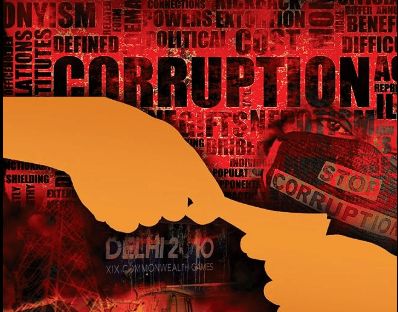
Corruption's Impact on Governance and Society
- Corruption significantly affects elections, government stability, and public protests (e.g., NEET paper leak protests).
- It is a pervasive issue, affecting access to services from the lowest to the highest public offices.
Constitutional and Legal Framework
- Right to Information (RTI) Act: Enacted to enhance government accountability and transparency. Despite its initial promise, amendments and judicial interpretations have weakened its effectiveness.
- Digital Personal Data Protection (DPDP) Act, 2023: Criticized for undermining the RTI Act by broadening the definition of personal information, thus allowing more information to be denied under the guise of privacy.
Judicial Insights and Interpretations
- Supreme Court judgments have altered the reach of the RTI Act, leading to less transparency in corruption cases.
- Introduction of Section 17A under the Prevention of Corruption Act requires prior government sanction before prosecuting public servants, complicating investigations.
Statistics on Corruption Reporting and Accountability
- Approximately 6 million RTI requests are filed annually, making India a leader in RTI usage.
- Historical statistics show low conviction rates in corruption cases: only 144 out of 280 accused individuals were convicted during a retrospective review of the CBI from 1980 to 1984.
Government Institutions and Mechanisms
- Institutions like the Lokpal and Lokayuktas have been criticized for ineffectiveness and lack of accountability.
- Central Information Commission has not appointed any commissioners since May 2014, raising concerns about transparency in governance.
Public Opinion and Civil Society
- Ongoing corruption is seen as one of the biggest threats to national development and societal trust.
- There is a call for a grievance redressal mechanism to effectively address complaints related to corruption.
Suggestions for Improvement
- Proposals to:
- Strengthen the RTI Act and withdraw amendments made by the DPDP Act.
- Innovate judicial processes with a target to resolve corruption cases within one year.
- Utilize media to examine high-profile corruption cases vigorously.
International Context
- India ranks 79th in the rule of law index, indicating significant challenges in governance and accountability compared to global standards.
Conclusion
Corruption continues to be a critical challenge for India, hindering development and eroding public trust in institutions. There is an urgent need for reforms to enhance transparency, accountability, and the efficacy of institutions designed to combat corruption.
Key Terms & Concepts
| Right to Information Act | Promotes government accountability |
| Digital Personal Data Protection (DPDP) Act, 2023 | Limits RTI Act's effectiveness |
| Lokpal | Institution for corruption oversight |
| Central Bureau of Investigation (CBI) | Investigates corruption cases |
| Prohibition of Corruption Act | Legal framework against corruption |
| Supreme Court judgments | Impact RTI and corruption laws |
| Six million RTI requests | Number of annual requests in India |
| Corruption Index (79th position) | Reflects India's rule of law status |
| 2018 amendments to Section 17A | Required permission for investigations |
| Girish Ramchandra Deshpande judgment | Judicial interpretation on privacy |
| Puttaswamy judgment | Incorporated privacy into law |
| Vyapam scam |