iAspirants
Current AffairsPrelims PYQsUPSC CSE SyllabusUPSC CSE StrategyBlogsPricing
Login
iAspirants

Your AI-powered companion for UPSC preparation.

Quick Links

  • Home
  • About Us
  • Current Affairs
  • Prelims PYQs
  • UPSC CSE Syllabus
  • UPSC CSE Strategy
  • Blogs

Company

  • Pricing
  • FAQs
  • Contact Us
  • Login

Legal

  • Privacy Policy
  • Terms & Conditions
  • Return Policy

© 2025 iAspirants, Inc. All rights reserved.

  1. Blogs
  2. Environment and Ecology

Construction of Madayipara Boundary Wall

Published on: 13-Sep-2026

Share this post

Construction of Madayipara Boundary Wall

Article Summary

Summary of Environmental Protection Initiatives at Madayipara

1. Constructive Measures:

  • Boundary Wall Construction: The Madayi Thiruvarkattukavu Devaswom has initiated the construction of a stone boundary wall along the road from Eripuram to the Naval Academy aimed at preventing vehicular entry into the ecologically sensitive area of Madayipara.
  • Materials Used: The wall is being built using laterite stones to restrict access primarily to address the environmental damage caused by vehicles and unregulated tourism.

2. Environmental Context:

  • Biodiversity: Madayipara is a 3.65 square-kilometre plateau recognized for its unique biodiversity, hosting:
    • 670 species of flowering plants.
    • 14 IUCN-listed threatened species.
    • 258 bird species, including 10 globally threatened species.
    • Supports various wildlife: 24 mammal, 32 reptiles, 20 amphibians, and multiple insect species.
  • Impact of Tourists: Increased vehicular movement is damaging rare plants and the fragile ecosystem, with environmentalists raising concerns over waste and behaviors of visitors affecting local biodiversity.

3. Government Actions & Policy:

  • Kerala High Court Directive: There was a previous directive to restrict access to vulnerable landscapes by regional police to safeguard biodiversity, which has reportedly not been enforced effectively in recent years, leading to increased human interference.
  • Stop Memo Issued: The local panchayat issued a stop memo to an amusement-cum-eco park operating without required permissions, reflecting regulatory oversight concerning environmental protection.

4. Future Plans and Challenges:

  • Enhanced Measurement: The Devaswom authorities are contemplating further protective measures against unauthorized access, such as clear warning boards and monitoring trespassers, along with natural vegetation fencing.
  • Monitoring Requirement: Maintaining any natural barriers will need continuous oversight due to prior ineffective temporary measures.
  • Community Disapproval: Plans to restrict access routes have led to dissatisfaction among local residents, highlighting the conflict between conservation and traditional public access.

5. Stakeholder Involvement:

  • Environmental Groups: Organizations such as the Madayipara Samrakshana Samithi are voicing concerns regarding tourism's ecological footprint, calling for stricter regulations on tourism activities to avoid further deterioration of the area's ecological integrity.

6. Conclusion:

  • The developments at Madayipara illustrate ongoing struggles between maintaining ecological integrity in tourism-heavy areas and ensuring public access rights. Continuous efforts from local government, enforcement of judicial directives, and community engagement will be crucial for effective conservation strategies.

Key References:

  • Schedule I of the Wildlife (Protection) Act: Protects certain endangered species.
  • International Union for Conservation of Nature (IUCN): Provides classifications for threatened species.
  • Kerala High Court Directive: Historical context for the legal framework protecting ecologically significant landscapes.

Key Terms & Concepts

MadayiparaEcologically preserved area
Kerala High CourtIssued directive for protection
Wildlife (Protection) ActLegal act for wildlife protection
IUCNClassified threatened species
3.65 square-kilometreSize of Madayipara plateau
670 species of flowering plantsFloral diversity statistic
14 threatened speciesClassification by IUCN
258 bird speciesBird diversity statistic
10 globally threatened speciesClassification of birds
Environmental groupsOpposing unregulated tourism
Stop memoIssued against eco park
Vadukunda Siva TempleLocation for construction
Vehicles and visitors

Mind Map for UPSC Civil Services Revision

Turn UPSC Civil Services Current Affairs Into Exam-Ready Notes

Reading Environment and Ecology current affairs is half the work. Revise them with ready-made notes and test what actually stuck.

  • Daily UPSC Civil Services current affairs analysis
  • Revision notes, mind maps & MCQs
  • Prelims mock tests with instant results

Related UPSC Civil Services Current Affairs Articles

Chennai's Innovative Elevated Bridge Project
National and International Importance14-Sep-2026

Chennai's Innovative Elevated Bridge Project

Key Highlights on Pallavaram-Thoraipakkam Radial Road Project

Project Overview

  • Construction of Elevated Bridge: A 2-km elevated bridge is to be constructed on the Pallavaram-Thoraipakkam Radial Road, replacing the existing road, facilitating flood water flow towards Pallikaranai marshland.
Entry causing ecosystem damage
Madayipara Samrakshana SamithiEnvironmental advocacy group
July 31Opening date of eco park
  • Specifications:
    • Type: Six-lane elevated structure.
    • Span: 200 meters long spans to minimize the number of supporting piers.
    • Pier Dimensions: Each pier will have a diameter of 2.5 meters.
    • Cost Estimate: Civil construction cost estimated at ₹450 crore.
    • Construction Duration: Expected to take two years with no land acquisition required.
  • Environmental Impacts

    • Flood Mitigation: The removal of the existing road aims to enhance floodwater management. Currently, the road allows only 90 meters of culverts for floodwater, inadequate for necessary drainage (15,000 cusecs of water must flow to Okkiyam Maduvu).
    • Community Benefit: The project is expected to provide relief from annual flooding for residents in Ram Nagar, Velachery, and Madipakkam.

    Transport Data

    • Current Traffic Load: Approximately 1.25 lakh vehicles traverse this road daily, connecting significant local areas (Rajiv Gandhi Salai, Velachery, etc.).

    Historical Context

    • Road Planning: The original road network was planned by the Madras Area Traffic Study Unit under the Chennai Metropolitan Development Authority (CMDA), with 15 roads identified for development during the late 1990s.

    Judicial and Policy Considerations

    • Environmental and Urban Planning: The removal of the road to facilitate environmental restoration marks a progressive shift in urban planning, reflecting a growing recognition of environmental conservation as a priority over infrastructural expansion.

    Future Implications

    • Flood Management Strategy: This initiative is significant as it prioritizes flood management and environmental sustainability in urban infrastructure, potentially serving as a model for other urban centers facing similar challenges.

    This summary encapsulates the structural and environmental aspects of the Pallavaram-Thoraipakkam Radial Road project, underscoring its relevance in urban planning and flood management in Chennai.

    Delhi Flooding and Urban Governance Issues
    Environment and Ecology14-Sep-2026

    Delhi Flooding and Urban Governance Issues

    Summary of Key Points: Flooding and Building Safety in Delhi

    1. Incident Overview:

      • Following monsoon flooding in Delhi, 7 students died in an unauthorized building collapse in Satya Niketan.
      • Highlighting vulnerabilities due to poor building conditions, safety regulations, and urban planning.
    2. Urban Governance Issues:

      • Approximately 60% of Delhi’s population lives in unauthorized structures; primarily in slums and high-density buildings.
      • Need for effective urban governance to manage infrastructure, focusing potentially on consolidating authority under a single entity, e.g., the mayor.
    3. Building Regulations and Safety:

      • The lifespan of modern buildings is estimated at 30-40 years; many structures in poor condition, particularly in unauthorized colonies.
      • Failure to comply with safety codes leads to life-threatening conditions, exacerbated during extreme weather events linked to climate change.
    4. Physical Mapping and Structural Assessments:

      • Urgent requirement for physical mapping of Lal Dora areas (unauthorized colonies) with detailed documentation of each structure’s condition.
      • Utilize advanced imaging technology for accurate assessment of structural integrity and necessary safety checks.
    5. Regulatory Measures:

      • Recommendations for stringent occupancy permits based on building use and minimum space allocation to prevent overcrowding.
      • Advocating for regular inspections and enforcement of structural safety codes to mitigate risks.
    6. Public Safety and Construction Oversight:

      • Historical precedence of unauthorized construction leading to disasters, including a prior incident in Bengaluru that resulted in 12 fatalities due to illegal additions compromising structural integrity.
      • Emphasizes the need for monitoring of construction activities and accountability for builders.
    7. Future Implications:

      • Forecasted population growth in Delhi to nearly 40 million by 2030, prompting potential future crises in urban living conditions.
      • Calls for innovative urban planning solutions to handle increased population density and service demands effectively.
    8. Systemic Challenges:

      • Questions raised about the efficacy of existing bye-laws and inspector accountability, highlighting a potential culture of bribery undermining building safety regulations.
    9. Recommendations:

      • Call for a comprehensive reassessment of building codes, urban policies, and implementation of scientific methods for urban governance and disaster preparedness.

    This summary encapsulates vital information regarding urban safety, governance, and the pressing need for reform in building policies and urban planning as it pertains to the challenges faced by cities like Delhi.

    Indo-German Forum on Climate Resilience
    National and International Importance14-Sep-2026

    Indo-German Forum on Climate Resilience

    Indo-German Environment Forum Highlights

    Background

    • Event: Fourth Indo-German Environment Forum
    • Date: September 1
    • Focus: Climate change and biodiversity conservation

    Key Issues

    • Global environmental crises have escalated since the first forum in 2008.
    • Deteriorating political climate due to wars, tariffs, and market protectionism affecting multilateralism.
    • India faces challenges of energy poverty and aims to decarbonize its economy.
    • Recent extreme weather events: Hottest summer recorded in Western Europe, heatwaves across India, water shortages, and severe flooding in Assam and Nepal.

    International Agreements

    • Adoption of the Paris Agreement for climate goals.
    • Implementation of the Kunming-Montreal Global Biodiversity Framework.
    • The BBNJ Agreement for the protection of high seas.

    India-Germany Relations

    • Strategic partnership celebrated 75 years; diplomatic relations established in March.
    • 2022: Launch of the Partnership for Sustainable Green Development.
    • Commitment reaffirmed by Prime Minister Modi and Chancellor Merz during a meeting in January 2023.

    Future Initiatives

    • Cabinet minister-level consultations are planned for 2027 in Berlin.
    • Declaration of Intent signed to enhance cooperation on wetland protection.

    Private Sector Involvement

    • Over 2,000 German companies operate in India, with nearly 75% expecting rising sales this year.
    • Importantly, more than 60% are focused on manufacturing for local demand.
    • Partnership example: BHEL and Thyssenkrupp Nucera.

    Economic Implications

    • Environmental technology development and circular economy encouraged by the Free Trade Agreement (FTA).
    • Focus on decarbonization of industries: green steel and low-carbon cement.
    • Municipalities in both countries collaborating on waste management and recycling innovations.

    Renewable Energy Targets

    • India sets ambitious targets for:
      • Solar energy expansion
      • Green hydrogen production
      • Growth in domestic manufacturing of green technologies.

    Technical Cooperation

    • Development of standardised recycling systems and financing solutions involving digital traceability chains.
    • Joint initiatives for integrating renewable energy and forming green industrial clusters aim to reduce emissions.

    Conclusion

    • The Indo-German collaboration at the fourth Environment Forum underscores a mutual commitment to address climate challenges while fostering sustainable economic growth, emphasizing multilateralism, and promoting environmental technologies.
    Increase in Winter Waste Burning
    Environment and Ecology10-Sep-2026

    Increase in Winter Waste Burning

    Summary of Key Findings on Open Waste Burning in Indian Cities

    Key Findings from WRI Study (2019-2026)

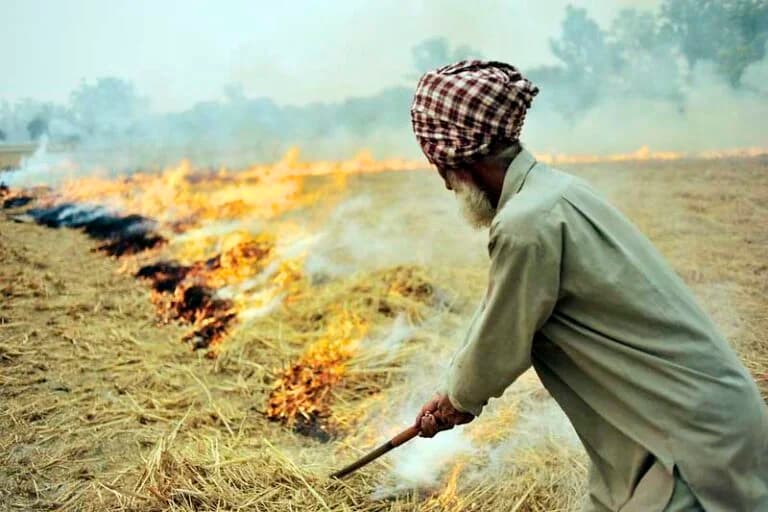
    • Waste Burning Increase: Open waste burning incidence rises sharply in winter cities, with an average increase in quantity of waste burned and associated emissions being three times higher than in summer.
    • Cities Surveyed: The study involved field surveys across 11 polluted Indian cities.
    • Tier 2 and 3 Cities:
      • Tier 2 Cities (population: 500,000 - 5 million):
        • Highest quantity of waste burned.
        • Waste burned volume doubled from ~21 tonnes/day in summer to ~41 tonnes/day in winter.
      • Tier 3 Cities: Highest winter incidence of burning, with an average of 49.6 incidents/km²/day, compared to 46 in Tier 2 and 39.4 in Tier 1 cities.

    Public Health and Pollution

    • Pollution Contribution: Open waste burning contributes less than 1% to citywide PM2.5 and PM10 emissions but is significant in localized areas due to proximity to homes and streets.
    • Socio-Economic Impact:
      • Poorer areas demonstrate a higher frequency of burning incidents (~84 incidents/km²/day in Tier 2 cities).
      • Indicates disparities in waste management services across socio-economic strata.

    Environmental Conditions

    • Seasonal Factors:
      • Winter conditions lead to weaker winds and stable atmospheric conditions, causing difficulty in the dispersion of pollutants.
      • Increased waste burning is partly attributed to its use as a source of warmth during colder months.

    Government and Policy Responses

    • Commission for Air Quality Management (CAQM): Introduced initiatives aimed at curbing open waste burning in the National Capital Region (NCR).
      • Identifying waste dumping/burning sites.
      • Training waste management personnel and conducting awareness campaigns.
      • Development of pilot solutions for future scalability.
    • Zero-Tolerance Approach: Emphasis on stringent inspections under ‘Operation Clean Air’.
    • Union Environment Ministry Initiatives: In May, the ministry urged Delhi authorities to:
      • Increase waste processing capacity before September.
      • Implement enforcement teams to prevent winter waste burning.
      • Provide heating facilities for workers to minimize the motivation for burning waste for warmth.

    Conclusion

    The rise in open waste burning during winter months in Indian cities poses significant public health risks and highlights socio-economic disparities in waste management. Government initiatives, particularly from the CAQM and the Union Environment Ministry, are being implemented to manage and reduce these emissions, focusing on enhancing waste management infrastructure and community awareness.

    National Workshop on Forest Resource Assessment
    Environment and Ecology10-Sep-2026

    National Workshop on Forest Resource Assessment

    Summary of the National Workshop on Leveraging Latest Technologies in Forest and Tree Resource Assessment

    Key Highlights:

    • Event: National Workshop on 'Leveraging Latest Technologies in Assessment of Forest and Tree Resources'.
    • Date: September 10, 2026.
    • Location: New Delhi.
    • Presiding Minister: Bhupender Yadav, Union Minister of Environment, Forest and Climate Change.

    Objectives:

    • Strengthen indigenous capabilities for forest assessment using advanced technologies.
    • Improve quality of green cover and effective forest conservation through standardized parameters and SOPs (Standard Operating Procedures).

    Workshop Details:

    • Participants included state forest departments, scientific institutions, and technology experts.
    • Technical sessions focused on:
      • Digitization of forest boundaries.
      • Forest and tree cover assessment.
      • Estimation of carbon stocks.
    Policy Gaps in Pallikaranai Marshland
    Environment and Ecology10-Sep-2026

    Policy Gaps in Pallikaranai Marshland

    Summary of the Pallikaranai Collective Report

    Key Recommendations

    1. Formation of Committee:

      • An independent interdepartmental committee is proposed to study policy and legislative gaps regarding the Pallikaranai marshland.
      • This committee should include subject-matter experts and representatives of the community to create a coordinated implementation plan.
    2. Policy Review and Legislative Gaps:

      • The report titled ‘Citizen’s Charter for Pallikaranai Watershed’ highlights significant gaps in existing policies:
        • Tamil Nadu Water Policy (1994) has not been updated.
        • A State Water Policy drafted in 2024 remains unnotified.
        • No Flood Plain Zoning Act has been enacted in Tamil Nadu despite a central government template issued in 1975.
    3. Data Transparency:

      • The Thiruppugazh Committee's final report from May 2023, which studied 1,189 square kilometers and 30 years of flood data, is not publicly accessible.

    Key Statements from Minister Bhupender Yadav:

    • Emphasized the need for co-existence with nature and respect for natural resources.
    • Advocated for robust data on natural resources to enhance decision-making and accelerate India’s climate commitments through nature-based solutions.
    • Highlighted the importance of the Indian Forest Survey (IFS) in documenting forest conservation and green cover.

    Policies and Commitments:

    • NDC Target: Enhance carbon sinks through forests and tree cover, aligned with the third Nationally Determined Contribution (NDC) under UNFCCC (United Nations Framework Convention on Climate Change).
    • Regular Assessments: The IFS has conducted biannual assessments of forest and tree resources since 1987, providing a scientific basis for monitoring changes and supporting national and international reporting.

    Conservation Strategies:

    • Call for standardization of parameters to enable coordinated action on forest conservation.
    • Necessity to classify fire-affected areas based on historical data to identify hotspots for targeted prevention strategies.
    • Recognition of wetlands as critical ecosystems for biodiversity and ecological balance.

    Future Goals:

    • India aims to create a carbon sink equivalent to 3.5-4.0 billion tons of CO2 by 2035, necessitating strong institutional capacities, effective policies, and community participation along with technological innovations.

    Government Initiatives:

    • Continuous technical and financial support to states and Union Territories through:
      • Green India Mission
      • Misti (Mangrove Restoration)
      • Nagar Van Yojana (Urban Forest Scheme)
      • Namo Forest (National Afforestation Programme)
      • A dedicated initiative named "Paid Mother" for enhancing tree cover.

    Conclusion:

    The workshop focused on discussing technologies and strategies to strengthen forest governance, support climate-resilient actions, and ensure sustainable management of India’s natural resources through enhanced institutional capacities.

  • The Tamil Nadu Water Resources Information and Management System contains data on 92,068 tanks and 127 reservoirs, which is not available to the public.
  • Environmental Management Proposals

    • Wetland Management:

      • The charter emphasizes that Wetland Rules are poorly implemented and that Pallikaranai marshland has not been formally notified as protected under these rules.
      • Demands include:
        • Demarcation and mapping of wetlands and floodplains under the Wetland (Conservation and Management) Rules, 2017.
        • Implementation of the Flood Plain Zoning Act.
        • Regular desilting and maintenance of canals.
        • Prevention of sewage discharge into water bodies.
    • Waste Management:

      • Advocates for the source segregation of household waste.
    • Protective Measures:

      • Calls to remove encroachments and illegal infrastructure within the Pallikaranai Ramsar site and its buffer zones.

    Legal and Constitutional Context

    • The recommendations align with environmental conservation principles outlined in the Indian Constitution, particularly Article 48A, which directs the State to protect and improve the environment and safeguarding of forests and wildlife.

    Significance

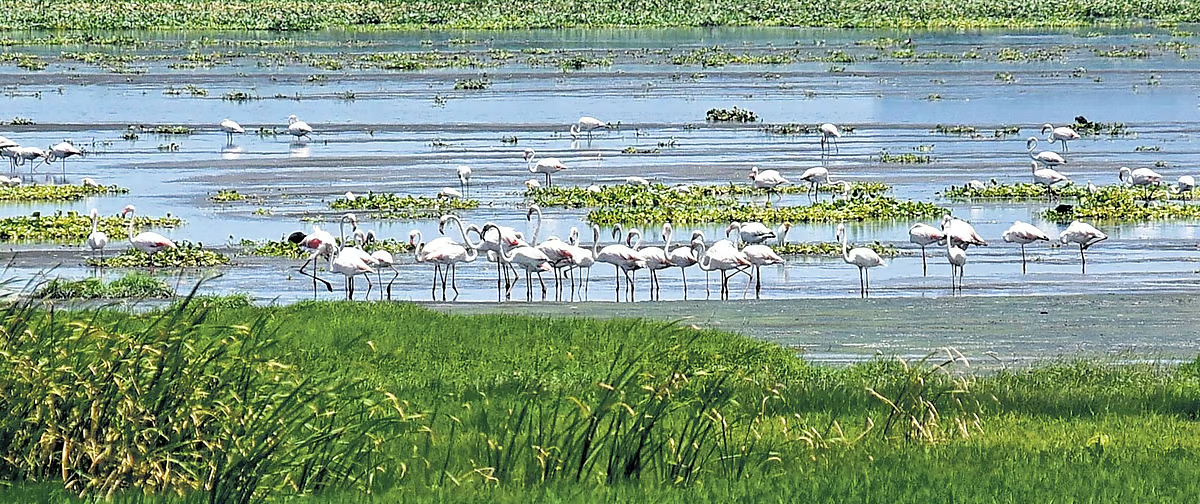
    • The proposed measures aim to enhance the ecological health of Pallikaranai marshland, a vital wetland ecosystem, and facilitate better water management and flood control for the area.

    Conclusion

    The Pallikaranai Collective's report calls for immediate and coherent action to address significant environmental concerns regarding the Pallikaranai marshland, underlining the need for effective policy implementation and data transparency for sustainable water management.