iAspirants
Concerns Over India's Lok Sabha Expansion
Published on:
Share this post
Article Summary
Delimitation and the Proposed Increase of Lok Sabha Seats
Overview:
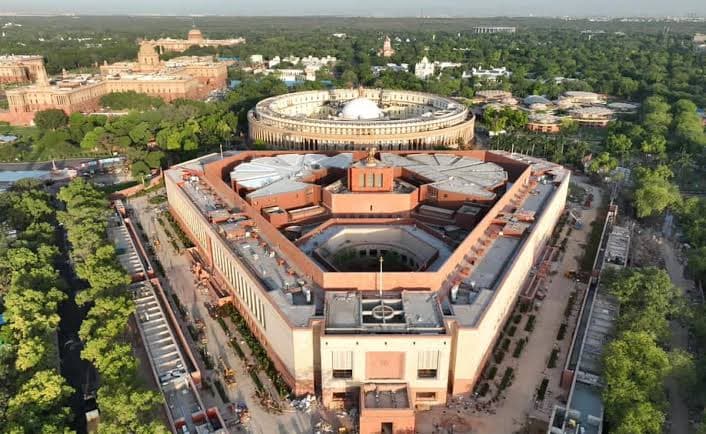
- The Indian government is considering a revision of delimitation that aims to increase the size of the Lok Sabha from 543 to between 824 and 850 seats.
Constitutional Context:
- The existing size of 543 seats was established in 1972; the proposed increase directly relates to population growth since then.
- Article 81 of the Indian Constitution specifies the composition of the Lok Sabha and allows for delimitation, which can be invoked based on population data.
Justifications and Concerns:
- The government presents the increase as a necessary adjustment to represent India's growing population properly.
- Critics argue that such a drastic expansion could lead to inefficiencies, with a potential decrease in governance quality and legislative scrutiny.
Legislative Functionality:
- Historical comparison with the U.S. House of Representatives, which remains capped at 435 seats despite population growth (from 120 million in 1929 to over 335 million now), suggests that too many members can hinder effective governance.
- In practice, with an expanded Lok Sabha, limited time for debates would mean only a fraction of members can participate actively, leaving many as passive observers.
Democratic Theory and Governance:
- Concerns are raised that a significantly expanded legislature could mirror authoritarian models, where large assemblies can become ineffective due to size (e.g., the Chinese People's Political Consultative Conference).
- An argument is made for maintaining a compact Parliament focused on genuine legislative duties rather than overshadowing the role of MPs with State Legislative Assemblies and local governance.
Potential Impacts:
- A larger Lok Sabha could potentially dilute accountability, as the executive may gain more leverage over a more extensive, less effective legislative assembly.
- It may strain resources and lead to increased expenditure on salaries, accommodations, and operational costs without proportional benefits to governance.
Alternative Suggestions:
- The proposal indicates that empowering MLAs and local governance systems could address local issues more efficiently without burdening the Lok Sabha.
- Envisioning a division of responsibilities between state and national representation can lead to a more functional and participative federal structure.
Conclusion:
- True representation in Parliament should be rooted in the quality of legislative debate and scrutiny rather than merely numerical strength.
- Maintaining an effective legislative body requires a balance between representation and functionality, suggesting that an increase in Lok Sabha seats may not be the best path forward.
Importance for Governance:
- The discussion highlights key facets of India's democratic structure and raises fundamental questions about the future efficiency of legislative processes, accountability, and the relationship between state and national governance.
Key Terms & Concepts
| Lok Sabha | Lower House of Parliament |
| 543 seats | Current Lok Sabha size |
| 850 seats | Proposed Lok Sabha size |
| 1972 | Year of previous delimitation |
| 73rd and 74th Amendments | Constitutional framework for local governance |
| United States House of Representatives | Comparison for legislative size |
| 335 million | US population today |
| 1929 | Year US House was capped |
| National legislation | MPs' constitutional duty |
| MPs | Members of Parliament |
| Local panchayats | Local governance bodies |
| Federal structure | Governmental organization framework |