iAspirants
Current AffairsPrelims PYQsUPSC SyllabusBlogsPricing
Login
iAspirants

Your AI-powered companion for UPSC preparation.

Quick Links

  • Home
  • About Us
  • Current Affairs
  • Prelims PYQs
  • UPSC Syllabus
  • Blogs

Company

  • Pricing
  • FAQs
  • Contact Us
  • Login

Legal

  • Privacy Policy
  • Terms & Conditions
  • Return Policy

© 2025 iAspirants, Inc. All rights reserved.

  1. Blogs
  2. Science and Technology

AI in Education: Challenges and Insights

Published on: 25-Aug-2026

Share this post

AI in Education: Challenges and Insights

Article Summary

  1. AI in Education:

    • The article discusses the integration of Artificial Intelligence (AI) in learning processes.
    • Key model introduced: PRISM-X, which includes 'prompting efficiency' and emphasizes reflective capability for effective learning.
    • It highlights that effective interactions with AI depend greatly on well-structured prompts, referred to as the "mother prompt".
    • Concerns raised about the need for learners to enhance 'Reflective capability', which requires strong background knowledge and understanding of concepts to critically engage with AI outputs.
  2. Education System Challenges:

    • A report indicates over 13,000 undergraduate seats remain unfilled at Delhi University.
    • This statistic reflects broader issues in the education sector, highlighting that education is not translating into assured employment or livelihood opportunities.
    • Calls for a complete restructuring of the National Education Policy (NEP) to address these challenges and better align educational outcomes with job market needs.
  3. Constitutional/Policy Insight:

    • The discussion on education hints at the Right to Education (RTE) Act (Article 21A of the Indian Constitution), which mandates free and compulsory education for children aged 6 to 14 years.
    • Emphasizes the need for policy reforms under the National Education Policy, which aims to overhaul educational practices and improve outcomes, reflecting relevant Articles concerning education and development.
  4. Skills Development:

    • Importance of equipping both students and educators with skills to engage critically and reflectively with technology, particularly AI.
    • The need to address misinformation and half-truths propagated by AI in educational contexts is emphasized, necessitating competencies in critical thinking and analytical skills.
  5. Future Implications:

    • Concerns regarding the long-term impact on learners’ cognitive abilities if reflective skills are not prioritized alongside technological engagement.
    • Suggests that without fundamental skills in reflecting on and challenging AI-generated content, there is potential for cognitive decline in critical thinking and independent thought processes among students.

By summarizing these key aspects of the article, one can understand the critical intersections between technology, education, and policy—attuned to the demands of modern learning environments and the need for systemic reforms in educational practices.

Key Terms & Concepts

PRISM-XAI learning model framework
Reflective capabilityCrucial for effective learning
National Education PolicyEducation system restructuring needed
Delhi UniversityHigher education institution
13,000 UG seatsIndicator of educational vacancies
AI modelsTechnological learning tools
ChennaiLocation of contributing professor
2026Future projection for education

Mind Map for UPSC Civil Services Revision

Turn UPSC Civil Services Current Affairs Into Exam-Ready Notes

Reading Science and Technology current affairs is half the work. Revise them with ready-made notes and test what actually stuck.

  • Daily UPSC Civil Services current affairs analysis
  • Revision notes, mind maps & MCQs
  • Prelims mock tests with instant results

Related UPSC Civil Services Current Affairs Articles

Concerns Over Meta's Smart Glasses
Science and Technology25-Aug-2026

Concerns Over Meta's Smart Glasses

Exam-Focused Notes on Smart Glasses and Privacy Concerns

1. Introduction to Smart Glasses

  • Smart glasses are wearable technology enabling users to see notifications, answer calls, and capture photos/videos directly via integrated AI features.

2. Features and Advertising

  • Meta’s smart glasses retail at approximately ₹25,000 in India.
  • Incorporates: tiny speakers, microphones, and a lightweight camera.
  • Publicly marketed as “normal-looking eyewear” with discreet technology.

3. Concerns Regarding Privacy

  • Historical context: Kylie Jenner's promotion contrasts her past concerns on privacy.
  • Enhanced risk of privacy invasion due to capabilities of discreet recording.
  • Advertisement of stickers that claim to cover LED recording indicators raises concerns about users’ awareness of ongoing recordings.
  • Shutter sounds don’t serve as substantial privacy indicators.

4. Data Collection Insights

  • Meta’s disclosure: Data is collected to ensure app reliability and user experience.
  • Review practices by contracted workers can expose sensitive content, heightening privacy concerns.

5. Statistics on Cybercrimes Against Women

  • NCRB Data (2023):
    • 3,678 cases of women-centric cybercrimes.
    • 2,767 cases involved distribution of sexually explicit material.
  • Concerns amplified regarding the ease of non-consensual recording.

6. Child Safety Threats

  • NCRB (2023): Over 698 cases concerning the use/storage of child sexual abuse material.
  • Capability of smart glasses to record without knowledge poses severe risks to minors.

7. Battery Life and Potential for Misuse

  • Battery life of 4-9 hours enables extensive recording capabilities.

8. Legal Framework and Gaps

  • Digital Personal Data Protection Act, 2023 (DPDPA): Technologically agnostic; focuses more on data purpose than the method of collection.
  • Following K.S. Puttaswamy vs. Union of India (2017): Reasonable expectation of privacy recognized as a fundamental right under Article 21 of the Constitution.
  • Gaps in DPDPA: Does not regulate recordings in public spaces, undermining the privacy expectation established in the Puttaswamy judgment.

9. Recommendations for Legislative Action

  • Propose creating laws that recognize and adapt to innovations in AI and integrated technologies.
  • Emphasize the need for protective measures regarding non-consensual data collection and emerging privacy threats.
  • Evaluate obligations of technology companies in ensuring user and public safety.

10. Conclusion

  • Rapid technological advancements through devices like smart glasses underscore an urgent need for reform in privacy laws and public awareness to mitigate associated risks.

Key Takeaways

  • There is a critical need for updated regulations that reflect evolving technology and ensure robust protection of individual privacy rights in public spaces.
  • Legislative attention is needed to address gaps in current laws like the DPDPA and protect vulnerable populations from emerging privacy threats.
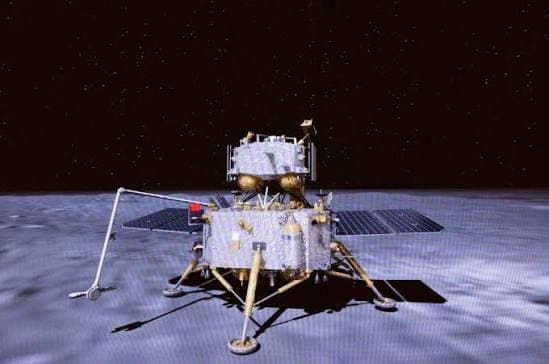
China Postpones Chang'e-7 Lunar Mission
Science and Technology24-Aug-2026

China Postpones Chang'e-7 Lunar Mission

Summary of Chang'e-7 Lunar Mission Postponement

Mission Overview:

  • Chang'e-7 Mission: Aimed at lunar exploration, particularly focusing on searching for water ice and conducting environmental/resource surveys of the moon's south pole.
  • Launch Site: Wenchang Space Launch Site, Hainan, China.

Postponement Details:

  • Announcement Date: August 23, 2026.
  • Reason for Postponement: The China Manned Space Agency cited that the mission does not meet launch conditions and cannot proceed in the planned window for the year due to a comprehensive assessment based on "prudence, reliability, and absolute mission success."

Background Information:

  • Chang'e Program: The Chang'e missions are named after the Chinese moon goddess and represent China's ambitions in lunar exploration. Chang'e-6 had previously achieved a milestone by returning lunar samples in 2024, marking a world first in retrieving rock and soil samples from the far side of the moon.
  • Technological Focus: The Chang'e-7 mission was intended to make breakthroughs in key lunar exploration technologies.

Significance:

  • The Chang'e program is critical for advancing China’s capabilities in space exploration, contributing to international knowledge about the moon, and enhancing China's position in global space endeavors.

Future Implications:

  • The postponement suggests a potential delay in China's lunar exploration timeline and highlights the importance of meticulous preparation and mission success in space missions.

Contextual Note:

  • The Chang'e missions reflect China's strategic investments in space technology and exploration, aligning with global trends in lunar research and exploration.

This summary encapsulates the essential facts and implications surrounding the Chang'e-7 mission postponement, relevant for understanding China's role in contemporary space exploration.

India's Vision for AI in Healthcare
Science and Technology22-Aug-2026

India's Vision for AI in Healthcare

Exam-Focused Notes on AI in Healthcare and India's Pharmaceutical Sector

  1. Government Initiatives and Policies:

    • AI in Healthcare: Central Minister Anupriya Patel emphasized the need for AI to complement human clinical decision-making rather than replace it.
    • Pharma-MedTech Sector Scheme: The government has launched a ₹5,000 crore scheme to promote research and innovation in the pharma sector, enhancing collaboration between industry and academia.
    • BioPharma Mission: A ₹10,000 crore BioPharma Mission aims to strengthen capabilities in biologics and biosimilars, develop skilled human resources, and bolster regulatory and clinical trial capacities.
    • Ayushman Bharat Digital Mission (ABDM): This initiative is creating an interoperable digital health ecosystem, with over 96 crore ABHA IDs and 1,000 crore health records linked digitally.
  2. Judicial and Legislative Developments:

    • Emphasis on creating a robust legal framework for AI applications in healthcare to ensure patient privacy and data security.
  3. International Agreements and Collaborations:

    • Collaborative efforts among government, academia, health institutions, startups, and industries to implement AI-driven healthcare solutions at a population level.
  4. Economic Data and Indicators:

    • The Indian pharmaceutical industry supplied vaccines and essential medical products to over 200 countries during the COVID-19 pandemic, administering over 220 crore doses domestically.
  5. Technological Innovations:

    • AI is being utilized for accelerating drug discovery, enabling personalized treatments, improving screening, and enhancing clinical decision-making.
    • Establishment of Centers of Excellence for AI in healthcare at institutions like AIIMS New Delhi and PGIMER Chandigarh.
  6. Challenges and Solutions:

    • Addressing challenges related to capital, software licensing, computing capacity, and specialized talent in the AI and pharmaceutical sectors.
    • Initiatives like the National BioPharma Mission and IndiaAI Mission are being implemented to solve these issues.
  7. Significant Developments:

    • Launch of the India Pharma Archives to document and preserve the growth of India's pharmaceutical industry, featuring oral histories, archival documents, and media related to significant achievements in the sector.
    • Publication on India's COVID-19 vaccine development, highlighting the country's response to global health crises.
  8. Future Directions:

    • Call for responsible and evidence-based use of AI in healthcare, focusing on patient-centric approaches and secure data practices.
    • Importance of collaboration among stakeholders to democratize access to datasets and AI tools.
  9. Key Figures:

    • Over 20 crore patients have benefited from AI-based diagnostic support through initiatives like e-Sanjeevani.
    • AI's role in identifying potential drug candidates faster and aiding in clinical trial design and patient recruitment.
  10. Conclusion:

    • The IIM Ahmedabad Healthcare Summit 2026 gathered policymakers, industry stakeholders, and academics to discuss the role of AI in advancing healthcare in line with the vision for a developed India by 2047.

These notes summarize the key facts, policies, and technological advancements discussed at the summit, which are crucial for understanding the evolving landscape of healthcare in India.