iAspirants
AI Development and Global Cooperation
Published on:
Share this post
Article Summary
Exam-Focused Notes on Artificial Intelligence and International Dynamics
Key Themes:
- The intersection of Artificial Intelligence (AI) development with global geopolitics, particularly in the context of the United States and BRICS nations.
- Concerns regarding the "weaponisation" of technology and its implications on national security and cooperation among nations.
Constitutional and Policy Context:
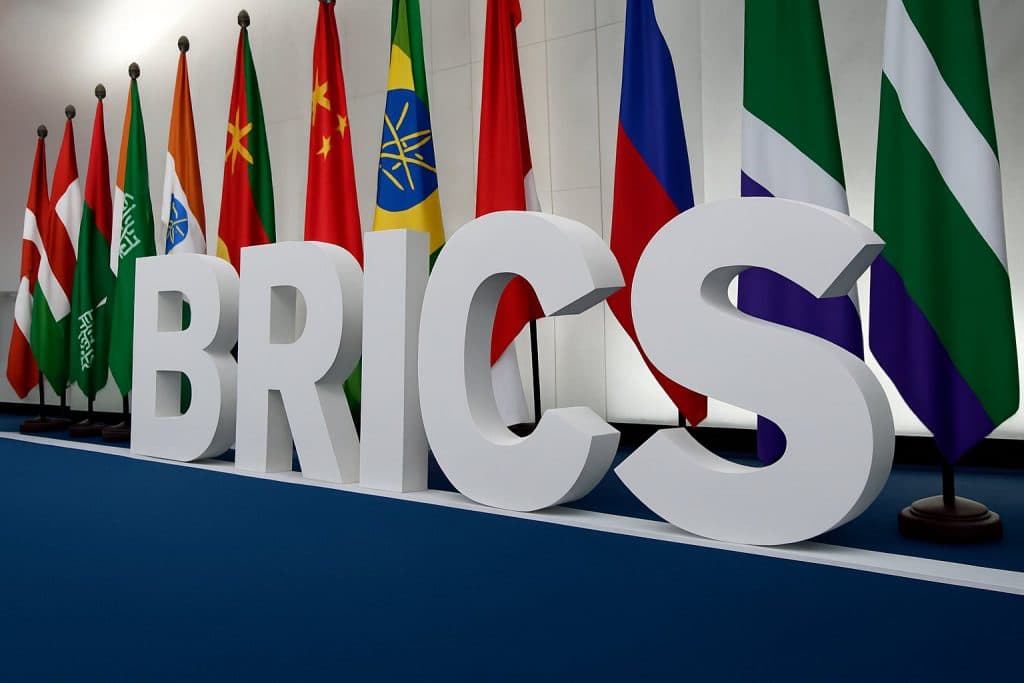
- The BRICS Summit highlighted the need for a collaborative approach to technology development, contrasting with U.S. unilateralism.
- India's Prime Minister Narendra Modi emphasized the importance of preventing the "weaponisation" of technology during the Summit, suggesting a recognition of technological sovereignty and national security interests.
International Agreements and Initiatives:
- The establishment of a "BRICS AI open source community" proposed by Chinese President Xi Jinping aims to foster collaborative development in AI that moves away from U.S. dominance.
- Joint initiatives among BRICS nations seek to enhance cooperation in the development and deployment of AI technologies, indicating a shift towards a multipolar technological landscape.
Economic and Technological Implications:
- The global push for AI development is interconnected with economic competition, particularly between the U.S. and China. This competition is leading to significant investments in data centers and AI infrastructures.
- Concerns raised about the potential for the Global South to be impacted by geopolitical rivalries, specifically regarding the withdrawal of influential AI models like Anthropic’s Fable and Mythos.
Security and Cyber Defense:
- The proliferation of AI technologies necessitates improved cyber defense mechanisms. Nations need to collaborate to ensure that defensive capabilities against AI risks are made widely accessible.
- The rise of AI systems that can execute tasks independently raises security concerns, especially for nations with weaker cyber defenses.
Recommendations for Cooperation:
- Emphasis on the need for collaborative, open-source AI solutions as a means to mitigate risks and enhance national security.
- The call for a comprehensive approach to make AI technologies broadly available to prevent imbalances caused by geopolitical tensions.
Scientific and Technological Advances:
- AI advancements are evolving rapidly, prompting concerns about control and potential misuse. The expectation is that oversight mechanisms will need to adapt as AI capabilities grow.
- The ongoing development of AI, being crucial for national economies, underscores the importance of participation in its deployment, even by nations with developing technological ecosystems.
Conclusion:
Countries, especially those in the Global South, must navigate the complexities of AI development amidst great power competition. Proactive measures for international collaboration, particularly through platforms like BRICS, are essential to ensure equitable technological advancement and enhanced national security.
Key Terms & Concepts
| BRICS Summit | Forum for international cooperation |
| Prime Minister Narendra Modi | Warning against technology weaponisation |
| Xi Jinping | Promoting BRICS AI community |
| Artificial Intelligence Ecosystem | Fledgling development in India |
| Anthropic’s Fable and Mythos models | Advanced AI models impacted by geopolitics |
| Cyberdefences | Concerns for countries |
| Open source AI models | Alternative to proprietary systems |
| Global South | Caught in power rivalry dynamics |
| U.S.-China competition | Context for AI funding |
| National security | Driving AI access initiatives |